Polotsk’s Park of the 50th Anniversary of Soviet Rule is the kind of place that doesn’t demand attention at first glance. It reveals itself slowly, like an old book whose pages you turn without hurry. Opened in 1967 to mark half a century of Soviet power, it was one of many public spaces created across the USSR during that era. In Polotsk, it found its home along the gentle curve of the Western Dvina River, where the water separates the historic heart of the city from its more modern districts.
Today, the park feels less like a monument to ideology and more like an ordinary urban green space. There are no grand statues or slogans here, nothing to remind visitors of its original purpose. Instead, you’ll find wide paths lined with benches, playgrounds for children, and dense clusters of trees that offer shade on summer afternoons. A promenade runs along the riverbank, where the view stretches across the water toward the opposite shore—once home to wooden houses, now replaced by apartment blocks.
Though small, the park has a quiet charm. In warmer months, families gather here, elderly men play chess in the open air, and groups of young people spread out blankets for picnics on the grass. When winter comes, the paths disappear under snow, and the park becomes a serene, white expanse where you can walk alone or sled down small hills. No matter the season, there’s a sense of unhurried life here, the kind you find in provincial towns where nature and city exist side by side without tension.
The park’s location ties it to Polotsk’s long history. The Western Dvina, which flows past its edge, has been a vital trade route for centuries, linking the Baltic Sea to the interior of Eastern Europe. In medieval times, merchants and pilgrims traveled these waters, and Polotsk itself was a powerful principality, rivaling Kyiv and Novgorod. Later, under Soviet rule, the river became not just a commercial artery but a place for leisure. The park is one of the few spots where that tradition still lingers.
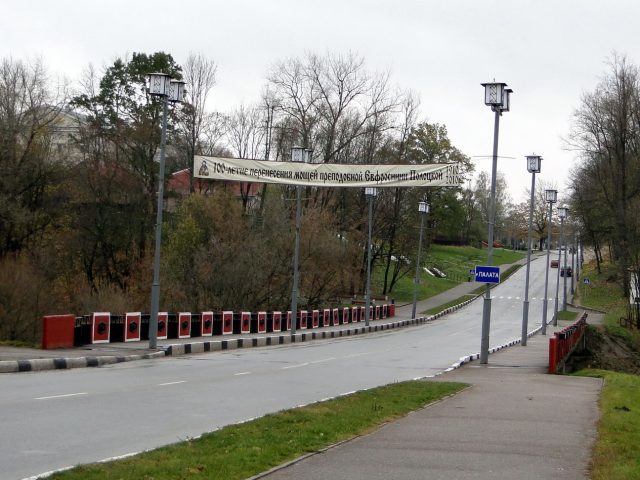
There’s nothing architecturally remarkable about the place, and that’s part of its appeal. It doesn’t try to be anything more than what it is—a comfortable, unassuming space for walks. Old-fashioned streetlamps line the paths, their design a quiet nod to the Soviet era, and a few concrete benches remain, their shapes familiar to anyone who’s spent time in similar parks across the former USSR. A fountain once stood in the center, but now it’s dry, and flowers grow in its basin. These small details give the park a sense of time suspended, somewhere between past and present.
The best seasons to visit are May, when chestnut trees bloom, and September, when the leaves turn golden and the air carries the scent of fallen foliage. On such days, the park fills with people—some reading, others simply sitting on benches, watching the river. The Western Dvina isn’t always pristine, but that doesn’t make it any less compelling. The water connects the park to the rest of the city, a reminder that Polotsk has always been shaped by its rivers.
Nowadays, the Park of the 50th Anniversary of Soviet Rule is less a relic of history and more a part of everyday life. There’s nothing extraordinary about it, and that’s precisely why it matters. It’s a place where you can be alone with your thoughts or spend time with loved ones without worrying about what to do next. In a world where everything seems designed to be loud and memorable, such quiet corners are rare. Maybe that’s why locals and visitors keep coming back—to feel a part of something simple and real.