Hastings Gardens sits quietly on the western slope of Valletta, where the city’s fortified walls give way to one of the island’s most enduring views. Below, the waters of Marsamxett Harbour stretch toward the Three Cities on the opposite shore, their honey-colored buildings catching the light in a way that hasn’t changed for centuries. This isn’t a park of manicured lawns or grand floral displays, but a place where history lingers in the stone and the sea breeze carries the weight of time. Few visitors make the climb, even in peak season, and those who do often come for the same reason—to sit, to watch, to let the hours pass without hurry.
The gardens take their name from Lord Hastings, who served as British governor of Malta in the early 1800s. It was under his administration that these terraces were first shaped into a public space, though the idea of using the slopes above the harbor for leisure had been around much longer. Valletta was built as a fortress, and every inch of land once served a military purpose. The same hills now dotted with palms and bougainvillea were once lined with cannons, their barrels pointed toward the sea where the Knights Hospitaller’s fleet anchored. Little remains of that era beyond the outline of bastions and a few rusted cannon barrels half-buried in the earth, but the land still bears the scars of its past. The gentle curves of the pathways follow the old defensive lines, a quiet reminder of how this place was once a barrier rather than a retreat.
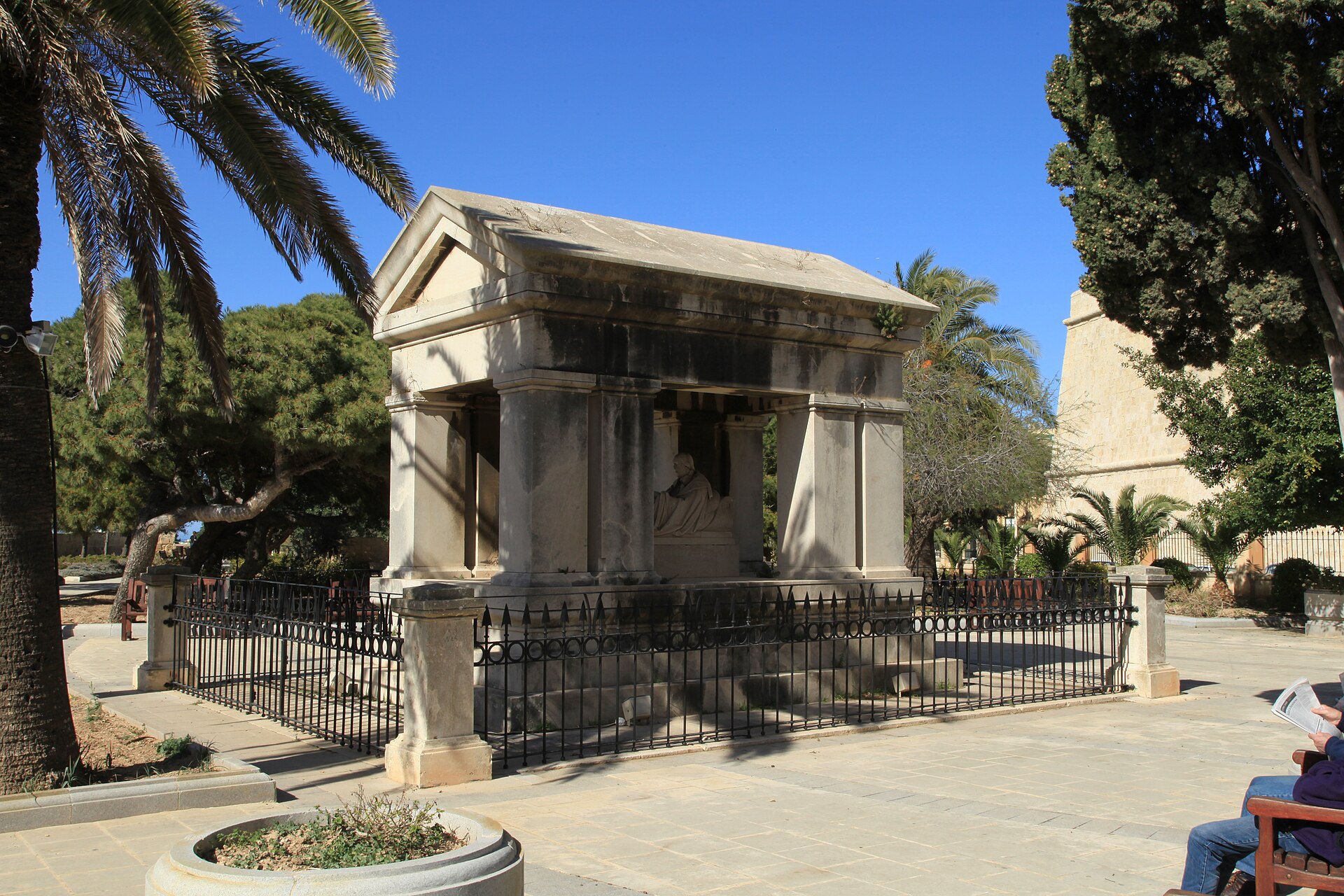
There’s nothing ornate about Hastings Gardens. The architecture is as practical as the British colonial era that shaped it—simple stone parapets, staircases connecting the terraces, and a handful of shaded alcoves where visitors can escape the midday sun. The most prominent feature is the memorial to Lord Hastings, a modest limestone obelisk erected in 1829. Locals call it simply "the column," and it’s not unusual to find fresh flowers laid at its base. Hastings is remembered for modernizing Malta’s infrastructure, including the first proper road linking Valletta to Mdina, and the gesture feels less like formal tribute than quiet gratitude.
The gardens are divided into two distinct levels. The upper terrace is open and airy, offering the best views of the harbor, and it’s where most visitors gather. A small cactus garden here showcases the hardy plants that thrive in Malta’s dry climate. Below, the atmosphere shifts. The lower paths wind between old stone walls, shaded by trees that muffle the sounds of the city. The air is cooler here, even in summer, and the space feels more intimate. It’s where locals come to read, to think, or to steal a moment of quiet in a city that’s always moving.
Hastings Gardens isn’t a place for grand experiences. There are no cafes, no souvenir stalls, no guided tours. What it offers instead is something rarer—a sense of stillness, a chance to step outside the rush of modern life. Time moves differently here. In the early morning, the harbor water shimmers like liquid silver. By midday, the light is sharp and bright, casting crisp shadows from the ships in the port. As evening falls, the lights of Valletta and the Three Cities flicker to life, and the gardens become one of the best spots on the island to watch the sun dip below the horizon.
It’s telling that Hastings Gardens rarely appears in guidebooks. Perhaps because it doesn’t need to be advertised—it finds its own visitors, those who seek it out for reasons they might not even articulate. There are no crowds here, no selfie sticks, no tour groups following a flag. Even locals sometimes forget it exists until they need a place to breathe. That’s part of its charm. The gardens don’t try to impress; they simply exist, a quiet corner of history where the past feels close enough to touch.
If you visit Valletta, resist the urge to rush straight to St. John’s Co-Cathedral or the waterfront. Instead, take the stairs up to Hastings Gardens, find a bench, and stay awhile. The view will be waiting, just as it has for generations. And in that moment, you might understand why Malta draws people back again and again—not just for its beaches or its ancient temples, but for these small, unassuming places where time slows down and the world feels a little more human.