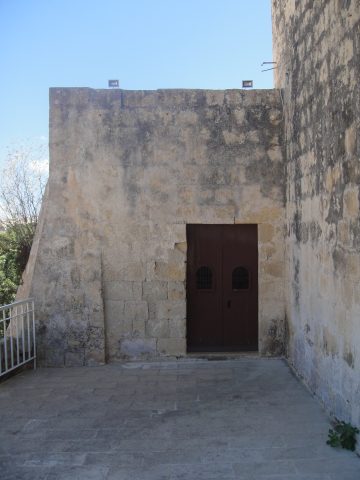
Perched on the edge of a rocky peninsula where Malta meets the sea, Fort Ricasoli stands as a silent witness to centuries of conflict, ambition, and resilience. Its towering limestone walls, weathered by time and salt, rise above the Grand Harbour like a forgotten sentinel, their imposing presence a reminder of the island’s strategic importance. Though it now appears abandoned, the fort’s history is anything but quiet—it’s a story of power, ingenuity, and the relentless struggle to control one of the Mediterranean’s most coveted harbors.
The fort’s origins trace back to the mid-17th century, when the Knights of Malta recognized the need to fortify the eastern flank of the Grand Harbour. The Mediterranean was a battleground, and Malta, sitting at the crossroads of trade and empire, was a prize worth defending. The Knights commissioned Italian military engineer Antonio Maurizio Valperga to design a fortress that would follow the natural contours of the coastline. What emerged was an irregular pentagonal structure, its walls shaped by the jagged rocks beneath them. Construction dragged on for decades, with modifications and expansions continuing long after its completion. The result was a formidable stronghold, one that would play a crucial role in the island’s defense for centuries to come.
Fort Ricasoli was built for one purpose: to guard the entrance to the Grand Harbour. Its sea-facing bastions bristled with cannons, ready to unleash fire on any ship daring to approach Valletta. Inside, the fort housed barracks, ammunition stores, powder magazines, and even a small chapel—everything needed to sustain a garrison under siege. While temporary fortifications had stood on this site during the Great Siege of Malta in 1565, Ricasoli was the permanent solution, the final line of defense that would secure the harbor against future invasions. Over the years, it repelled pirate raids and naval assaults, proving its worth time and again.
When the British took control of Malta in the 19th century, they saw the value in Ricasoli and expanded it further. New casemates, tunnels, and artillery positions were added, transforming the fort into a modern military complex. During both World Wars, it served as a critical defensive position. Anti-aircraft batteries were installed, and its underground passages provided shelter from air raids. There were even whispers during the Cold War of converting the fort into a nuclear storage site, though those plans never materialized. By then, Ricasoli had already outlived its original purpose, but its walls still bore the weight of history.
Today, the fort feels like a relic of another era. Its limestone walls, pockmarked by time and the elements, tell stories of battles long past. Inside, the remnants of barracks, storerooms, and gun emplacements remain, though much of the interior is off-limits due to safety concerns. Locals sometimes call it the "Red Fort," a nod to the warm hue the stone takes on at sunset. Despite its state of disrepair, Ricasoli remains one of Malta’s most striking examples of military architecture—a place where the past feels almost tangible.
Visiting Fort Ricasoli isn’t like touring a typical tourist attraction. Access is restricted, and those who do manage to step inside often do so through special permissions or guided tours. There are no crowds, no souvenir stands, just the quiet echo of footsteps on stone and the distant cry of gulls. The fort’s emptiness adds to its atmosphere, making it easy to imagine the soldiers who once stood guard here, the prisoners who were held within its walls, or the workers who toiled to build it. It’s a place where history isn’t just remembered—it’s felt.
More than just a collection of stone and cannon, Fort Ricasoli is a monument to the people who shaped Malta’s destiny. Knights, soldiers, laborers—all left their mark here. It was a place where wars were planned, where ships set sail for distant shores, and where, in its darker moments, lives were decided by the stroke of a pen. The fort serves as a reminder that Malta’s history isn’t just about sun-drenched beaches and ancient temples. It’s also about the blood, sweat, and iron that forged this island into what it is today.
From the water, as a ferry approaches Valletta, Fort Ricasoli looms like an unbreakable fortress, its silhouette blending into the coastline. Only a careful eye picks out the gun ports and bastions hidden among the rocks. There’s something fitting about that—Malta has always been a place where history lingers just beneath the surface, where every stone has a story if you know how to listen. Fort Ricasoli is one of those stones, a silent guardian that has stood watch for centuries, long after the last battle was fought.