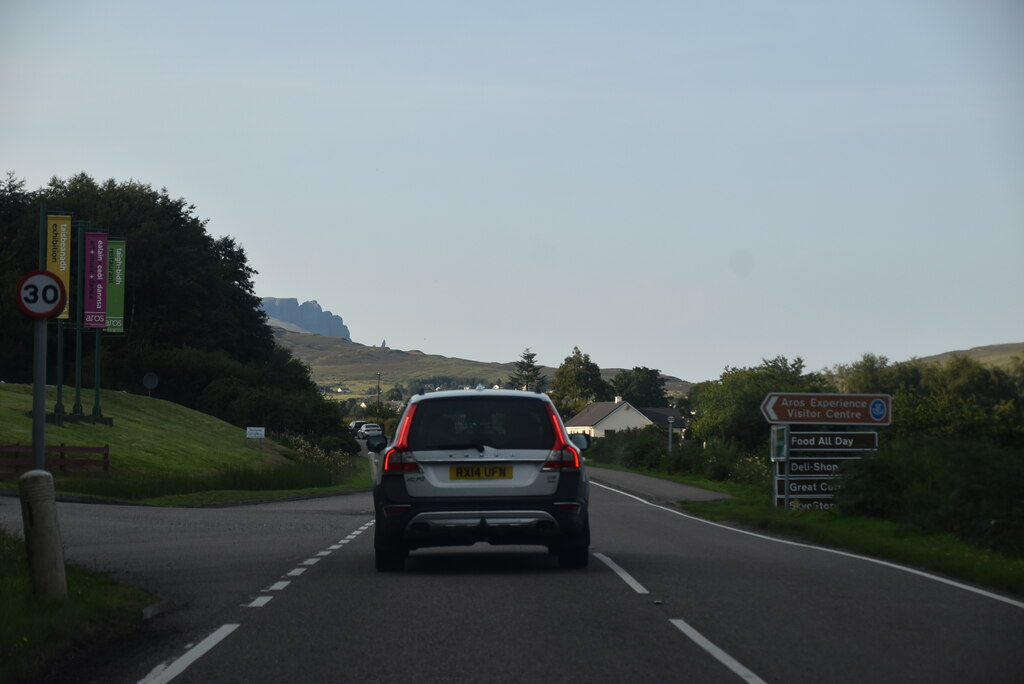
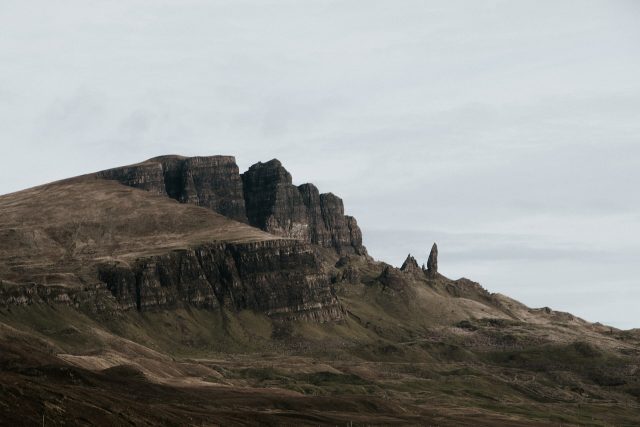
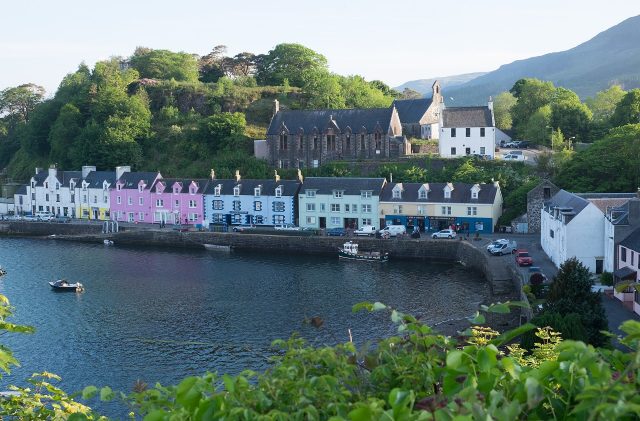
Portree is a quiet harbour town on the Isle of Skye, where the raw beauty of the Scottish Highlands meets the sea. The coastline here is jagged, the hills often shrouded in mist, and the air carries the salt of the North Atlantic. Aros Park sits on the edge of town, a place that feels less like a formal attraction and more like a natural extension of the landscape. It’s where locals come to walk their dogs, where visitors pause to catch their breath after a long drive, and where the rhythm of island life slows just enough to let you notice the details—the way the light catches the water, the sound of gulls overhead, the distant outline of the Cuillin mountains.
The park was established in the mid-20th century, but its roots go deeper. Portree has long been a working town, shaped by fishing and trade, and Aros reflects that history. There are no grand monuments here, no manicured gardens or towering landmarks. Instead, it’s a modest green space, the kind you find in small Scottish towns where public life unfolds quietly. The paths are simple, winding past patches of grass and clusters of trees that have stood for decades, their branches bending with the wind. In the centre, a low stone arch marks the entrance, unassuming but fitting—like something you’d see in a hundred other coastal villages, yet entirely its own.
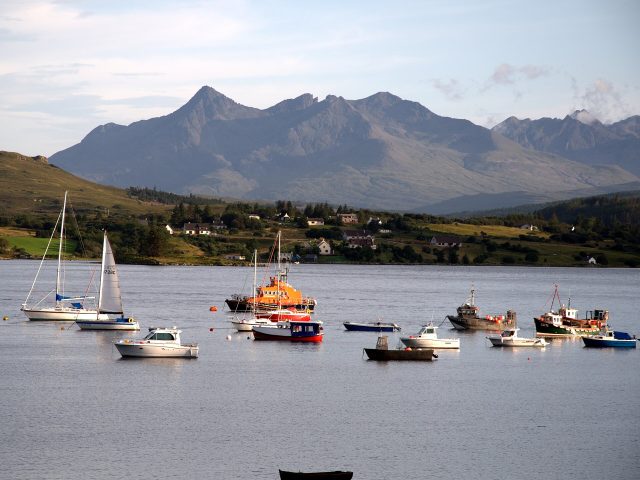
What makes Aros special isn’t its size or spectacle, but the way it frames the world around it. From the benches along the shore, you can watch fishing boats drift in and out of the harbour, their hulls weathered by years at sea. On clear days, the Cuillins rise in the distance, their peaks sharp against the sky, a reminder of the wildness that defines this part of Scotland. The park doesn’t try to compete with that grandeur; it simply offers a place to sit and take it in. In summer, the grass is dotted with picnickers and the occasional musician playing folk tunes, while in winter, the space empties, leaving only the sound of waves and the cry of seabirds.
There’s a sense of everyday life here that’s hard to find in more famous spots. Families push strollers along the paths, elderly locals feed ducks by the small pond, and tourists wander in, still getting their bearings on the island. Aros isn’t a place you need to plan a visit to—it’s just there, waiting. Unlike the castles or dramatic cliffs that draw crowds, it doesn’t demand attention. Instead, it invites you to slow down, to notice the way the wind moves through the trees or how the light changes over the water. It’s the kind of place where you might sit for an hour without realising it, lost in the quiet.
The plants here are hardy, the kind that thrive in Scotland’s unpredictable weather. There are no exotic flowers or elaborate displays, just wild grasses, low shrubs, and a few resilient trees clinging to the rocky soil. In spring, rhododendrons bloom in bursts of purple, and in autumn, the leaves turn gold, blending into the muted tones of the landscape. Even when it rains—and it often does—the park has a certain charm. The paths grow slick, the air thickens with mist, and the whole place takes on a moody, almost secretive feel, as if it’s sharing something just with you.
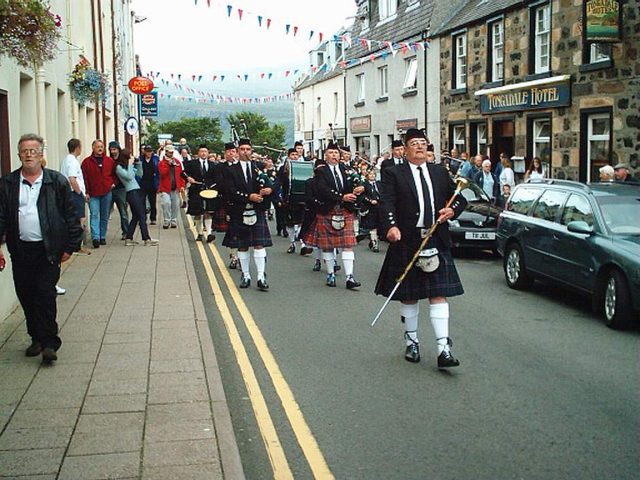
Aros is also a gathering place for the community. During local celebrations like St. Andrew’s Day or Hogmanay, the park comes alive with music and laughter. Bagpipes echo across the green, and the scent of fresh baking drifts from stalls selling traditional treats. For a few hours, the space transforms, filled with the warmth of shared traditions. Even those who don’t know the customs can feel the pull of it—the sense that this is more than just a park, that it’s a thread connecting the past to the present.
For first-time visitors to Skye, Aros can be a gentle introduction to the island’s character. There are no tour buses here, no souvenir shops or guided spiels. Just the sea, the wind, and the occasional cry of a gull. It’s a place that doesn’t try to impress; it simply exists, offering a moment of stillness in a world that rarely slows down. That’s why people return—not for the sights, but for the feeling of being somewhere real, somewhere that doesn’t need to shout to be heard.
In the end, Aros isn’t just a park. It’s a piece of Portree’s identity, a quiet witness to the town’s changes and constants. Some come for the views, others for the silence, and a few just to sit on a bench and watch the tide roll in. What makes it special is that it doesn’t ask for anything in return. It’s there, as it always has been, a small green space where the land, the sea, and the people of Skye come together without fuss. And sometimes, that’s enough.