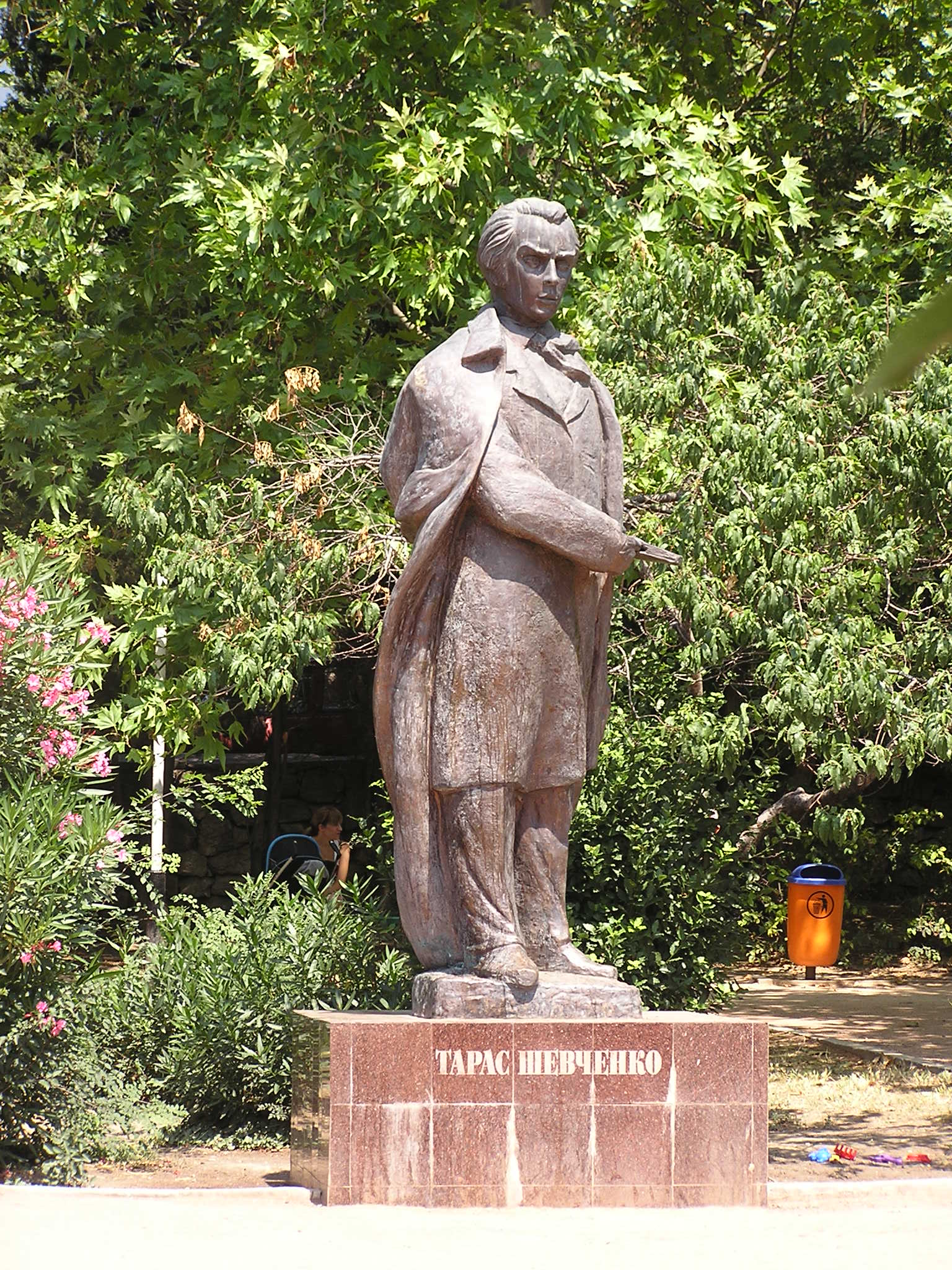
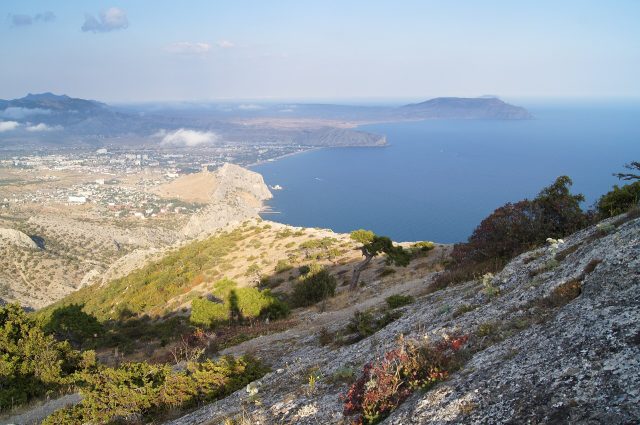
Yalta’s monument to Taras Shevchenko is on the seafront, where the city’s past meets the present. The Crimean coast has drawn artists, writers, and thinkers—each leaving something behind. Shevchenko, the Ukrainian poet and painter, spent only a few weeks here in 1858. After years of exile, he traveled south for his health. Those weeks were enough to leave a mark.
The monument was unveiled in 2007 near the promenade. Shevchenko is cast in bronze, standing on a simple pedestal, his gaze toward the water. He holds a book, as if pausing mid-thought. The setting is unmistakably Crimean: flowers, the sound of the Black Sea, the weight of history.
Sculptor Vladimir Chepelik designed the monument. It’s not grand or imposing. Instead, it feels personal, as if Shevchenko might step down and sit beside you. This contrasts with the earlier monument in Simferopol, which feels more formal, more distant.
The idea of honoring Shevchenko in Yalta first emerged in the late 1800s. It took over a century to build. Soviet-era plans were delayed by bureaucracy, funding issues, and politics. By the 2000s, tensions between Russia and Ukraine were rising. Yet the statue itself doesn’t take sides. It’s a reminder of a man whose words belong to many.
Yalta has always been a city of memorials. Pushkin, Chekhov, Lesya Ukrainka—each has a place here. Shevchenko fits among them, though his story is different. His work came from struggle and love for his homeland. That he spent so little time in Yalta doesn’t change that. The landscape—the sea, the mountains—is the same one he wrote about.
Today, the monument isn’t just for tourists. Locals bring flowers, sit on benches, or read his poetry. On quiet evenings, when the sea breeze picks up, it’s easy to imagine him still here, watching the waves. The city moves around him, but the monument stays still, a place where the past lingers.
Yalta is full of stories. The Shevchenko monument is one of them. It’s about how art lasts, how great figures stay with us. Even now, with history’s complexities, the statue stands. It doesn’t ask for allegiance. It offers a moment to remember a man and his words.