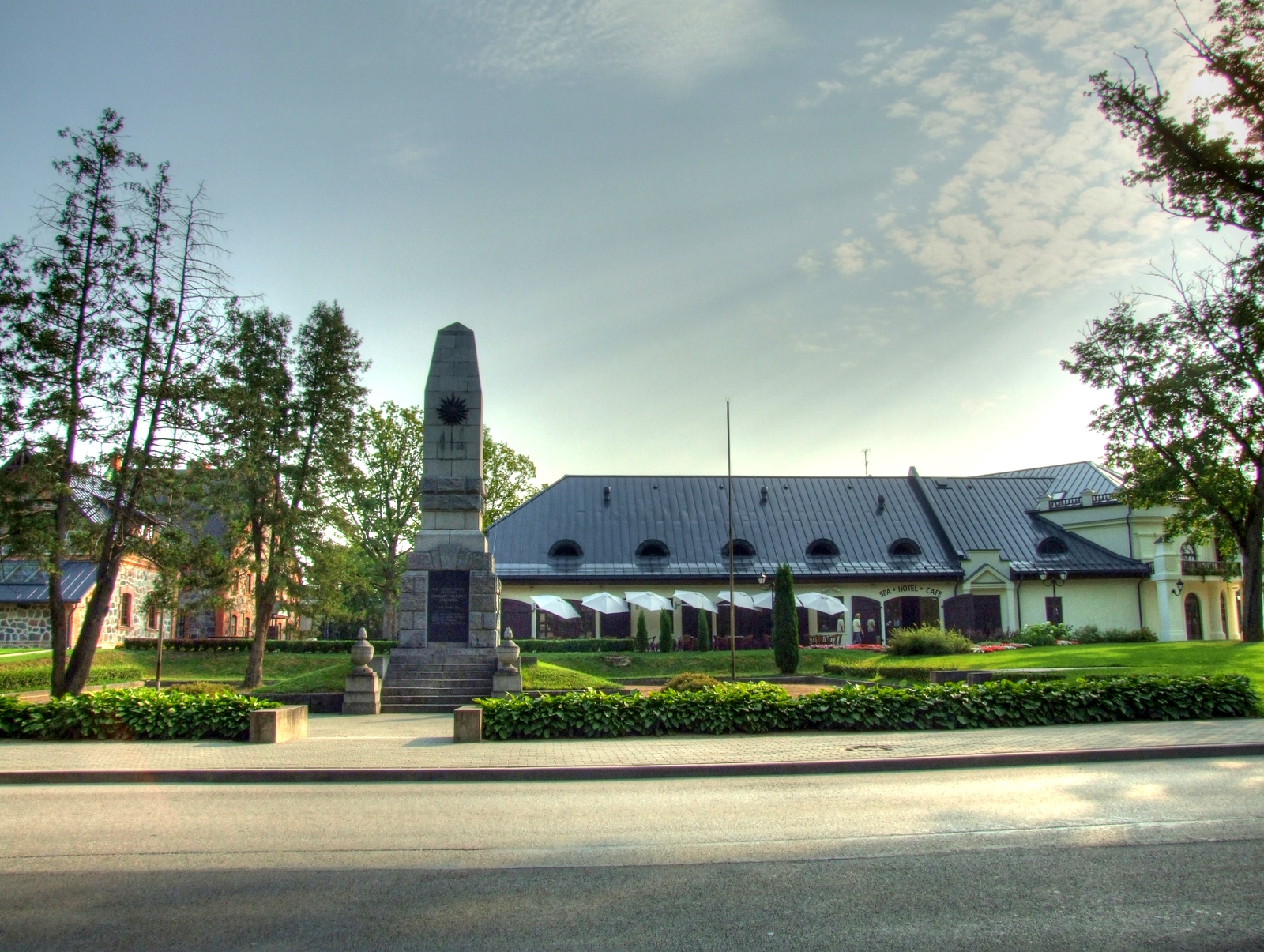
In the heart of Gulbene, a quiet town in northeastern Latvia, a modest hill rises above the streets. At its top stands a memorial that has overlooked the city for decades. It was built during the Soviet era to honor soldiers who died in the Second World War, a conflict that left deep scars across this part of Europe. The monument is unassuming, yet its presence lingers in the town—a silent witness to the past that shaped Gulbene.
The memorial is simple: a tall gray obelisk topped with a five-pointed star. At its base, an eternal flame burns, framed by granite slabs bearing the names of those who never returned. There’s no grandeur, no dramatic sculptures or elaborate inscriptions. The clean lines and muted tones create a sense of solemnity, a quiet respect for the lives lost. The design is familiar to anyone who has seen Soviet war memorials elsewhere, but here, it doesn’t feel like a political statement. It feels like a place where people come to remember.
Gulbene isn’t a city you’ll find in most guidebooks. Its streets are lined with low-rise buildings, and life moves at a slower pace than in Riga or other larger Latvian towns. But during the war, this unassuming place was the site of fierce fighting. When the German occupation ended, the town entered a new reality—one that would define its identity for decades. The memorial wasn’t just built to remember the fallen. It marked a turning point in Gulbene’s history. For many locals, it’s still a place of pilgrimage, especially on Victory Day, when flowers appear at its base and the past feels closer.
The small park around the monument is peaceful in every season. In summer, trees cast dappled shade over the paths. In winter, snow blankets the ground, softening the sounds of the town. It’s not a place that draws crowds, even on weekends. Most visitors are locals who come to pay their respects—some leave flowers, others stand in silence. For outsiders, the memorial might seem ordinary at first glance. But that simplicity gives it a weight that more elaborate monuments sometimes lack. There are no tour groups here, no guided narratives. Just the quiet hum of history, waiting.
Latvia’s relationship with its Soviet past has changed over the years, and memorials like this one have become part of broader conversations about memory and identity. After independence, many Soviet-era monuments were reevaluated, their meanings debated. Yet in Gulbene, the memorial has kept its significance for those who grew up with it. It’s not a relic of ideology. The names on the granite slabs belong to real people—sons, brothers, neighbors—and that connection matters more than politics.
Today, the monument is both a historical artifact and a place of quiet contemplation. It doesn’t draw the same attention as the grand memorials in Riga or other major cities. Maybe that’s why it feels different. Here, history isn’t distant. The town moves on around it, but the memorial remains a reminder that the past is never far away.
If you’re in Gulbene, take a moment to visit. There are no exhibits, no audio guides—just the monument and the stories it holds. It’s not a place for loud conversations or hurried footsteps. It asks you to pause, to read the names on the stone, and to think about what they mean. In a world that moves too fast, such moments are rare. Here, they’re waiting for anyone who stops to listen.