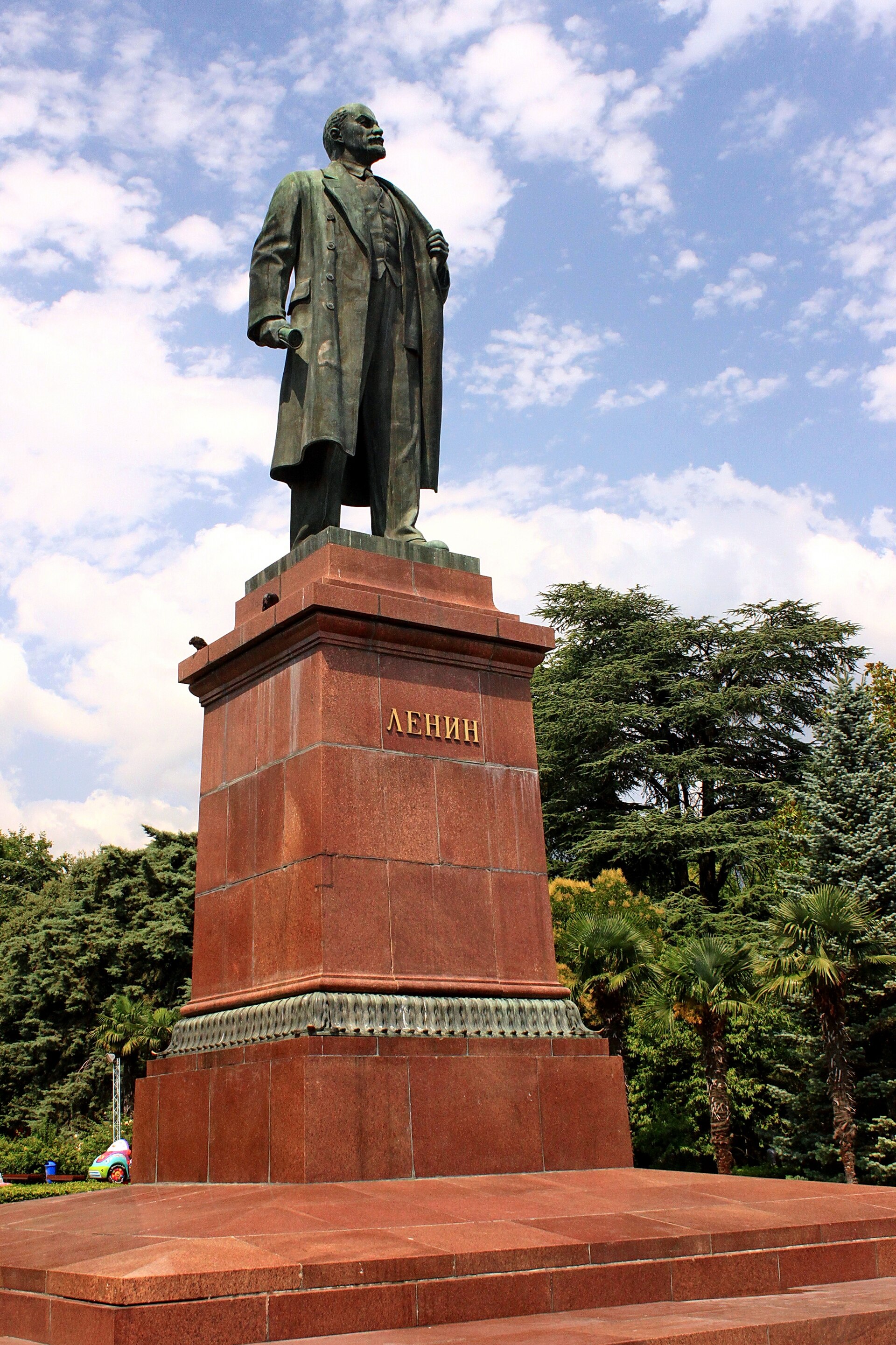
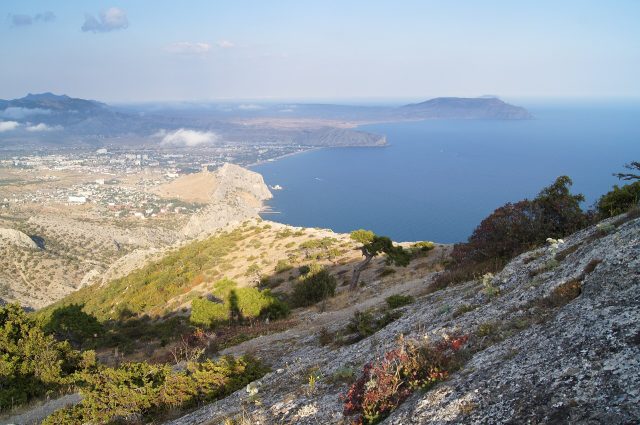
The Lenin Monument in Yalta is one of those landmarks that doesn’t just mark a spot on the map but becomes woven into the fabric of the city itself. It stands on the seafront promenade, where tourists and locals stroll, where the Black Sea meets the mountains, and where the sunlight shifts between soft diffused glows and sudden bursts of brightness. Against the backdrop of cypress trees and palms, the bronze figure of the revolutionary leader feels unexpected—not so much a political symbol as a quiet nod to an era when Yalta was more than just a resort. It was a place where history and politics unfolded in equal measure.
The monument was unveiled in 1954, during the post-war reconstruction of Crimea. Yalta still bore the scars of conflict, yet it was already reclaiming its identity as a city of rest and recovery. The statue was placed where a house once stood, supposedly the same one where Lenin stayed in 1902 during his brief visit to the southern coast. Historians debate the accuracy of this claim—some argue the meeting with local social democrats took place elsewhere, and Lenin’s time in Yalta was fleeting. But for the city, the specifics mattered less than the connection to a name that had become central to Soviet identity.
Architecturally, the monument follows the austere, monumental style of its time. Lenin is depicted mid-stride, his head slightly tilted forward, as if he’s just stepped out of a building and is now moving toward the people. In his hand, he holds a hat, a small detail that softens the formality of the figure without diminishing its authority. The red granite pedestal grounds the composition, neither overwhelming nor diminishing the statue itself. Around it, a small park offers shade in summer and a gentle slope for sledding in winter, making the monument part of everyday life rather than a distant relic.
For Yalta, the statue is more than just a tourist attraction—it’s a layer in the city’s complex history. Yalta has always been a place where eras and cultures intersect. Russian aristocrats once vacationed here, tuberculosis patients sought treatment, and writers and artists rented dachas. In the Soviet era, it became a premier resort for workers and collective farmers, a place where ordinary people could access the rest once reserved for the elite. The Lenin Monument fits into this narrative as a symbol of that shift, a reminder of a time when leisure was democratized. Today, it feels less like an ideological statement and more like a piece of the past that refuses to fade.
Reactions to the monument vary. For some, it’s just another fixture on the promenade, something to walk past without a second thought. For others, it’s a reason to pause—whether to reflect on history or to snap a photo with the sea and mountains in the background. A few might see it as an outdated relic, but they’re in the minority. Over time, the statue has settled into the cityscape, no longer a source of controversy but simply part of the scenery, as familiar as the cypress trees or the Black Sea itself.
Yalta’s seafront is one of the liveliest parts of the city, and the Lenin Monument isn’t alone here. Other statues, some modest, some grandiose, stand nearby, each marking different moments in the city’s past. But this one stands out for its historical weight. It’s a reminder that Yalta is more than just sun, beaches, and wine—it’s a city with a layered, sometimes contradictory story. Every building, every stone seems to hold a memory, and the Lenin Monument is just one of many markers on that timeline.
In recent years, the monument has rarely been the site of rallies or political gatherings. It’s no longer a place where ideology is debated, though occasionally you’ll see school groups on guided tours, learning about the revolution and the Civil War, or tourists posing for photos. For many, it’s become a landmark in the most practical sense: if you’re meeting someone on the promenade, saying “by Lenin” is the easiest way to be understood.
Whether the monument is worth a special visit depends on what you’re looking for in Yalta. If you’re interested in the city’s history, its architecture, or the way different eras have shaped its character, then yes—it’s worth seeing. But if you’re here just to enjoy the sea and the sun, the statue will simply be one of many details that make Yalta what it is. Either way, it’s hard to miss. It occupies one of the most visible spots on the seafront, and sooner or later, your gaze will land on that bronze figure, still striding forward through the decades.