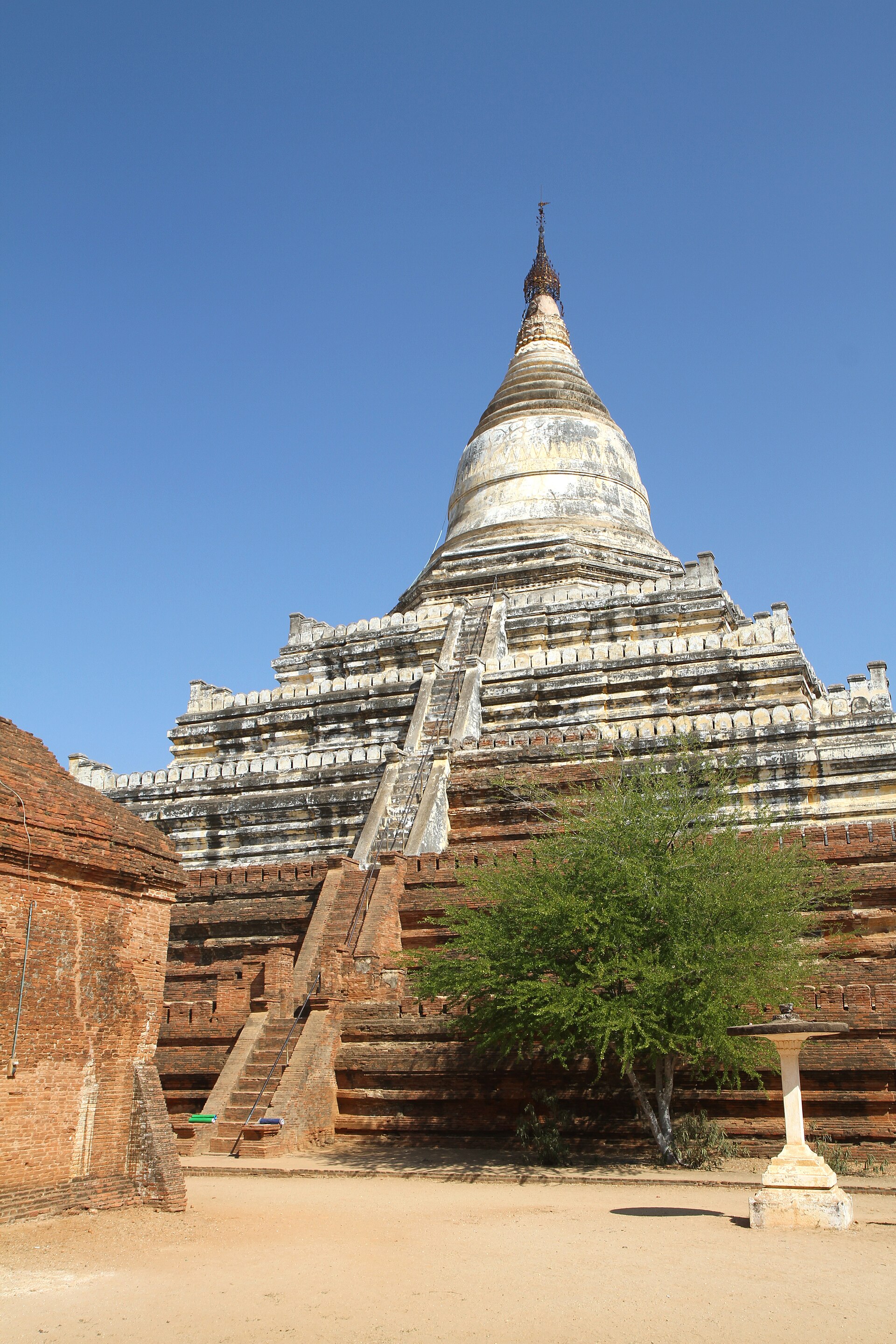
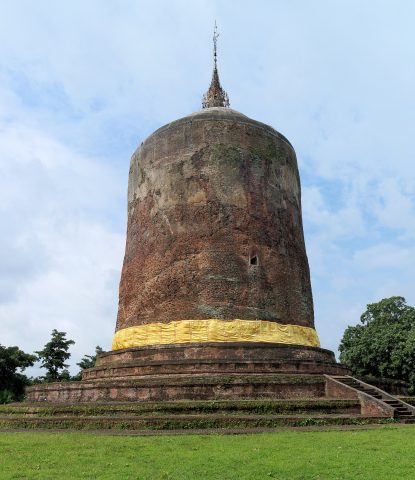
Shwesandaw Pagoda is one of those places in Myanmar where time seems to slow down, not because of grand monuments, but because of the quiet weight of history that lingers in the air. Located in the ancient city of Pyay, it sits along the banks of the Irrawaddy River, which once made this town a vital trading hub between the north and south of the country. Today, Pyay is a peaceful, almost sleepy place where life moves at its own unhurried pace, and Shwesandaw remains its spiritual core.
Unlike the towering pagodas of Bagan or the golden splendor of Shwedagon in Yangon, Shwesandaw is modest in scale. That’s part of its charm—it doesn’t demand attention, but invites you to pause, to notice the small things. The central stupa, gilded in gold leaf, is surrounded by smaller shrines, altars, and Buddha statues, each with its own story. Some are worn by time, their edges softened by centuries, and that only adds to the sense of age here. It’s a place where the past feels tangible, not just preserved but alive.
The pagoda dates back to the 11th century, built during the reign of King Anawrahta, the founder of the Bagan Empire. Legend says it was here that he received a sacred relic—a hair of the Buddha—which became the temple’s most revered treasure. Like many Buddhist sites in Myanmar, Shwesandaw has been rebuilt and restored over the centuries. The last major renovation took place in the 19th century under the Konbaung dynasty, giving it the appearance it has today.
The architecture is classic for its time: a bell-shaped stupa topped with a spire, symbolizing the path to nirvana. Scattered around it are small pavilions with intricately carved wooden columns, where monks and pilgrims sit in meditation or prayer. Early mornings are the best time to visit, when the first light catches the gold of the stupa and the air is filled with the scent of flowers and incense. There are few tourists then, just the quiet rhythm of devotion, and it’s easy to feel like you’ve stepped into something timeless.
For locals, Shwesandaw isn’t just a tourist site—it’s woven into daily life. People come here to celebrate festivals, pray for good fortune, or simply meet friends. The most vibrant time is during Thingyan, the Burmese New Year, when the pagoda grounds transform into a lively festival space. Stalls sell food, musicians play, and the stupas are draped in flowers and colorful lanterns. It’s a rare glimpse of how religion and community intertwine in Myanmar.
Despite its spiritual importance, Shwesandaw doesn’t feel rigid or unwelcoming. There are no strict rules about photography or noise, and the monks who live here are often happy to chat with visitors. Many speak English and will share stories about Buddhist traditions, the temple’s history, or their own lives. For those curious about local culture, it’s a chance to see it up close, without the filter of a guidebook.
Pyay itself is often overlooked by travelers. There are no crowds, no bustling markets, no luxury hotels—just a quiet town where life unfolds slowly. Shwesandaw mirrors that simplicity. It doesn’t ask for much from visitors, just respect and a willingness to look beyond the obvious. If you’re lucky, you might leave with the sense that you’ve touched something real, something that hasn’t changed in generations.