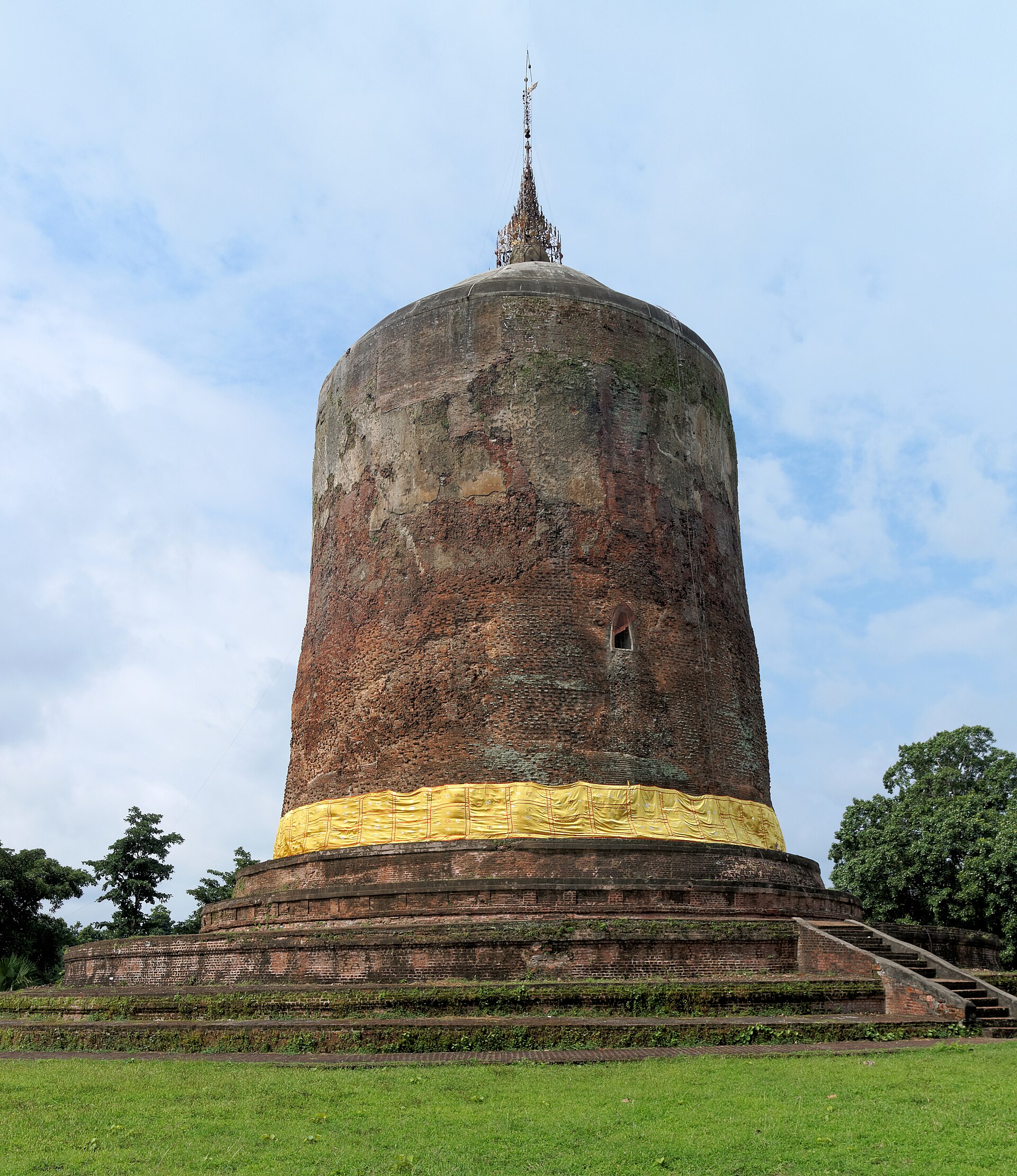
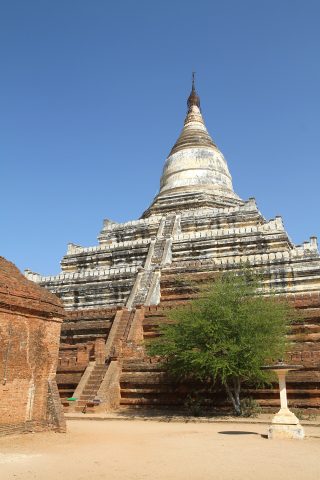
Bawbawgyi Pagoda in Pyay is one of those quiet places that doesn’t demand attention but lingers in the mind long after you’ve left. It isn’t as grand as the towering temples of Bagan or as dazzling as the gilded stupas of Yangon, and that’s precisely why it feels so genuine. Pyay itself moves at a slower pace, a riverside town where the Irrawaddy’s currents seem to shape the rhythm of life. The streets carry the scent of roasted tea and spices, and people greet strangers with a quiet, unassuming warmth. Bawbawgyi fits naturally into this setting—not as a tourist attraction, but as a place where daily life unfolds with unhurried grace.
The pagoda’s origins stretch back centuries, though no one can say for certain when it was first built. It likely dates to the height of the Bagan Kingdom, when Buddhism had already taken deep root in Myanmar and art and architecture flourished. Unlike many other temples, Bawbawgyi hasn’t been drastically altered over time. Its structure still bears the marks of ancient traditions, even if the years have softened its edges. The walls are adorned with faded murals that tell stories from the Buddha’s life, their colors worn but still vivid enough to imagine how they must have looked when first painted. The surrounding stupas hint at a time when monks and pilgrims gathered here to discuss teachings and preserve knowledge.
The architecture is typical of central Myanmar, yet it has its own understated charm. The main stupa is low but solid, its gilded spire catching the sunlight on clear days and casting a warm glow over the stone. The entrance is framed by intricately carved wooden doors, their surfaces etched with lotus flowers, mythical creatures, and scenes from the Jataka tales. Inside, the space is cool and spacious, even in the midday heat. Narrow windows filter the light, casting gentle patterns over the altar where a Buddha image sits in quiet dignity. There’s no excess here—no gilded extravagance, no overwhelming ornamentation—just a sense of purpose in every detail.
One of the most intriguing parts of Bawbawgyi is its library, home to ancient manuscripts written on palm leaves. These fragile scrolls are relics of a time when monasteries served as centers of learning, and though access to them is limited, their presence speaks volumes. Monks still care for these texts, occasionally sharing their history with visitors—how they were painstakingly inscribed, how they’ve survived centuries, and why they remain sacred. It’s a reminder of how deeply the written word has shaped Myanmar’s spiritual and cultural identity.
Visiting Bawbawgyi isn’t about ticking off a sightseeing list; it’s about stepping into the flow of local life. In the early morning, monks in saffron robes return from their alms rounds, their bare feet silent on the stone steps. By midday, women arrive with offerings of flowers and incense, their voices soft as they murmur prayers. As the sun dips lower, the pagoda comes alive in a different way—locals gather to sit in the shade, chat quietly, or simply enjoy the stillness. There’s no rush, no pressure to move on. If you linger, you might find yourself swept up in the rhythm of the place, where time feels less like a constraint and more like a companion.
Pyay isn’t a stop on the usual tourist trail, and that’s part of its appeal. Bawbawgyi isn’t a museum piece; it’s a living temple where the past and present coexist effortlessly. The stones beneath your feet have absorbed centuries of footsteps, and for a little while, yours become part of that story. You could spend an hour here or an entire afternoon, watching how the light shifts across the walls, how the shadows stretch longer as the day fades. The air carries the scent of sandalwood and freshly brewed tea, and if you’re lucky, the distant sound of a temple bell will pull you back to the moment.
If you find yourself in Pyay, take the time to explore beyond the pagoda. Nearby, a small market sells local sweets and seasonal fruits, their flavors as vibrant as the conversations around them. In the workshops scattered through the town, artisans craft traditional umbrellas and lacquerware, their hands moving with practiced ease. If your visit coincides with a local festival, Bawbawgyi becomes the heart of the celebration—music fills the air, prayers rise in unison, and the scent of festive food drifts through the streets. But even on an ordinary day, the pagoda has a way of revealing itself in unexpected ways, as if it’s patiently waiting for you to notice the details others might miss.
What makes Bawbawgyi special isn’t its size or its fame, but the way it invites you to slow down. There’s no script here, no must-see checklist—just the quiet assurance that if you give it time, the place will reveal something of itself. Maybe it’s the way the light hits the stupa at dusk, or the sound of a monk’s chant drifting through the courtyard. Maybe it’s the realization that this temple has seen generations come and go, yet it remains, steadfast and serene. In a world that often feels too loud and too fast, Bawbawgyi offers a rare kind of stillness—one that doesn’t ask for anything in return, except perhaps a moment of your attention.