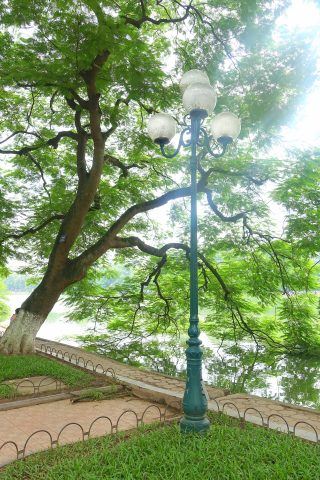
West Lake is Hanoi’s largest and most iconic body of water, a vast expanse that stretches across the city’s northwest like a natural mirror. Locals know it as Hồ Tây, a name that simply means "western lake," and it’s easy to see why—its position on the edge of the urban sprawl gives it a sense of openness, a quiet counterpoint to the bustle of the streets beyond. The lake has a way of drawing people in at all hours. In the early morning, joggers trace its shoreline, their footsteps muffled by the damp air. By midday, families spread out picnic blankets under the shade of trees, while others linger on benches, watching the light dance across the water. Even as the sun sets, the lake remains alive with activity, its edges glowing under the warm light of streetlamps.
The lake is encircled by a seventeen-kilometer promenade, a favorite spot for both locals and visitors. The path winds past cafés, food stalls, and small shops, their aromas mingling with the scent of lotus flowers in the summer. When the weather is warm, the water’s surface is dotted with the broad, pink blooms of lotuses, their petals unfolding in the morning light. In the cooler months, the lake takes on a different character—its waters turn steely gray, and the crowds thin out, leaving behind a quieter, almost meditative atmosphere. The promenade itself is a study in contrasts, where the old and new Hanoi collide. On one side, the low-slung rooftops of traditional houses peek out from behind trees, while on the other, glass-fronted hotels and office buildings rise into the sky.
The lake’s origins are shrouded in legend and history. One story claims it formed when a village was swallowed by the earth after its residents refused to help a poor fisherman—who was, in fact, a divine being in disguise. A more plausible explanation ties its creation to the shifting course of the Red River, which once flowed through this area. Whatever its beginnings, West Lake has long been a cornerstone of Hanoi’s identity. During the Lý Dynasty, it was a retreat for emperors, a place where they could escape the confines of the imperial palace. Over time, it became a center of religious and cultural life, its shores dotted with temples and pagodas that still stand today.
Among the most significant of these is Tran Quoc Pagoda, the oldest Buddhist temple in Hanoi, dating back to the sixth century. Though it has been rebuilt and restored over the centuries, the pagoda retains a sense of timelessness. It sits on a small island connected to the shore by a narrow causeway, its curved roofs rising above the trees. Inside, the air is thick with the scent of incense, and the walls are lined with ancient statues of the Buddha, their serene expressions worn smooth by time. The temple grounds are a peaceful retreat, where visitors can wander among the greenery or watch locals practicing tai chi in the early morning light.
Not far from Tran Quoc is Quan Thanh Temple, dedicated to Xuan Wu, the Taoist god of the north. Built in the eleventh century, the temple has been meticulously preserved, its dark wooden beams and intricate carvings offering a glimpse into Vietnam’s spiritual past. The centerpiece is a massive bronze statue of the deity, cast in the sixteenth century, its imposing presence a reminder of the temple’s enduring significance. On festival days, the temple comes alive with the sound of chanting and the scent of offerings, as devotees gather to pay their respects. Even on ordinary days, there’s a sense of reverence here, a quiet hum of devotion that lingers in the air.
Beyond its historical and religious sites, West Lake is a vital part of Hanoi’s daily life. The promenade is lined with cafés and restaurants, their menus filled with local specialties—grilled seafood, fragrant noodle soups, and fresh spring rolls. In the evenings, many of these places transform into laid-back bars, where patrons sip coffee or beer as the lights of the city reflect off the water. The lake is also a hub for festivals and events. During the Mid-Autumn Festival, paper lanterns float across the surface, their soft glow mirrored in the dark water. In the summer, dragon boat races draw crowds to the shore, while winter brings flower exhibitions and open-air concerts. Artists often set up easels along the promenade, capturing the lake’s shifting moods in watercolors and oils.
What makes West Lake special is the way it bridges Hanoi’s past and present. On one side, the old quarter’s narrow streets and centuries-old temples offer a glimpse into the city’s history. On the other, modern high-rises and luxury hotels stand as symbols of its rapid growth. The lake itself is a constant, a natural anchor in a city that is always changing. It’s a place where tradition and modernity coexist, where the rhythms of daily life unfold against a backdrop of timeless beauty. Whether you’re watching the sunrise from a quiet corner of the promenade or joining the crowds for an evening stroll, West Lake offers a sense of connection—to the city, to its people, and to the stories that have shaped it over centuries. It’s not just a landmark; it’s a living part of Hanoi, as dynamic and enduring as the water that fills its shores.