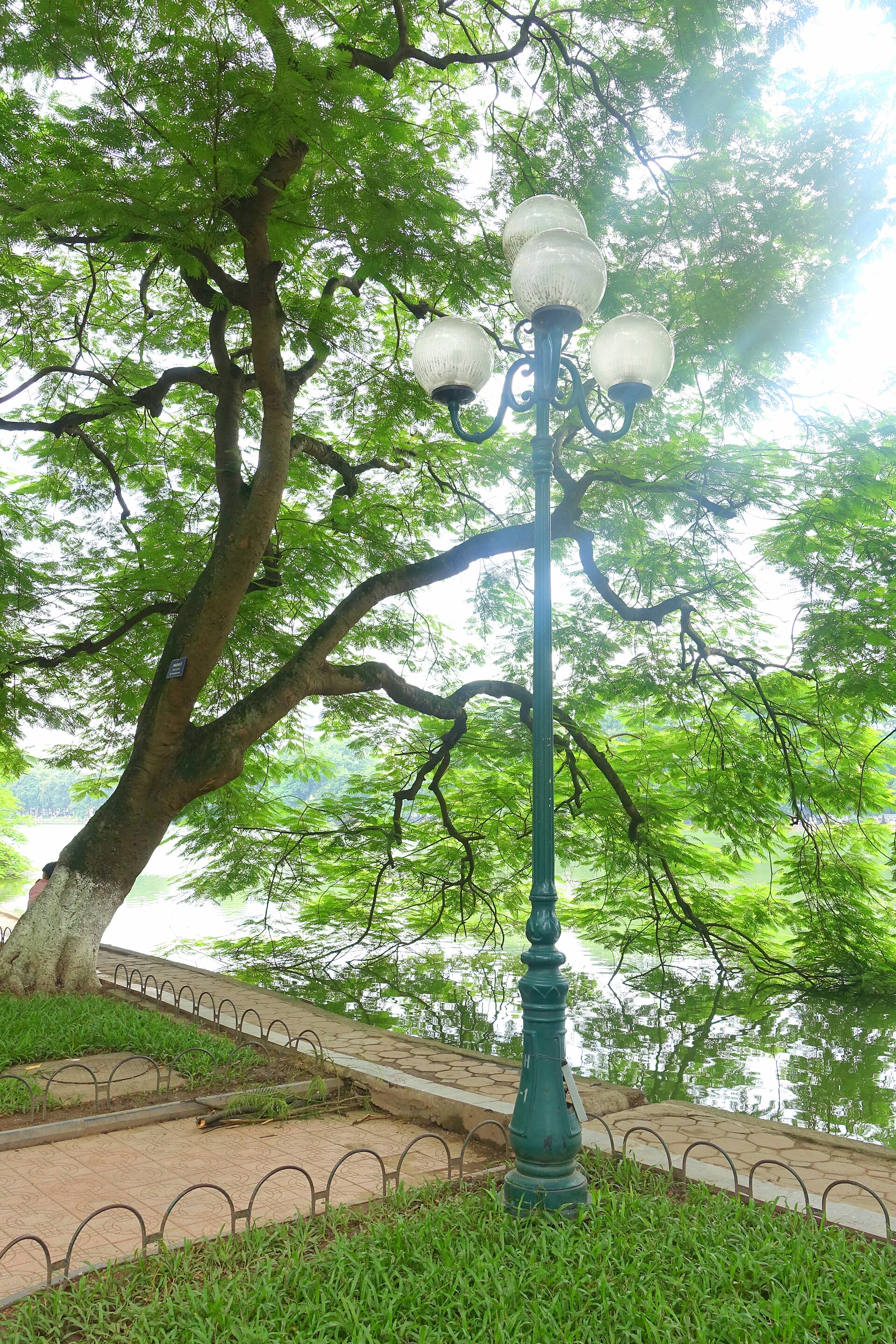
Hoan Kiem Lake sits quietly at the heart of Hanoi, a place where the city’s past and present flow together as naturally as the water in its shallow basin. The name translates to Lake of the Returned Sword, a nod to a legend that still lingers in the air. According to the tale, Emperor Lê Lợi was given a magical sword by a golden turtle, which he used to drive out Chinese invaders in the 15th century. When peace returned, the turtle reappeared to reclaim the blade, leaving the lake as a silent witness to the story. Whether you believe it or not, the legend gives the place a sense of timelessness, as if the water itself holds secrets from centuries ago.
At the center of the lake stands Turtle Tower, a small stone structure that seems to float just above the surface. It’s not grand or imposing, but its presence is striking—especially at dawn, when mist clings to the water, or at dusk, when the last light catches its weathered edges. The tower was built in the 19th century, though its exact origins are a little hazy, much like the stories that swirl around it. Nearby, the red-painted Huc Bridge arches gracefully toward Jade Island, where Ngoc Son Temple waits. The bridge’s name means Bridge of the Rising Sun, and on clear mornings, the sunlight does seem to spill across it like liquid gold. The temple itself is modest, with dark wooden beams and altars draped in red cloth, but it’s the preserved remains of a giant softshell turtle that draw quiet crowds. The creature, which lived in the lake until 2016, was one of the last of its kind, and its taxidermied body now rests under glass, a reminder of how deeply nature and myth are woven into Hanoi’s identity.
The lake is encircled by a narrow path, just over a mile long, where the rhythm of daily life plays out in small, unscripted moments. In the early hours, before the city fully wakes, groups of older Hanoians gather for tai chi, their slow, deliberate movements mirrored in the still water. By mid-morning, the path fills with joggers, students on motorbikes, and vendors selling steaming bowls of pho from portable stalls. In the evenings, families stroll along the shore, children darting ahead while parents pause to watch the lights flicker on around the lake. On weekends, the streets surrounding Hoan Kiem close to traffic, and the area transforms into a pedestrian playground. There’s no grand performance here—just locals playing traditional games, teenagers practicing dance routines, and musicians setting up on corners to play folk songs. It’s not a show for tourists; it’s simply how Hanoians live, and for a few hours, the lake becomes the center of their world.
The neighborhoods around the lake tell their own stories. To the north lies the Old Quarter, a maze of narrow streets where each lane was once dedicated to a single trade—silk sellers, paper makers, blacksmiths. The names of the streets still hint at this history: Hang Gai (Silk Street), Hang Bac (Silver Street), and so on. The buildings are tall and narrow, their facades faded by time, and the air is thick with the scent of grilled corn, fresh herbs, and motorbike exhaust. To the south, the French colonial influence is unmistakable. Wide boulevards lined with tamarind trees lead to the Hanoi Opera House, its pale yellow facade a stark contrast to the Old Quarter’s clutter. Here, the pace feels slower, the architecture more deliberate, as if the city is taking a breath between its frenetic past and its bustling present.
Getting around Hoan Kiem Lake—or anywhere in Hanoi, really—requires a certain kind of patience. The traffic moves in a constant, swirling flow, a river of motorbikes that parts only slightly for pedestrians. Crossing the street isn’t about waiting for a break; it’s about stepping forward with confidence, moving at a steady pace so the bikes can weave around you. It’s unnerving at first, but after a few attempts, it starts to feel almost meditative, a small act of trust between strangers. The lake itself is a good place to practice—its circular path offers plenty of opportunities to test your nerve without venturing too far into the chaos.
As the sun sets, the lake takes on a different character. The water darkens, and the lights along the shore glow softly, reflecting in ripples that spread like liquid gold. Vendors set up small carts selling coconut ice cream, its sweetness cutting through the evening humidity, or ca phe trung, the famous Hanoi egg coffee. The drink is rich and frothy, with a layer of whipped egg yolk floating on top of strong, dark coffee. It’s an acquired taste, but one worth trying at least once, especially while sitting on a low plastic stool by the water, watching the city wind down. The temple on Jade Island stays open late, its gates illuminated, and the sound of distant music or laughter drifts across the lake, mingling with the hum of motorbikes and the occasional call of a street vendor.
Hoan Kiem Lake isn’t just a landmark; it’s a living part of Hanoi. It’s where history and myth blur, where the past is never quite forgotten, and where the present unfolds in small, everyday moments. You could spend an hour walking its perimeter or a whole afternoon watching life pass by from a bench. There’s no grand spectacle here, no must-see attraction that demands your attention. Instead, it’s a place that invites you to slow down, to notice the details—the way the light hits the water at dawn, the laughter of children playing by the shore, the quiet determination of an old man practicing tai chi. It’s a reminder that sometimes the most meaningful places aren’t the ones that shout the loudest, but the ones that let you listen.