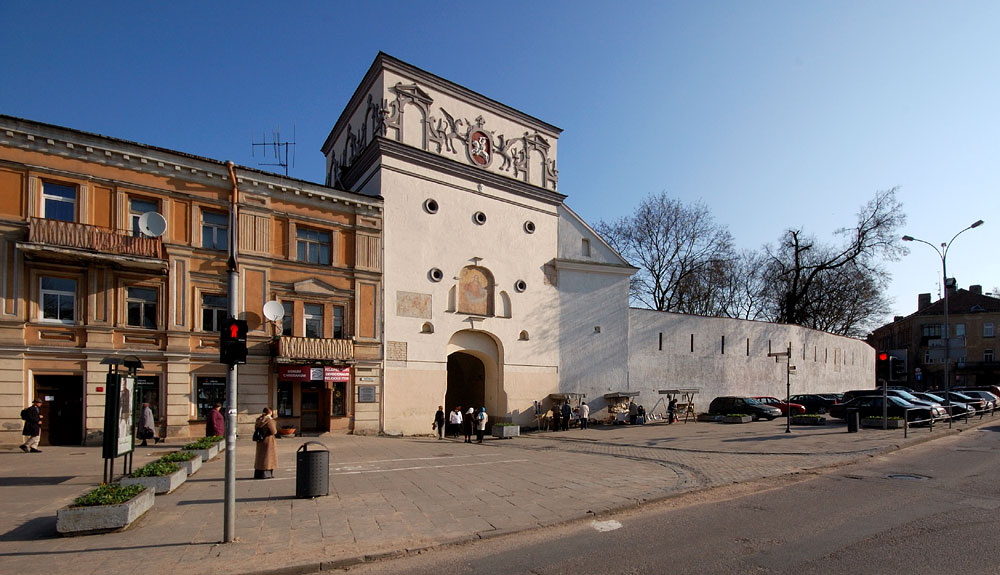
The Gate of Dawn is one of those rare places in Vilnius where history isn’t just remembered—it lingers in the very stones beneath your feet. Built in the early 16th century as part of the city’s defensive walls, these gates were once one of nine entry points into the medieval town. Over time, most of the fortifications were dismantled or absorbed into the growing city, but the Gate of Dawn endured, becoming far more than just a relic of military architecture. Its name, derived from the sharp angle at which it once connected to the city walls, hints at its original purpose, though today it stands as a symbol of something deeper—faith, resilience, and the quiet persistence of the past.
The structure itself is unassuming, designed with the practicality of a fortress in mind. Thick stone walls, a narrow arched passage, and the absence of ornate details reflect its military origins. Yet what makes the Gate of Dawn remarkable isn’t its defensive function, but what came after. In the 17th century, a small chapel was added above the arch, housing an icon of the Virgin Mary that would transform the site into one of the most revered pilgrimage destinations in Lithuania. The image, painted on oak wood, is believed to be miraculous, and its presence here has drawn worshippers for centuries. Some say the icon appeared mysteriously, others claim it was a gift from a Byzantine emperor—stories vary, but the devotion it inspires does not.
The icon’s reputation grew over the centuries, particularly during times of crisis. Legends tell of the Virgin Mary protecting the city from fires, invasions, and epidemics, her gaze seemingly watching over Vilnius through the gate’s narrow windows. Even when the chapel was closed during the Soviet era, people continued to gather in quiet defiance, lighting candles and leaving prayers at the foot of the gates. Today, the chapel remains an active place of worship, its interior modest yet striking, with the icon framed in silver and gold, its dark, expressive face a focal point for both the faithful and curious visitors.
The Gate of Dawn has witnessed nearly every chapter of Vilnius’s history. It stood through wars and occupations, survived fires that ravaged the city, and adapted to the changing tides of power. In the 19th century, when Vilnius was part of the Russian Empire, the space above the gate briefly served as an archive. Later, it became a museum, though the icon never left its place. The Soviet authorities, wary of religious symbols, shut down the chapel, but the gates themselves remained a gathering point, a silent testament to the city’s unbroken spirit. Now, restored and open, the Gate of Dawn bridges the gap between past and present, its walls holding stories that no plaque could ever fully capture.
Walking toward the gates along Aušros Vartų Street feels like stepping back in time. The cobblestones, the low-slung buildings with their pastel facades, and the occasional scent of fresh bread from a nearby bakery all contribute to the sense of being in a place where history hasn’t been polished for tourists, but simply endures. The street narrows as you approach, the gate looming ahead, its stonework darkened by centuries of rain and wind. Even on a gray day, when the light is soft and the air damp, the place has a quiet magnetism. It’s easy to imagine processions of monks, merchants haggling over goods, or weary travelers entering the city for the first time, all passing beneath the same arch.
What makes the Gate of Dawn special isn’t just its age or its religious significance, but the way it has woven itself into the fabric of daily life. For locals, it’s a place of routine and reflection—a spot to light a candle before work, to pause for a moment of silence, or to meet a friend under the watchful gaze of the icon. For visitors, it offers a glimpse into the layers of history that make Vilnius unique. The gates have seen the rise and fall of empires, the shifting borders of nations, and the quiet, unshakable faith of generations. Yet they remain unchanged in the most essential way, a constant in a city that has reinvented itself time and again.
There’s something deeply human about the Gate of Dawn. It doesn’t demand attention with grand architecture or dramatic stories, though it has both. Instead, it invites you to slow down, to look closely at the worn steps, the faint inscriptions on the walls, the way the light filters through the chapel’s small windows. Early mornings are the best time to visit, when the city is still waking up and the gates stand in peaceful solitude. The icon’s gold leaf catches the first rays of sunlight, and for a moment, it’s possible to forget the modern world just beyond the street. In the evening, when the lamps flicker to life and shadows stretch across the cobblestones, the gates take on a different character, as if the past is momentarily closer to the surface.
The Gate of Dawn isn’t a place that needs embellishment. It has stood for centuries as a silent witness to history, a threshold between the city and the world beyond, between the sacred and the everyday. Whether you come for the icon, the architecture, or simply the chance to stand where countless others have stood before, it offers something rare—a sense of continuity, of time moving forward without erasing what came before. In a world that often feels transient, the gates remind you that some things endure. And perhaps that’s the most powerful experience of all.