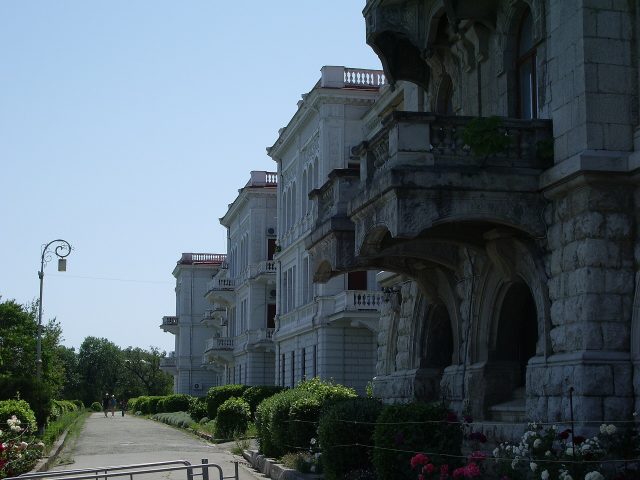
The Livadia Palace is often remembered for its grand halls and historic significance, but tucked within its walls is a place that feels like a quiet secret—one where music and history intertwine. The Organ Hall, once the palace’s private church, now fills the air with sounds that seem to linger in the high ceilings and aged stone. It’s an unexpected discovery in a place better known for its imperial past, a space where the echoes of the past meet the precision of modern artistry.
The hall itself began its life in the late 19th century as the Church of St. Alexander Nevsky, designed by architect Nikolai Krasnov. Built in the Byzantine style, it was small but elegant, adorned with mosaics and frescoes that reflected the tastes of the time. After the revolution, the church was repurposed—first as a club where films were screened and dances held, then later as a concert venue. The transformation wasn’t just about changing its function; it was about preserving the layers of its history. The high vaulted ceilings, the remnants of religious art, and even the Soviet-era chandeliers were left intact, creating a space that feels both sacred and lived-in.
The organ, installed in the early 2000s, is the heart of the hall. Crafted in Germany, it’s not the largest instrument of its kind, but its sound is perfectly suited to the room’s acoustics. When the first notes fill the space, they don’t just play—they resonate, bouncing off the stone walls in a way that makes the music feel alive. The repertoire is varied, from Bach and Vivaldi to contemporary compositions written specifically for the organ. Sometimes, the performances expand to include strings or vocals, turning the hall into a stage for intimate, almost private concerts.
What makes this place special isn’t just the music, but the way it interacts with the architecture. The faded frescoes, the narrow stained-glass windows, the worn details of the mosaics—all of it tells a story. The hall doesn’t try to hide its age; instead, it embraces it. The Soviet-era light fixtures, once used for dance nights, now cast a warm glow over the audience, blending the old with the new. Even the way the space is arranged—small, with just enough seats for a few dozen people—creates an atmosphere of closeness. There’s no grand stage, no distant rows of spectators. Here, the music feels personal, as if it’s being played just for you.
Livadia Palace itself adds another layer to the experience. Built as a summer retreat for Tsar Nicholas II, it witnessed moments that shaped history—the Yalta Conference, where the post-war world was decided, as well as quieter, more personal gatherings. Today, the palace is a museum, and the Organ Hall has become a bridge between its past and present. Walking through its rooms, you can almost hear the whispers of the past: the murmurs of prayers, the laughter of dancers, the solemnity of diplomatic talks. The organ’s music doesn’t just fill the space; it seems to converse with it.
Visiting the hall isn’t just about attending a concert—it’s about stepping into a place where time moves differently. The performances are often accompanied by short talks about the building’s history, turning a musical evening into something more. There’s no dry recitation of facts; instead, it’s a conversation, a way to understand why this particular room, with its layers of history, makes the music feel so alive. The hall isn’t open year-round, though. Most concerts take place during the classical music festival season, when the palace comes alive with visitors. Outside of that, performances are rare, and tickets sell out quickly. Even if you don’t catch a concert, the building itself is worth seeing—if only to imagine the sounds that have filled it over the decades.
There’s something almost magical about the way the organ’s music interacts with the space. It doesn’t just play in the hall; it seems to breathe life into the walls, as if the building itself is responding. Whether it’s the deep, resonant notes of a Bach fugue or the lighter tones of a modern piece, the sound feels like it belongs here. It’s a reminder that some places aren’t just about what you see—they’re about what you feel. And in Livadia, the Organ Hall is one of those rare spots where history and music come together in a way that lingers long after the last note fades.