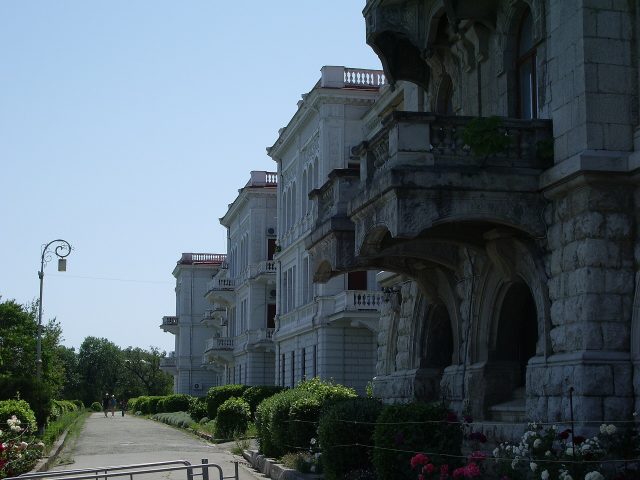
The Imperial Path in Livadia isn’t just a hiking trail—it’s a quiet witness to history, winding through the same Crimean forests where Russia’s last tsar once walked. This stretch of coastline has always been a place of retreat, where the mild Mediterranean climate and sweeping sea views made it an obvious choice for summer escapes. Nicholas II and his family spent their summers here, and the path that now bears their name was once part of their daily routine, connecting the Livadia Palace to the neighboring estate in Oreanda.
The trail itself is about seven kilometers long, a gentle journey that takes a couple of hours if you walk without rushing. It meanders through pine forests and rocky outcrops, dipping toward the sea before climbing again over low hills. Along the way, the trees occasionally part to reveal the Bay of Yalta, where the water shimmers in shades of blue on clear days. The path is well-trodden but never feels crowded, even in peak season. In places, you’ll find old stone steps, worn smooth by time, and the remnants of small pavilions where the imperial family once paused to rest. These details are easy to miss, but they’re the kind of quiet reminders that make the walk feel like stepping into another era.
The path hasn’t always looked the way it does now. In the late 19th century, it was little more than a narrow horse trail, used by riders and carriages moving between estates. When Livadia became the official summer residence of the tsar, the route was widened and improved for foot traffic. Safety was a priority—railings were added in steep sections, and the edges were reinforced where the terrain was uneven. Today, those features blend into the landscape, but they’re a subtle hint at how carefully this place was once maintained.
Walking the Imperial Path is as much about the atmosphere as it is about the scenery. The forest is quiet, broken only by the rustle of pine needles in the wind and the distant cry of gulls over the water. There’s a sense of stillness here, as if the years have settled into the land. When you reach Oreanda, the ruins of Alexander III’s palace stand as a reminder of what once was. The building was destroyed during World War II, but even in its current state, it’s not hard to imagine the grandeur it once held.
The best times to visit are spring and autumn. In May, the air is thick with the scent of blooming wildflowers, and in October, the trees turn shades of gold and crimson. Summer brings more visitors, but the path never feels overrun. Winter, on the other hand, is almost deserted—just you, the sea, and the quiet rhythm of the waves against the shore.
This isn’t just a trail for tourists. It’s a place where history and nature overlap, where the past feels close enough to touch. The Crimea has always been more than a resort—it’s been a backdrop to power, leisure, and change. Walking here, you’re following the same route as emperors and courtiers, but without the pomp. There’s no fanfare, no crowds, just the steady presence of the forest and the sea, and the faint echo of footsteps that came before.