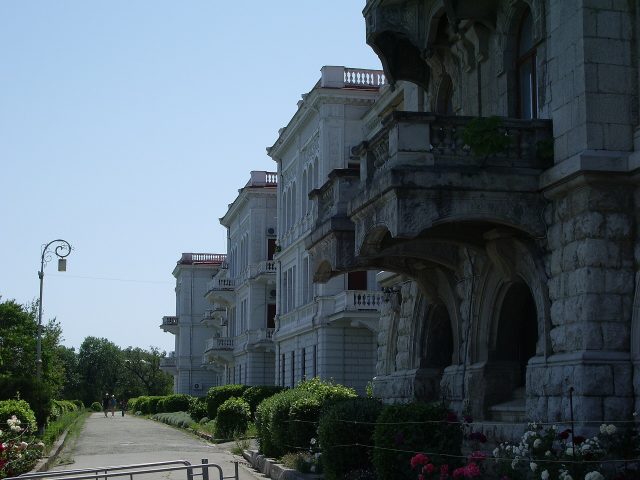
Livadia Park is one of those rare places where nature and history intertwine so seamlessly that time seems to move differently here. Stretching across the southern coast of Crimea, just steps away from the palace that once served as the summer retreat of Russian emperors, the park covers dozens of hectares. Unlike formal gardens with their rigid symmetry, Livadia feels more organic, as if the trees and shrubs grew where they pleased. Yet this apparent wildness was carefully cultivated. The park was never meant to be just a place for leisurely strolls—it was designed as a living museum of rare plants gathered from across the globe.
The park’s origins trace back to the mid-19th century, when these lands belonged to the Polish magnate Potocki. Back then, it was a modest garden laid out in the Italian style. But everything changed when the imperial family acquired the estate. Under Nicholas II, Livadia became an official royal residence, and the park evolved into a space that balanced grandeur with seclusion. Architects and gardeners worked to create an environment that was both visually stunning and a retreat from courtly life. Winding paths, gazebos, and fountains appeared, but the true treasure was the collection of exotic plants, many imported from distant lands.
Today, the park retains much of its original character, though time has left its mark. Ancient cedars, magnolias, and plane trees still tower over the pathways, some of them witnesses to the imperial family’s walks. The most striking feature is the alley of Italian stone pines leading toward the sea—tall trunks with sprawling canopies that evoke the Mediterranean. Younger plantings blend into the landscape without disrupting its harmony. In summer, the air is thick with the scent of pine and blossoms, while autumn brings the rustle of fallen leaves underfoot, a reminder that nature follows its own rhythm, regardless of human intentions.
One of the park’s most charming spots is the Sun Courtyard, a small enclosure surrounded by stone walls and draped in ivy. This was once a private retreat for the imperial family, and today it offers visitors a quiet escape from the heat. Nearby, a fountain trickles softly, its gentle murmur cooling the air even on the hottest days. Not far off stands a gazebo with a view of the sea—a perfect place to linger, especially at sunset.
The park is inseparable from the history of Livadia Palace, and that connection is palpable at every turn. Old stone staircases leading to the shore, fragments of the original fencing—everything here breathes the past. During the Soviet era, the park became part of a sanatorium, and new structures were added, though they didn’t diminish its charm. Some, like the small amphitheater, even enhanced the landscape, giving it a modern touch. Now open to the public, the park’s greatest appeal is its accessibility. There’s no need for guided tours—visitors can wander freely, discovering hidden corners at their own pace.
What makes Livadia Park truly special is its proximity to the sea. The shore is just a few minutes’ walk away, creating the sense that the park is part of a larger natural world where land and water merge. In summer, it’s a popular spot—tourists visit the palace and then retreat to the park’s shaded paths. Even in peak season, though, quiet corners can be found if you venture beyond the main alleys. Winter transforms the park into a different kind of beauty, with bare branches dusted in frost, a reminder that nature here thrives year-round.
Livadia Park isn’t just a green space beside a palace—it’s a place where history and nature exist in perfect balance. There’s no forced opulence, no grand statements, just a quiet beauty that reveals itself slowly. Walking its paths, it’s impossible not to wonder about the people who’ve passed through over the past century and a half, the events that unfolded here, and how perceptions of this land have changed. The park doesn’t shout its stories—it simply exists, allowing each visitor to find their own meaning in it. For some, it’s a place to rest; for others, a piece of living history; and for many, just a beautiful corner of the world where they can be alone with their thoughts.