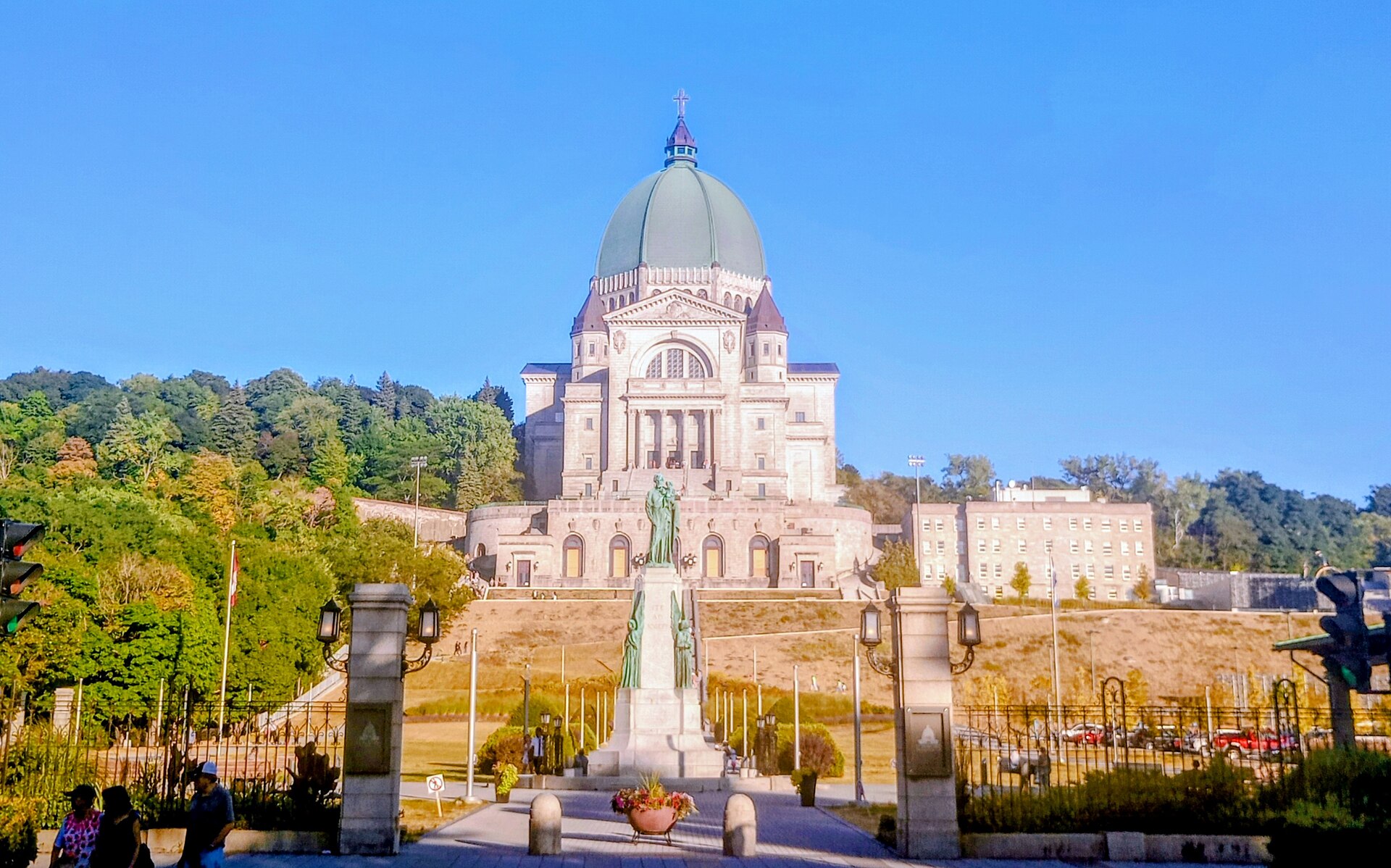
Saint Joseph’s Oratory is one of those rare places in Montreal where the world seems to slow down. Perched on the slopes of Mount Royal, its massive dome rises above the city like a quiet guardian, visible from nearly every neighborhood. Built in the early 20th century, it remains one of the largest churches in the world, drawing not just pilgrims but anyone seeking a moment of stillness or a glimpse into something greater than themselves.
The story of the oratory begins with Brother André Bessette, a humble doorman at the College of the Holy Cross. Known for his deep faith and a quiet gift for healing, he became a figure of comfort for those who sought his help. In 1904, a small chapel dedicated to Saint Joseph, the patron saint of Canada, was built on the hillside. As word spread, more people came, and the modest chapel soon proved too small. What followed was a decades-long construction project that would transform the site into the monumental structure it is today.
The architecture of Saint Joseph’s Oratory is striking in its scale and simplicity. The main dome, one of the largest of its kind, towers nearly 100 meters above the ground, its gray stone facade weathered by time into a soft, muted hue that blends with the surrounding landscape. Inside, the vast nave feels both grand and intimate, with towering arches, stained glass casting colored light across the stone floors, and the deep resonance of the organ filling the space during services. Below the main altar, the crypt offers a quieter place for reflection, its dimly lit chambers a stark contrast to the soaring heights above.
For many, the oratory is more than a place of worship—it’s a sanctuary of hope. People come here seeking healing, solace, or just a break from the noise of everyday life. In the Chapel of Saint André, near the main building, the preserved heart of Brother André is kept as a relic, a focal point for those who leave behind written prayers or light candles in quiet devotion. Even visitors who don’t consider themselves religious often remark on the sense of peace that lingers here, as if the weight of the world lifts for a little while.
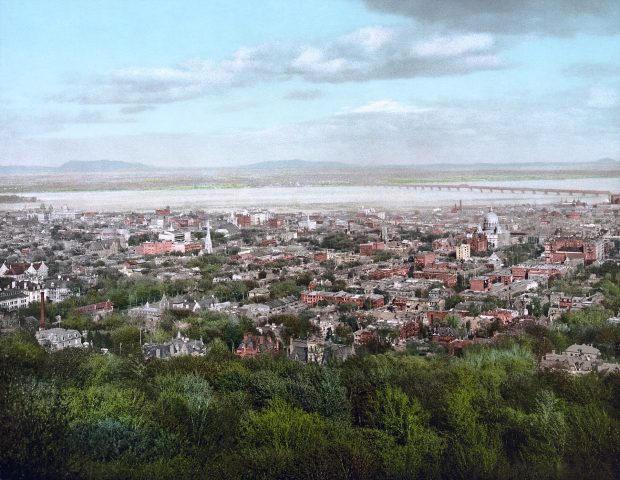
The hill on which the oratory stands is as much a part of its character as the building itself. From the top, the view stretches across Montreal and the Saint Lawrence River, a reminder of how the city has grown around this place of quiet devotion. In warmer months, the gardens around the oratory bloom with flowers, and visitors wander the paths or sit on benches, watching the light shift across the stone walls. Winter transforms the scene entirely—the steps and dome dusted with snow, the crisp air sharpening the outlines of the architecture, turning the oratory into something almost otherworldly.
What makes Saint Joseph’s Oratory different from other landmarks is its lack of pretense. There are no flashy signs, no souvenir stands, no crowds jostling for the best photo. Instead, there’s a sense of timelessness, as if the place exists slightly apart from the city that surrounds it. That might be why people return to it, even after they’ve seen everything else Montreal has to offer. It’s not just a stop on a tour; it’s a pause, a moment to step out of the rush and into something slower, deeper.
Services are held regularly, and anyone is welcome to attend, whether to join in prayer or simply to sit and listen. The most moving moments come during major feast days, when the organ swells and the choir fills the space with music, but even on ordinary days, the oratory has a way of making the sacred feel present. The air hums with quiet energy, the kind that makes you look up from your thoughts and notice the details—the way the light filters through the stained glass, the echo of footsteps on the stone, the faint scent of incense lingering in the air.
Over the years, Saint Joseph’s Oratory has become more than just a church; it’s a part of Montreal’s identity. It stands as a testament to how faith and culture can coexist in a modern city, evolving without losing their essence. There are no rigid rules here, no expectations—just an open door and a space where each person can find what they need. Some come for spiritual comfort, others for inspiration, and some simply to feel the weight of history in the stones beneath their feet. In the end, that might be the most remarkable thing about it: the way it manages to be both a monument and a living, breathing place, one that changes with the city even as it remains unchanged.