Montreal’s Olympic Stadium is one of those places that lingers in the memory long after you’ve seen it—not because it turned out exactly as planned, but because its story is far more complicated than anyone intended. Built for the 1976 Summer Olympics, it was meant to be Quebec’s grand statement to the world, a symbol of ambition and modernity. Architect Roger Taillibert’s design was bold, even audacious: a vast, oval stadium crowned by a towering inclined structure, its shape resembling a giant question mark looming over the city’s east end. The tower, the tallest inclined structure in the world, was supposed to support a retractable roof, but construction delays meant the stadium opened without it. The roof became one of those infamous details that turned the project into a decades-long saga of unfinished business.
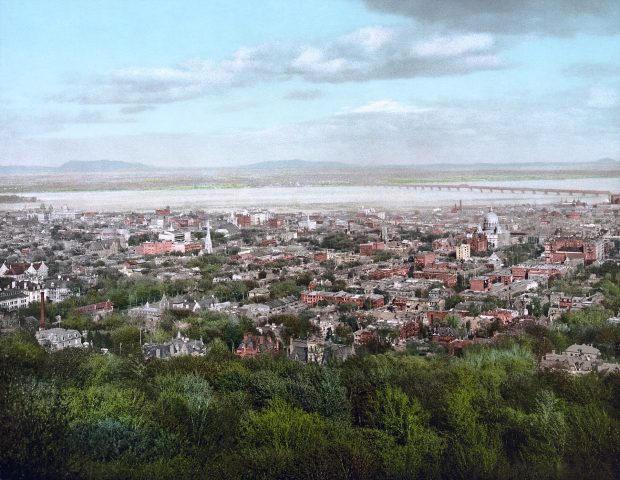
Today, the stadium’s tower is more than just an architectural landmark—it’s a vantage point offering sweeping views of Montreal and the surrounding landscape. You can ride a funicular up its sloping side, the slow ascent giving you a close-up look at the engineering marvel. From the top, the city unfolds below: the stadium nestled among parks and residential neighborhoods, the St. Lawrence River stretching into the distance on clear days. In winter, the view softens under a blanket of snow, the urban sprawl taking on a quieter, almost serene quality. The tower, though it never fulfilled its original purpose, has become a destination in its own right. Its 45-degree tilt makes you wonder how anyone ever thought this was a good idea—and yet, here it stands.
Despite its troubled beginnings, the stadium has hosted its share of significant events. Beyond the Olympics, it became a venue for baseball games, concerts, exhibitions, and even religious gatherings. In 1977, the Montreal Expos, Canada’s first Major League Baseball franchise, played their home games here. In 1984, Pope John Paul II held a mass that drew hundreds of thousands of people to the stadium. Later, musicians like U2 and the Rolling Stones performed on its stage, the vast arena providing a dramatic backdrop for their shows. Over time, though, it became clear that the stadium was too large for most events, and its use gradually declined.
The architecture of the Olympic Stadium tells a story of ambition clashing with reality. Taillibert’s design was inspired by organic forms—the stadium resembling a giant seashell, the tower a plant stem reaching toward the sky. But bringing that vision to life proved far more difficult than expected. Construction dragged on, costs ballooned, and the retractable roof, a key feature, never worked as intended. A temporary roof was installed instead, only to collapse under heavy snow in 1998. The stadium remained roofless for years until a permanent structure was finally added in 1999. These setbacks became part of Montreal’s urban lore, and locals still affectionately—or sarcastically—refer to the stadium as the Big O.
Nowadays, the Olympic Stadium is more than just a sports venue. Inside, the Sports and Olympic Museum traces the history of the Games, displaying medals, torches, and memorabilia from athletes who competed here. Nearby, the Biosphere, an environmental museum, focuses on the ecology of the St. Lawrence River and the Great Lakes. The surrounding Olympic Park is a green space with bike paths, picnic areas, and skating rinks in winter. Festivals take place here in the summer, while in colder months, the park becomes a quiet spot for cross-country skiing or sledding. Despite its size, the area has a relaxed, almost small-town feel.
For Montreal, the Olympic Stadium is more than just a relic of the Games—it’s a reminder of how the city learned to live with its grand ambitions. Its history is a mix of triumphs and setbacks, each phase adding to its identity. The stadium never became the flawless monument its architects envisioned, but that’s part of what makes it compelling. It’s imperfect, yet strangely charming, much like Montreal itself, a city that embraces its quirks rather than hiding them.
Visiting the Olympic Stadium isn’t just about seeing the famous tower or strolling through the park. It’s a chance to reflect on how architecture captures the spirit of its time. The 1970s were an era of futuristic dreams, and Montreal was no exception. But reality has a way of grounding even the boldest visions. The stadium, once meant to symbolize progress, instead became a testament to the challenges of turning grand ideas into reality. Today, it stands as a monument to an age when cities dreamed big but had to learn to live with the results.
If you find yourself in Montreal, the Olympic Stadium is worth a visit, if only for the view from the tower. But it’s better to come not just for the photos, but for the sense of a place that has seen more than most landmarks in the city. There’s none of the polished tourist appeal you’ll find in Old Montreal or the Old Port. Instead, there’s an authenticity here—the stadium doesn’t pretend to be anything other than what it is. It exists with all its scars and victories, and in that, there’s a certain kind of beauty.