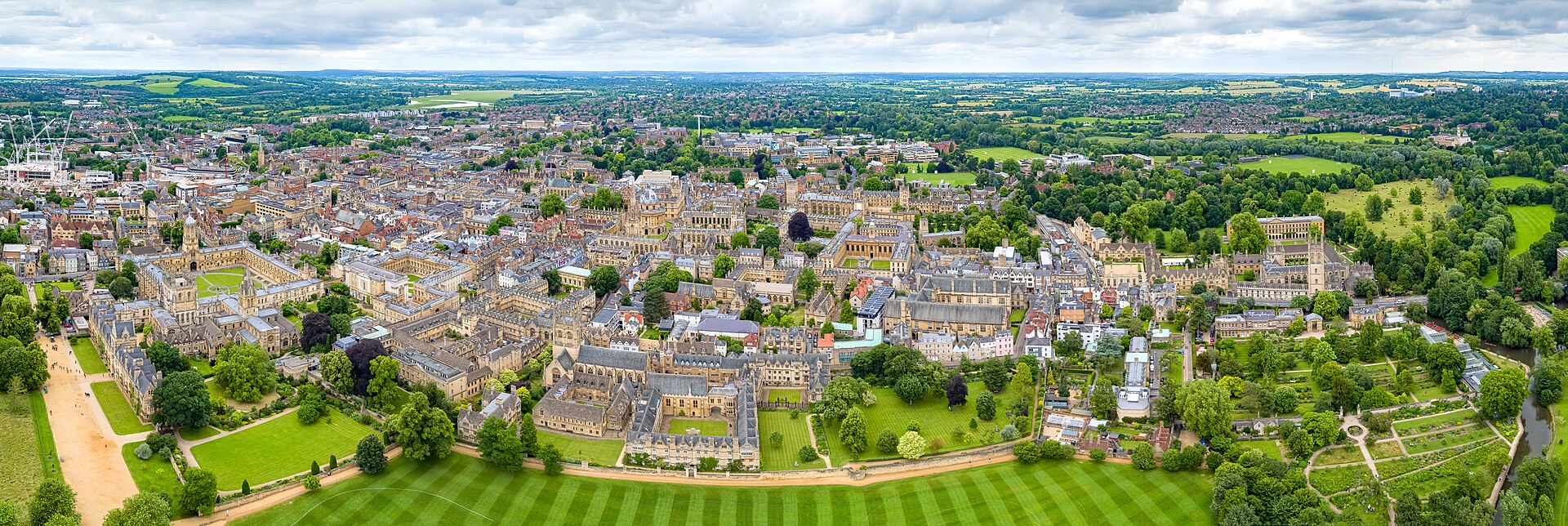
Oxford is more than just a university—it’s a place where the weight of history and the pulse of the present exist side by side, so seamlessly that you might not notice where one ends and the other begins. The city itself, with its winding lanes and medieval spires, feels as though it was built for this purpose, as if the very stones were laid to cradle centuries of thought. Here, the past isn’t something preserved behind glass; it’s alive in the courtyards where students still gather, in the halls where lectures have been held for generations, and in the quiet corners where great minds once walked.
Teaching in Oxford dates back to the late 11th century, but the university as we know it took shape in 1167, when English scholars were forced to leave Paris amid political tensions between England and France. What started as a loose gathering of masters and students soon grew into a center of learning that drew the brightest from across Europe. In those early years, the curriculum was rooted in theology, law, medicine, and the liberal arts, while the first colleges began to rise around ancient quadrangles, their architecture evolving into the distinctive style that defines Oxford today. Over time, these colleges became more than just places of study—they became communities, each with its own character, rituals, and sense of identity.
Today, the university is a collection of 39 colleges and six permanent private halls, each with its own story. Some, like Magdalen or Christ Church, are grand and imposing, their towers and chapels instantly recognizable, their alumni lists filled with names that shaped history. Others, such as St John’s, are quieter, their modest courtyards offering a more intimate glimpse into academic life. Walking through the university grounds feels like stepping into a living museum, where Gothic arches lead to hidden gardens, where libraries hold manuscripts older than nations, and where the air itself seems thick with the weight of ideas. It’s easy to lose track of time here, distracted by the details—the way sunlight filters through stained glass, the sound of footsteps echoing on flagstones, the sight of students bent over books in centuries-old rooms.
The architecture of Oxford is a lesson in itself, spanning nearly a thousand years of design. Romanesque vaults stand alongside Perpendicular Gothic fan vaulting, while Victorian neo-Gothic buildings rub shoulders with sleek modern structures. The Bodleian Library, one of the oldest in Europe, is a treasure trove of knowledge, housing everything from Shakespeare’s First Folio to Newton’s handwritten notes. Nearby, the Sheldonian Theatre, designed by Christopher Wren in the 17th century, still hosts degree ceremonies, its classical lines a reminder of the university’s enduring traditions. Even the newer additions, like the futuristic Mathematical Institute, manage to feel at home in this historic setting, as if the past and future have always been in conversation here.
Yet Oxford isn’t just about its buildings or its books. It’s about the rituals that have endured for centuries—the formal dinners where students and dons wear academic gowns, the debates at the Oxford Union that have launched political careers, the rowing races on the Isis (as the Thames is known here) that pit Oxford against its eternal rival, Cambridge. The university thrives on these traditions, but it’s also a place of constant reinvention. Student societies range from drama groups to scientific clubs, offering spaces to explore passions beyond the classroom. The city itself pulses with this energy, its cafés, pubs, and bookshops filled with the hum of conversation, its streets alive with the comings and goings of scholars and visitors alike.
Oxford has produced an extraordinary number of figures who left their mark on the world. Writers like Oscar Wilde and J.R.R. Tolkien walked these halls, as did politicians such as Margaret Thatcher and Bill Clinton, and scientists like Stephen Hawking and Tim Berners-Lee. The university’s legacy, however, isn’t just in the names it has nurtured but in the intellectual curiosity it fosters. There’s a sense here that ideas matter, that questions are worth asking, and that the pursuit of knowledge is a lifelong endeavor. It’s an atmosphere that lingers, whether you’re standing in the shadow of the Radcliffe Camera or sitting in a quiet college garden, watching the light change over the rooftops.
The line between the university and the city is blurred in Oxford. There’s no clear boundary between campus and town—students spill into the streets, filling cafés and pubs, browsing bookshops and attending concerts, while visitors wander through college courtyards, trying to catch a glimpse of what makes this place so special. In the summer, the city is busier than ever, with tourists, festivals, and open lectures drawing crowds from around the world. Yet even at its most crowded, Oxford retains its academic calm, a reminder that this is still a working university, not just a relic of the past.
To visit Oxford is to step into a story that has been unfolding for centuries. You could spend hours wandering the colleges, tracing the lines of vaulted ceilings or admiring the intricate carvings on chapel screens. The city’s museums offer another layer of discovery, from the Ashmolean’s ancient artifacts to the Pitt Rivers’ eclectic collections. But sometimes, the best way to experience Oxford is simply to slow down—to sit by the Cherwell with a coffee, watching punts glide past, or to linger in a college garden, listening to the distant chime of a clock tower. Here, time moves differently, as if the weight of history has gently slowed its pace, inviting you to pause and take it all in.
What makes Oxford enduring isn’t just its age or its beauty, but the way it makes you feel part of something larger. It’s a place where the past is always present, where every stone has a story, and where the pursuit of knowledge feels as vital today as it did eight hundred years ago. Whether you’re a student, a scholar, or just a visitor passing through, Oxford leaves an impression that lingers long after you’ve left its streets.