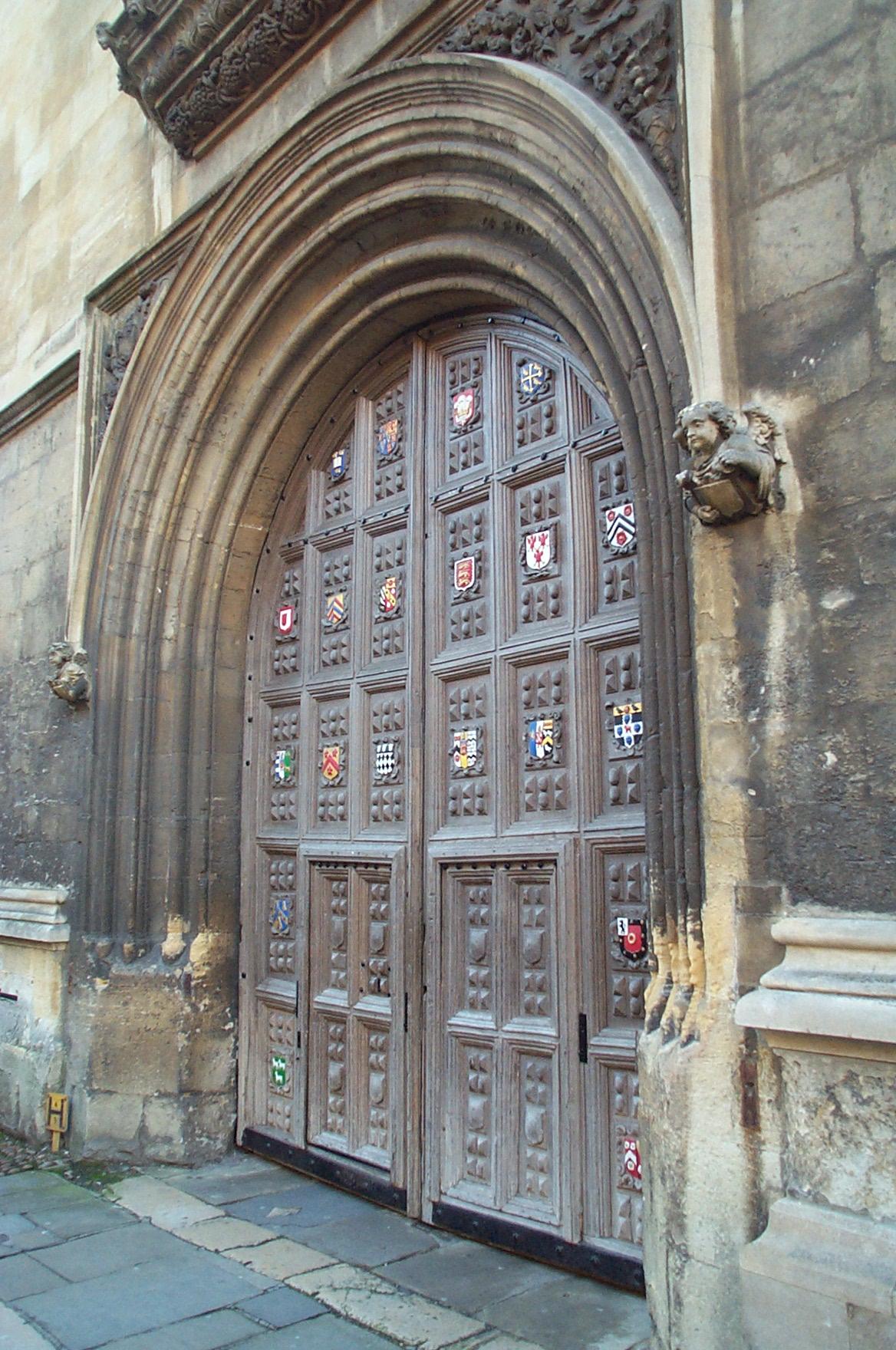
The Bodleian Library isn’t just a place where books are kept—it’s where history breathes. Founded in 1602 from an older collection, it grew into the second-largest library in Britain, but for Oxford, it’s something far more essential. Behind its walls, generations of scholars, writers, and thinkers have shaped ideas that changed the world. Stepping inside, you sense it immediately: you’re part of something much larger than yourself.
The architecture tells its own story, layer by layer. The oldest part, Duke Humfrey’s Library, dates back to the 15th century, named after the Duke of Gloucester who donated manuscripts to the university. Its ceiling is adorned with the coats of arms of early benefactors, while the wooden panels carry the scent of aged paper and wax. Over time, other buildings were added—the domed Divinity School in the 17th century, the iconic Radcliffe Camera in the 18th—each one a reflection of its era, not just in design but in purpose.
Today, the Bodleian remains a working library, alive with the quiet hum of study. Students and researchers sit among millions of volumes, though the shelves themselves are off-limits; books are fetched on request. The silence isn’t empty—it’s filled with the rustle of pages, the scratch of pens, the occasional murmur of conversation. Knowledge here isn’t stored away; it’s actively used, debated, and built upon.
Among its treasures are first editions of Shakespeare, manuscripts by John Donne, letters from Oscar Wilde, sketches by Leonardo da Vinci, and ancient Egyptian papyri. But what truly sets the Bodleian apart is its system. It was one of the first libraries to collect a copy of every book published in England, a tradition that continues today. With over 13 million items, its collections are a living record of the written word, spanning centuries and subjects.
Yet the library is more than just a repository. Students come here not only to study but to think, to write, to imagine what comes next. The line between past and present blurs—anyone can engage with the ideas that took shape within these walls. Visitors often feel it too, that intangible presence of thought lingering in the air.
The man behind the library, Thomas Bodley, was a diplomat and scholar who, after years of service, decided to revive Oxford’s university library. He didn’t just gather books; he established principles that still guide it today: openness to researchers, careful preservation, and a commitment to growth. Those ideals endure, shaping how the library functions now.
What makes the Bodleian so compelling is its atmosphere. The creaking wooden staircases, the worn floorboards, the scent of old paper and leather—it all feels like stepping into another time. There’s no rush here, no need to fill the silence. Words are respected, ideas are given room to breathe. That’s why, after all these years, the library remains at the heart of Oxford. It’s not just a place where knowledge is kept; it’s where knowledge lives.