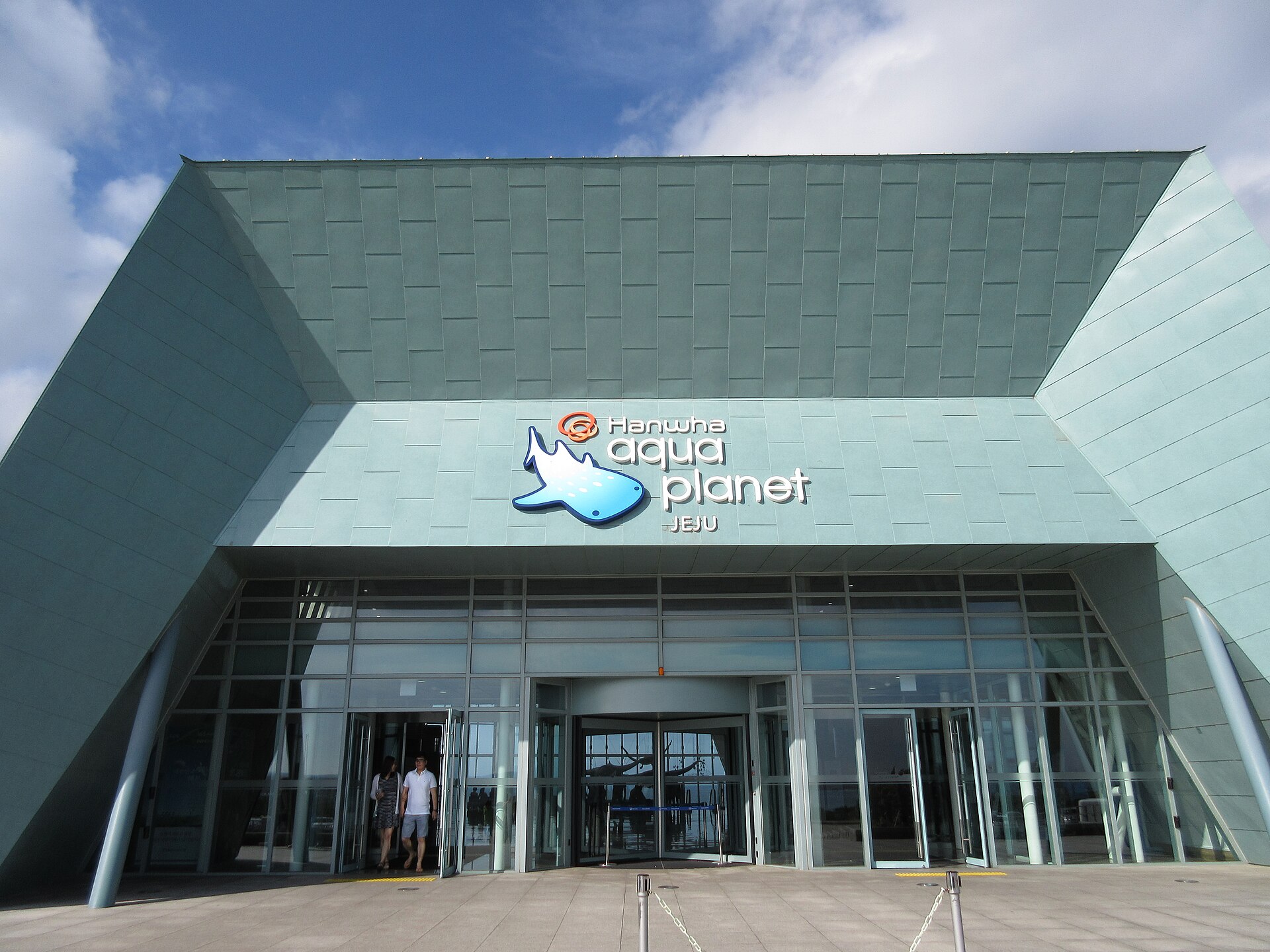
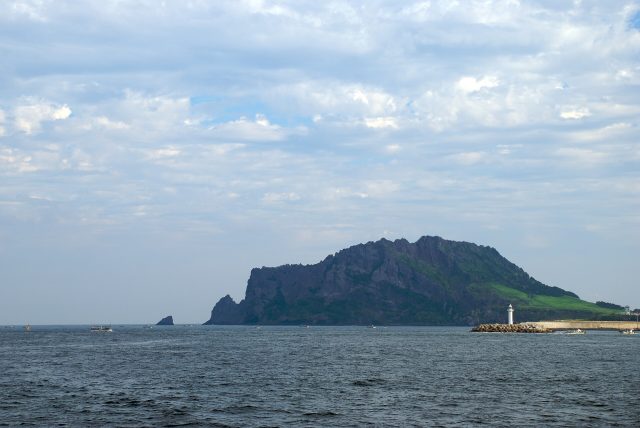
Jeju Island has always been a place where the land and sea exist in quiet conversation, its volcanic shores and endless blue horizons shaping both the landscape and the lives of those who call it home. Aqua Planet Jeju, tucked away in Seogwipo, feels like a natural extension of this dialogue—less a building and more a threshold into another world. From the outside, its architecture mimics the restless energy of the ocean, the curved lines of the facade echoing the swell of waves against the coast. There’s no grand entrance or imposing structure; instead, the building seems to rise from the earth itself, as if the island has simply decided to reveal one of its secrets.
Stepping inside, the first thing you notice is the absence of barriers. The main exhibit isn’t a series of tanks but a vast underwater tunnel where the ocean presses in from all sides. The glass arches overhead, and suddenly you’re standing in the middle of a slow, swirling current, with sharks gliding just above and schools of fish darting past like flecks of light. It’s disorienting at first—the way the water distorts sound, the way shadows move across the floor as if you’re submerged. Other exhibits branch off from this central space, each one a different layer of the sea: shallow coral gardens where clownfish weave between anemones, dimly lit caves where moray eels lurk in crevices, and open pools where seals lounge on rocks, their eyes half-closed in the afternoon warmth. The feeding sessions are particularly mesmerizing, not just for the spectacle of divers descending with buckets of fish, but for the way the predators circle, their movements precise and unhurried, as if they’re performing a ritual older than the island itself.
Jeju’s relationship with the sea has always been practical—fishing, trade, survival—but Aqua Planet reframes that connection as something more intimate. The idea for the aquarium didn’t come from a desire to build a tourist attraction, but from a recognition that the island’s identity was incomplete without a way to share its underwater world. Before its opening, visitors could only glimpse the ocean from boats or the shore; diving was an option, but one reserved for the adventurous. The aquarium was designed to bridge that gap, to let people see what lies beneath without getting wet. The exhibits focus on species native to the waters around Jeju—the Japanese sea bass, the spotted eagle rays, the delicate seahorses that cling to coral—creatures that have always been there, just out of sight. Even the layout follows the logic of the sea, starting with the sunlit shallows and descending into the deeper, quieter zones where light barely reaches.
The building itself is a study in how architecture can honor its surroundings without disappearing entirely. The exterior’s undulating forms mirror the jagged coastline, while the glass panels catch the shifting colors of the sky, making the structure seem to dissolve at certain angles. Inside, the design plays with perception: ceilings slope downward as you move deeper into the exhibits, and the lighting shifts from bright and airy to muted and blue, as if you’re sinking into the ocean’s depths. There are no sharp corners or sterile corridors; instead, the space flows like water, with each turn revealing something new. The effect is immersive without being overwhelming, a careful balance between spectacle and serenity.
What makes Aqua Planet different from other aquariums is its refusal to treat the ocean as a mere backdrop for entertainment. The information panels scattered throughout the exhibits don’t read like textbooks; they’re more like stories, small glimpses into the lives of the creatures on display. You might learn that the zebra sharks here are part of a breeding program, or that the coral in one tank was rescued from a dying reef. For children, there are touch pools where they can handle starfish and sea cucumbers, but the real draw is the way the aquarium encourages quiet observation. Adults often linger longer than they intend, watching the slow ballet of a stingray or the way a school of fish moves as one, as if guided by an unseen current. There’s no rush, no pressure to move on to the next exhibit—just the steady rhythm of water and the occasional murmur of visitors.
Beyond its role as a window into the ocean, Aqua Planet is also a place of conservation. The aquarium runs programs to rehabilitate injured marine life, from sea turtles struck by boats to fish entangled in discarded nets. Some of the animals on display are permanent residents, unable to survive in the wild, while others are nursed back to health and released. The staff also work on breeding endangered species, hoping to bolster populations that are dwindling due to overfishing and habitat loss. For visitors, there are talks on how small changes—reducing plastic use, supporting sustainable seafood—can make a difference. It’s not preachy, just a quiet reminder that the ocean isn’t an infinite resource, but a fragile ecosystem that sustains life far beyond its shores.
The atmosphere inside Aqua Planet is one of deliberate slowness, a counterpoint to the hurried pace of modern travel. Even on busy days, there’s a sense of space, of room to breathe. Visitors drift from one exhibit to the next, pausing to watch a jellyfish pulse in the dark or a pufferfish inflate itself like a tiny, spiky balloon. The sound of water is constant, a soft white noise that blurs the edges of the outside world. In the evening, when the interior lights glow against the glass, the building takes on an almost ethereal quality, as if it’s not just reflecting the ocean but becoming part of it. For those who come to Jeju seeking solitude, it’s an unexpected sanctuary—a place where time seems to move at the pace of the tides.
Seogwipo, where the aquarium is located, is a city of contrasts. Modern hotels and cafes line the waterfront, but just a short walk away, you’ll find old fishing villages where life hasn’t changed much in decades. The markets still sell the day’s catch—octopus, mackerel, seaweed—while the harbor is dotted with boats that have seen generations of use. Aqua Planet fits into this landscape not as a disruption, but as a natural evolution. It’s a place where the island’s past and future intersect, where the sea is no longer just a source of livelihood but a world waiting to be explored. For locals, it’s a reminder of what has always been there; for visitors, it’s an invitation to see Jeju not just as a destination, but as a living, breathing part of the ocean itself. And perhaps that’s the real magic of the place—not the sharks or the coral or the glass tunnels, but the way it makes you feel like you’ve stepped into a story much larger than your own.