New Simeiz feels like a place where time has settled into a slower rhythm, one that moves with the rise and fall of the Black Sea’s waves rather than the ticking of a clock. Tucked between the rugged slopes of the Crimean Mountains and the shoreline, this small settlement has a quiet charm that appeals to those who want to step away from the noise of cities without giving up the comforts of modern life. The air carries the scent of pine and salt, the light has a particular softness, especially at dusk, and the sea here is warm enough to swim in well into autumn.
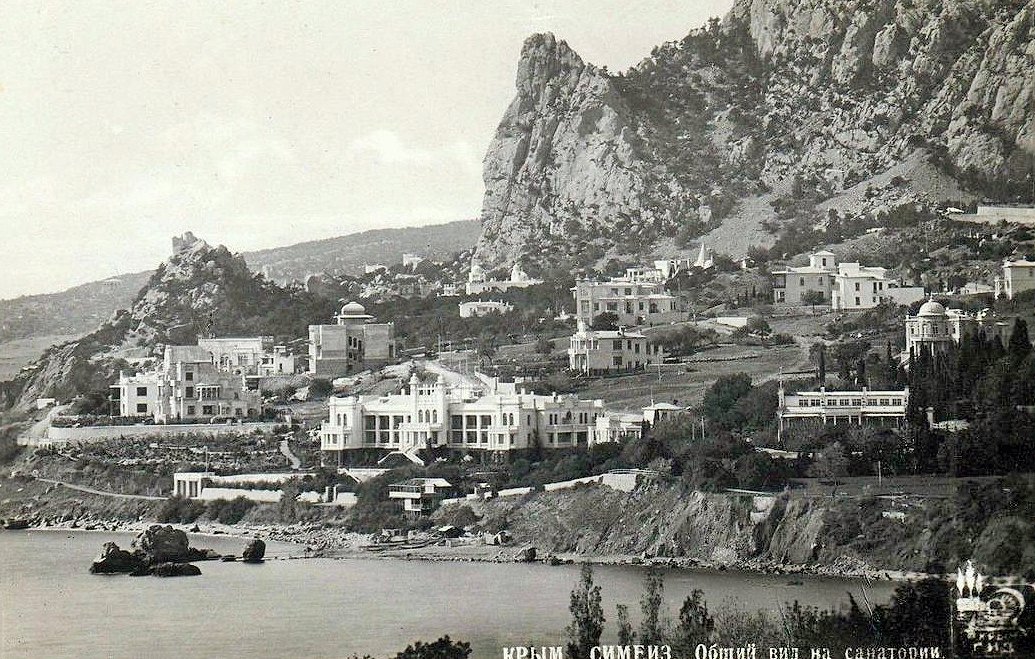
The story of New Simeiz begins in the late 19th century, when the southern coast of Crimea caught the attention of Russian aristocrats and wealthy industrialists. Unlike the older part of Simeiz, which had grown from a Greek settlement, New Simeiz was planned with a European sensibility. Wide streets were laid out, villas in the Art Nouveau style rose along the hillsides, and the entire place was designed to feel both elegant and unhurried. Writers, artists, and scientists came here to rest, and some stayed for good. By the Soviet era, the settlement had become a favored retreat for those seeking relaxation and healing, a reputation it still holds today.
Walking through New Simeiz, you notice how the architecture tells its own story. The villas from the early 20th century, with their ornate balconies, mosaic facades, and little towers, stand alongside Soviet-era sanatoriums without clashing. Some buildings show their age, their paint peeling slightly, their walls bearing the marks of decades, but that only adds to their character. The mix of neoclassical and constructivist styles along Sovietskaya Street feels natural, as if each era simply layered itself over the last without erasing what came before.
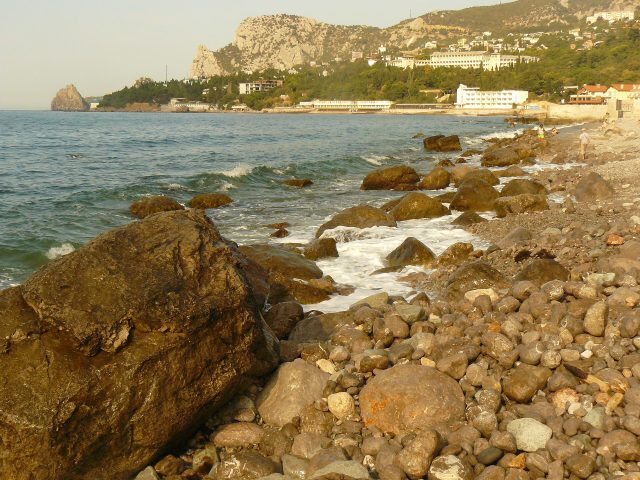
The landscape around New Simeiz is just as compelling as the settlement itself. The mountains here are covered in juniper and pine, their slopes rising sharply from the coast. The sea is clear, its waters shifting from deep blue to turquoise depending on the light. Above the town looms Mount Koshka, a distinctive peak that serves as a landmark for miles around. Its slopes are home to rare plants, and from the top, the view stretches along the coastline, the horizon blurred by sea mist on some days. Nearby, the Diva rock formation rises like a sentinel, its jagged outline said to have been a sacred site for the ancient Tauri people. Now, it’s a place where visitors come to scramble over the rocks or simply sit and watch the waves crash against the shore.
Life in New Simeiz changes with the seasons. In summer, the settlement hums with activity—families strolling along the promenade, couples lingering in seaside cafes, and children playing on the pebble beaches. The local eateries serve Crimean dishes like chebureki and stuffed mussels, while vendors sell fresh figs, grapes, and seafood straight from the boats. By winter, the pace slows. The crowds thin out, the cafes close earlier, and the beaches empty, leaving only the sound of the wind and the waves. It’s a time when the place feels almost secret, a quiet corner of the world where you can walk for miles without seeing another soul.
The off-seasons, spring and autumn, have their own appeal. The sea is still warm enough for a swim in September, while the mountains take on a hazy blue tint as the days grow shorter. The air is crisp, the light golden, and the whole place feels suspended between summer’s energy and winter’s stillness. It’s the best time for long walks along the coastal paths or up into the hills, where the scent of wild herbs mixes with the salt breeze.
New Simeiz isn’t a place for those looking for luxury resorts or nightlife. There are no grand hotels, no neon signs, no crowds jostling for space on the beach. Instead, there are small guesthouses, family-run pensions, and the kind of quiet that makes you realize how loud the world usually is. The days here unfold without hurry—morning coffee on a balcony overlooking the sea, an afternoon spent reading under a pine tree, an evening watching the sunset paint the sky in shades of pink and orange.
For those who want more than just relaxation, there are ways to fill the time. You can rent a bicycle and ride along the coast, or hike up to Uchan-Su waterfall, where the water cascades down the rocks in a thin, shimmering veil. Divers come here for the clear waters and underwater cliffs, while others prefer to explore the old parks, where the trees have grown tall and the paths wind through shaded groves. But even these activities feel unhurried, as if the point isn’t to check things off a list but to let the place work its way into you.
What makes New Simeiz different from other Crimean resorts is its sense of harmony. It’s not just the way the buildings blend into the landscape or how the sea and mountains frame the settlement. It’s something less tangible—the feeling that this place has always been here, and always will be, no matter who comes or goes. That’s why people return. Not for the attractions or the amenities, but for the chance to step into a rhythm that feels older than memory, where the only thing that matters is the sound of the waves and the wind in the pines.