The Mekong River Night Market in Vientiane is where the city sheds its daytime stillness and reveals a different kind of energy. As the sun dips below the horizon, the air cools just enough to make an evening stroll bearable, and the riverside comes alive with a quiet, unhurried bustle. Unlike the practical morning markets where locals buy vegetables and spices, this one is all about the slow rhythm of the night—soft lights, the murmur of conversation, and the scent of grilled meat mingling with the river’s damp breeze.
Stretching along the waterfront for nearly a kilometer, the market begins near the Mekong Bridge and unfolds in long rows of stalls draped in warm, flickering lights. There’s no hard sell here; vendors sit beside their goods, chatting with neighbors or watching the world go by. The atmosphere is more about lingering than buying—though there’s plenty to tempt you. Handwoven silk scarves in deep indigo and rust, silver jewelry hammered into delicate shapes, and wooden carvings of elephants and Buddha figures line the tables. Some stalls offer quirkier finds: old French coins repurposed as keychains, bamboo baskets woven tight enough to hold water, or vintage postcards with faded images of colonial Laos.
But the real draw is the food. The market is a moving feast of street-side kitchens, where cooks tend to sizzling skewers of pork and chicken, ladle steaming bowls of *khao poon*—a fragrant coconut curry noodle soup—or fry up crispy *sai oua*, a spiced Lao sausage. Fresh fruit is piled high in pyramids of mango, pineapple, and dragon fruit, while dessert stalls serve sticky rice with mango or coconut milk puddings drizzled with palm sugar. The flavors are bold but not overwhelming, a balance of smoky, sweet, and herbal that feels distinctly Lao.
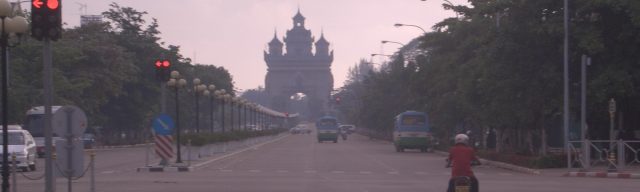
Beyond the shopping and eating, the market is a place to watch the city breathe. During the day, Vientiane can feel almost sleepy, its wide boulevards and low-slung buildings bathed in a haze of heat. But as night falls, the riverside becomes a gathering spot. Families spread out on mats with takeaway dinners, groups of friends share bottles of Beerlao under strings of fairy lights, and couples wander hand in hand along the water’s edge. Occasionally, a musician sets up near the river, plucking a *khaen*—a traditional bamboo mouth organ—or strumming a guitar to a Lao folk song. The music is never loud enough to drown out the river’s gentle lapping, just enough to add another layer to the evening’s soundtrack.
The market’s origins are modest. It emerged in the early 2000s, when Laos was just beginning to open up to tourism. Locals realized that the riverside, with its cooling breezes and open space, was the perfect place for an evening bazaar. Over time, it grew into a fixture of Vientiane life, though it’s still far from polished. There are no permanent structures here, just tents and tarps that appear at dusk and vanish by dawn. That impermanence gives the market its charm—it feels like a temporary stage set, a place where the city plays at being something else for a few hours.
For residents, the market is a social hub. It’s where you run into old friends, catch up on neighborhood gossip, or simply unwind with a cold beer by the water. For visitors, it’s a rare glimpse of Laos without the filter of tourist brochures. There are no grand monuments or curated experiences, just the easy flow of daily life. That’s what makes it special: it doesn’t try to impress. The stalls are simple, the crowds are small, and the vibe is unpretentious. You might come for the souvenirs or the food, but you’ll stay for the way the market makes the city feel smaller, more human.
By midnight, the energy starts to wind down. Vendors pack up their wares, the last of the beer bottles are cleared away, and the riverbank grows quiet again. The Mekong, wide and dark, carries on as it has for centuries, indifferent to the fleeting spectacle of the market. But the next evening, the lights will return, the voices will rise again, and Vientiane will once more slip into its nighttime skin—a city that, for a few hours, belongs to the river, the stars, and the people who gather there.