Lower Park in Lipetsk is one of those rare places where the city seems to pause, shedding its modern hustle to reconnect with its roots. Stretching along the banks of the Voronezh River in the heart of the city, it blends the present with the past in a way that feels effortless. This isn’t just a patch of greenery—it’s a living part of Lipetsk, where people come not only to walk but to step into a slower, more thoughtful rhythm of life.
The park’s history is deeply tied to Lipetsk’s evolution as a spa town. In the early 18th century, Peter the Great recognized the potential of these mineral-rich lands and ordered the construction of ironworks here. Later, as industry gave way to wellness, the healing properties of the local springs took center stage. By the 19th century, the area that is now Lower Park had become a hub for bathhouses and sanatoriums, with lush greenery integrated into the therapeutic landscape. Today, little remains of those original structures, but the sense of tranquility and care lingers, as if the park still carries the quiet purpose it was once built for.
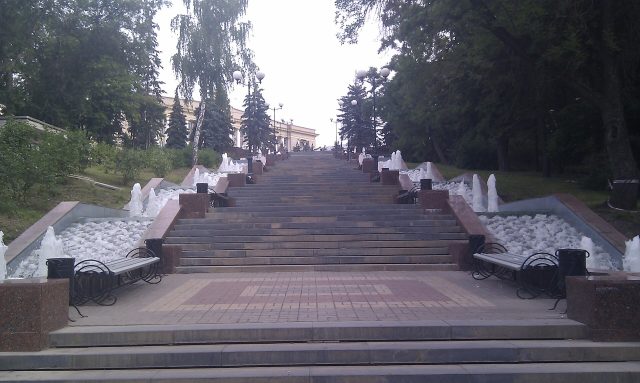
There’s no grand design to Lower Park—its charm lies in its gradual, organic growth. No imposing monuments or elaborate architecture dominate the scene; instead, everything feels understated yet perfectly balanced. Winding paths, paved with simple tiles, curve around old trees, some native to the region, others brought in long ago as exotic novelties. The park is especially beautiful in spring, when chestnuts and lilacs bloom, or in autumn, when the leaves turn every shade of gold. Even in summer, the dense canopy offers cool shade, while winter transforms the alleys into quiet, snow-dusted corridors.
One of the park’s most recognizable features is its modest fountain, installed during the Soviet era. It doesn’t draw crowds with its size, but it has become a natural gathering spot. In warmer months, people linger around it—some sitting on benches, others snapping photos, children darting through the spray. The fountain is surrounded by well-tended flowerbeds, giving the area a cared-for, welcoming feel. Small concerts and local events often take place nearby, though the park hardly needs them to feel alive; it hums with activity on its own.
The Voronezh River isn’t just a boundary for Lower Park—it’s part of its soul. The embankment here is narrow but intimate, lined with paths where joggers, cyclists, and strollers pass by at all hours. In summer, you can rent a boat or a catamaran, while winter brings ice fishermen and skaters to the frozen surface. The water is clean, though swimming isn’t common within the city limits. Still, the river’s presence is felt everywhere, its gentle flow visible from the park’s winding trails, adding a sense of openness to the space.
Lower Park also serves as an open-air museum of sorts, preserving fragments of Lipetsk’s past. Among the trees stand a few historical remnants, like the old bathhouses, repurposed over time but still hinting at their original purpose. There’s a small but striking monument to Peter the Great, honoring his role in founding the city’s early industries. Nearby, a modest memorial commemorates the residents who died in World War II, a quiet reminder of the city’s deep ties to the nation’s history.
The park changes with the seasons, each one bringing its own rhythm. Spring awakens the first flowers, drawing locals eager to soak up the early warmth. Summer turns it into a green refuge from the heat, where evenings fill with music and laughter. Autumn blankets the paths in golden leaves, the air thick with the scent of fallen apples from the park’s old trees. Winter is quieter, but never empty—snow crunches underfoot, and bird feeders hang from the branches, a small but steady sign of life.
What makes Lower Park special isn’t grandeur or spectacle, but its authenticity. This is a place for those who live nearby, a natural extension of their daily lives rather than a tourist attraction. You can spend hours here with a book, or simply wander without purpose, letting the park’s unhurried pace seep in. In a world that moves faster every day, such places feel increasingly rare—a reminder that beauty often lies not in the dramatic, but in the quiet corners where time slows down.