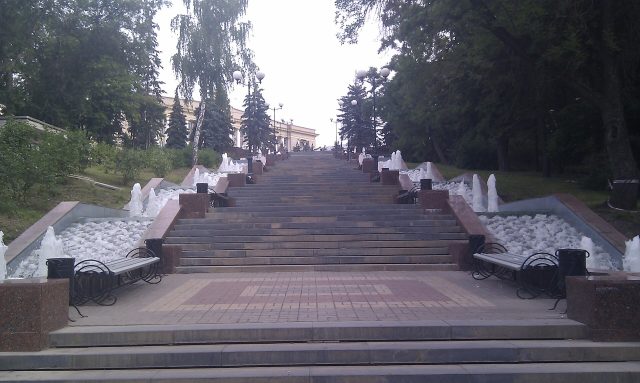
Upper Park in Lipetsk is one of those places that doesn’t reveal itself at first glance. To a casual observer, it might seem like just another city park—neat paths, benches, and greenery. But those who take a closer look soon realize why it holds a special place in the hearts of locals. There are no flashy attractions or noisy crowds here, just a quiet corner where the only sounds are the rustling of leaves and the occasional murmur of passersby. The park carries a subtle echo of the past, a reminder of the refined estates that once stood in this area, though little remains of them beyond the layout and the old trees that still stand.
The history of Upper Park is intertwined with Lipetsk’s evolution as a spa town. In the early 19th century, this land belonged to noble families who used it for their country retreats. Back then, the park was part of a larger estate where visitors came to relax and take the mineral waters that made Lipetsk famous. As the city expanded, the park became part of its fabric, yet it retained its peaceful character. Some remnants of the past still linger—old ponds that were once part of the estate’s water system, and tree-lined avenues planted when Lipetsk was just beginning to earn its reputation as a healing destination.
The park’s design is unassuming but deliberate. The main avenue leads to a small square where, in the 19th century, a summer theater or pavilion once stood. Today, a monument occupies that space, but the layout remains unchanged—straight paths intersecting at right angles, creating a sense of order and balance. The trees here are a mix of linden, maple, and oak, some of them older than the park itself. Autumn is particularly beautiful, when the leaves turn golden and crimson, and the paths are carpeted with fallen foliage.
Upper Park is closely tied to Lipetsk’s spa history. In the 19th century, the city was known for its mineral springs, and the park was where visitors strolled after their treatments. Concerts were held here, picnics organized, and in the evenings, lanterns lit the paths. While Lipetsk’s spa culture has faded over time, the park remains a place where people come to escape the hustle of the city. In summer, fountains splash, and in winter, an ice rink draws skaters. Spring and autumn turn the park into a quiet retreat for those who prefer a slower pace.
What makes Upper Park special is its atmosphere. There are no crowds of tourists, no loud groups, no vendors pushing their wares. It’s a place for unhurried walks, where you can simply wander along the paths, listen to birdsong, and watch the light shift through the branches. Even on hot summer days, the shade keeps the air cool, while in winter, snow blankets the ground, transforming the park into a scene from a fairy tale. Locals often bring their children here to ride bikes or sit on a bench with a book.
Though small, the park has a few notable spots. A small pond with ducks has become an unofficial symbol of the place, always drawing children who come to feed the birds. Nearby stands a modest monument to Lipetsk’s metallurgists, a nod to the city’s industrial roots. The monument is simple, but it serves as a reminder that Lipetsk isn’t just a spa town—it’s also a place with a strong working-class history.
Upper Park is where time seems to slow down. There’s no need to rush, no pressure to see everything or take photos for social media. You can just come, walk the paths, sit on a bench, and let the city’s noise fade into the background. That’s probably why locals love it so much—it offers a chance to rest not just the body, but the mind.
The park continues to evolve, but carefully. New benches and playgrounds appear, yet the old trees and layout remain untouched. Upper Park isn’t a museum; it’s a living space that changes with the city while staying true to its past. And perhaps that’s its greatest value.