Newtown Park is where Johannesburg’s past and present meet—not as separate layers, but as something woven together. It sits in Newtown, a neighborhood shaped by the city’s everyday rhythm rather than grand monuments. There’s no fanfare here, just the quiet hum of a place that has seen generations come and go.
The park occupies the site of Johannesburg’s old fresh produce market, active in the late 19th and early 20th centuries. Back then, Newtown was the city’s industrial core, where goods were traded and streets filled with workers and merchants. When the market closed in the mid-1900s, the area decayed. By the 1990s, a revival began, turning the space into a cultural precinct while preserving its history. Today, it’s surrounded by museums, theaters, and galleries.
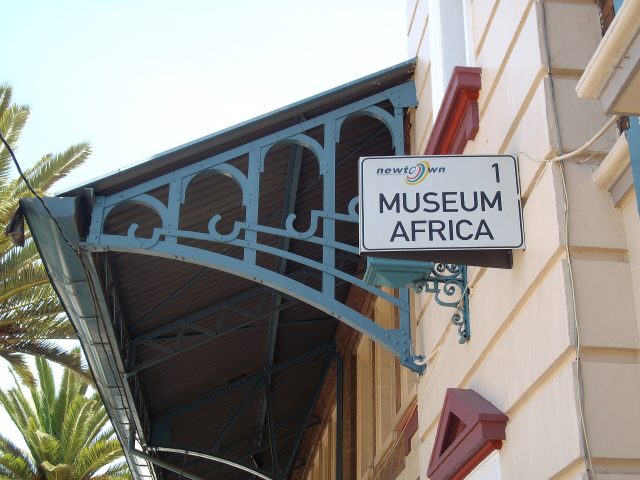
The architecture here is unassuming. The old brick buildings, once part of the market, have been restored and repurposed. Their sturdy walls now house spaces that tell stories. The Museum Africa focuses on daily life, not just major events. Nearby, the Workers’ Museum explores labor movements and workers’ rights in South Africa, with exhibits that feel like conversations.
The park is a small green refuge in the city.
The trees here are old. Their roots stretch back to a time when horse-drawn carts carried meat through these streets. In summer, their shade becomes a gathering spot for picnics. In winter, the open spaces host small markets. At the center stands a sculpture of market workers, their metal figures caught mid-motion, as if pausing for a moment’s rest.
Music has always been part of Newtown’s identity. The park often becomes a stage for it. Jazz and African rhythms fill the air on summer evenings. The neighborhood has a long tradition of live performances, and the park’s casual setting suits impromptu shows. Sometimes, it transforms into an open-air gallery—street artists paint murals, dancers perform, poets recite under the trees. There’s no schedule, just creativity when people have space to express themselves.
If you want to stay longer, nearby cafes and small restaurants serve South African flavors. The café at the Museum Africa is a favorite because it feels like part of the neighborhood. There’s no rush, just the quiet pleasure of watching the world go by.
Newtown Park doesn’t announce itself. It doesn’t try to impress. Instead, it offers a sense of belonging—a place that moves to its own rhythm. Here, you’ll see students with sketchbooks, artists setting up easels, musicians carrying instruments, and office workers on lunch breaks. Everyone finds their own reason to be here.
In recent years, Newtown has become one of Johannesburg’s cultural hubs, hosting art exhibitions, film festivals, and literary events. The park serves as a gathering place for conversations, performances, and spontaneous creativity. Unlike parts of the city that feel manufactured, Newtown has an authenticity that’s hard to fake.
If you’re in Johannesburg and want to experience the city beyond its famous landmarks, Newtown Park is a good place to start. It won’t give you the full sweep of South Africa’s history, but it will give you its heartbeat—its contradictions, its energy, the way past and present coexist. You might spend an hour here, or you might lose track of time. Either way, it stays with you.