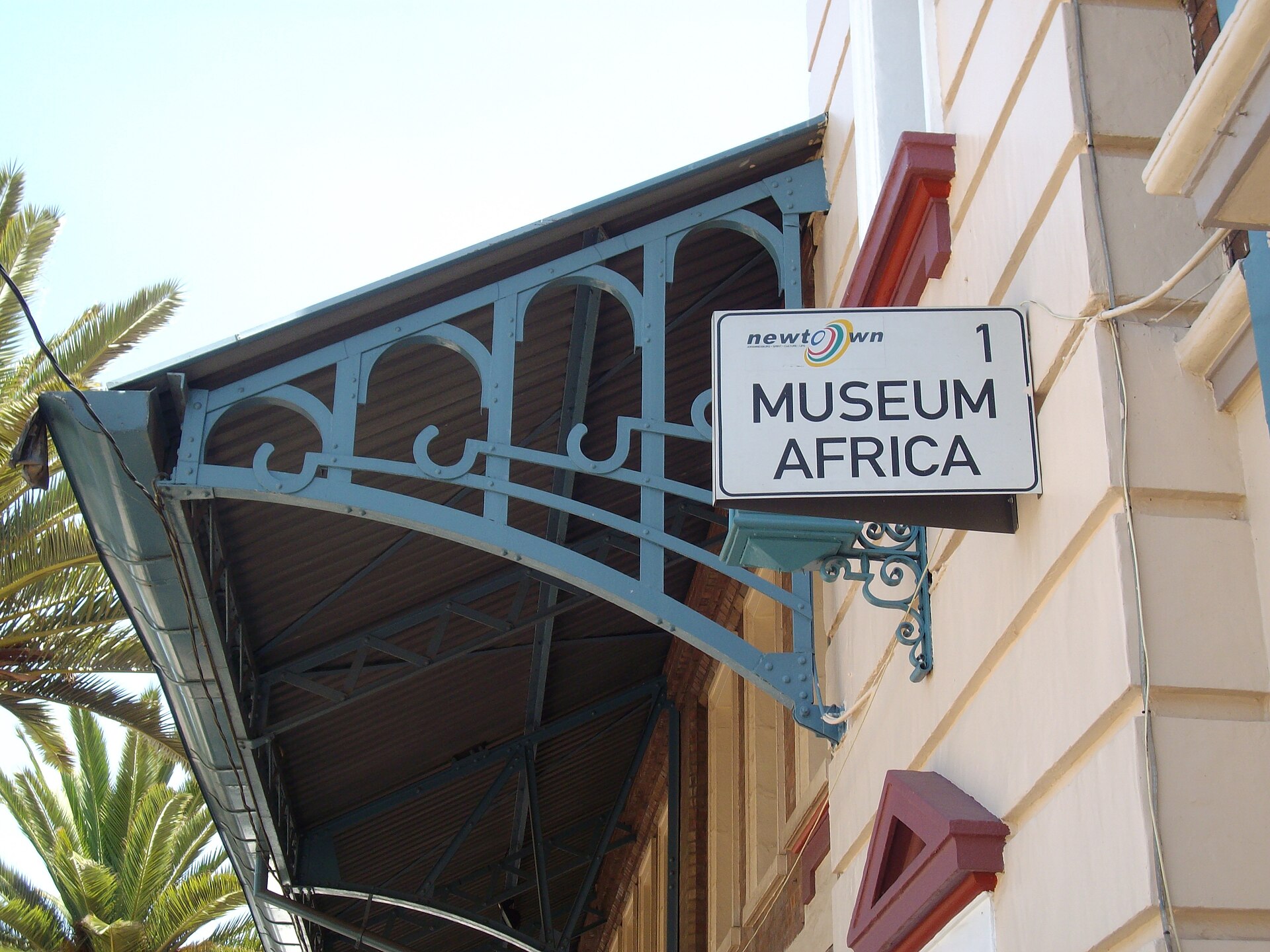
The former market hall that houses MuseuMAfricA was built in the early 1900s. Its thick brick walls and towering ceilings once echoed with the clatter of commerce in a city then raw—Johannesburg, where fortunes were made and lost overnight. The building has outlasted the boom-and-bust cycles that followed.
The museum opened in 1994, the year of South Africa’s first democratic elections. It was conceived as a space for reflection, not a passive archive. Exhibits weave together the lives of miners, activists, artists, and laborers, showing how their stories intersected to shape the nation. The focus is on understanding how South Africa became what it is today.
The collection includes objects that filled people’s lives: traditional garments, handcrafted tools, early radios, and the first cars on South African roads. The museum pays particular attention to the labor movement, a natural fit for Johannesburg, a city built on mining and industry. Workers’ voices come through in personal accounts and artifacts, reminding visitors that the city’s wealth was extracted by human hands.
The building’s industrial modernist architecture retains exposed steel beams, brickwork, and old freight elevators. The modern exhibition spaces sit within the historic structure. You can imagine the hall as it once was, filled with traders, while seeing how it functions today as a keeper of memory.
One section deals with apartheid. Exhibits show how racial segregation seeped into education, healthcare, and leisure. Protest posters, activists’ personal belongings, and documents lay bare the system’s cruelty. But the museum also highlights resistance—small acts of defiance and dignity. The message is resilience, not despair.
The collection includes artifacts from across Africa: masks, sculptures, textiles, and musical instruments. These pieces show how South African culture absorbed influences from migration, trade, and conflict. Visitors can trace the traditions of the Bantu peoples and see the impact of colonialism on art. South Africa’s story is part of a larger narrative.
For those interested in the present, the museum features contemporary artists, photographers, and musicians. Their work grapples with the legacy of the past and the possibilities of the future. Temporary exhibitions tackle social issues—inequality, violence, migration—through personal stories and artistic expression. The museum becomes a forum for discussion.
Newtown is a mix of old and new—historic industrial buildings stand alongside galleries, cafes, and street festivals. MuseuMAfricA connects Johannesburg’s past as a mining town with its present as a cultural hub. The museum embodies the city’s story.
You leave with more questions than answers. The museum doesn’t offer a neat version of history. It invites you to think for yourself, to see South Africa as a place still unfolding. History isn’t just something that happened—it continues to shape the present.