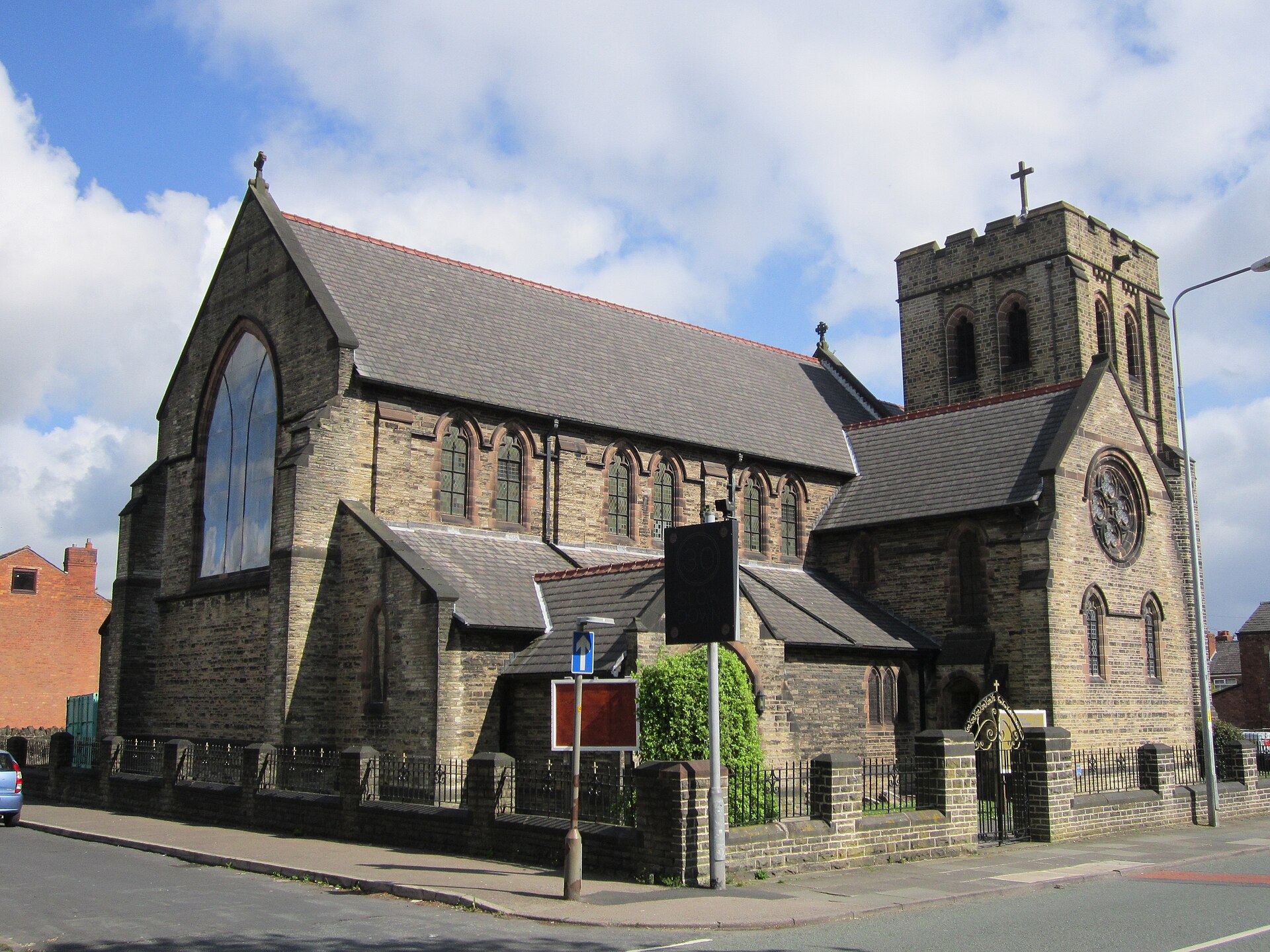
St. Mark’s Church in Newtown is one of those rare places in Johannesburg where the city’s layered history feels almost tangible. Built in the late 19th century, it has watched the neighborhood transform from an industrial hub into a cultural district, yet it remains a quiet anchor amid urban life. The church doesn’t demand attention like the galleries or theaters nearby, but its presence is grounding—a reminder that some things endure even as everything around them changes.
The architecture is simple. The red-brick exterior, with its pointed arches and modest spire, carries the hallmarks of late Gothic design, adapted to its time and place. Inside, the high ceilings and exposed wooden beams create openness, while the stained-glass windows filter light into soft hues. The space feels welcoming rather than imposing.
Newtown was once the industrial heart of Johannesburg, a district of factories, warehouses, and workers. Many of those laborers were immigrants, drawn to the city by the promise of work, and St. Mark’s became a focal point for the community. Beyond Sunday services, it hosted gatherings, fundraisers, and social events. After church, people would linger on the grass outside, sharing news and stories.
The neighborhood’s identity shifted dramatically over the decades. Factories closed, and the area became a cultural precinct with museums, performance spaces, and art studios. Yet St. Mark’s remained, a witness to the neighborhood’s evolution. While surrounding buildings were repurposed into lofts and exhibition halls, the church stayed true to its original purpose, connecting the past to the present.
Today, St. Mark’s continues to serve its congregation. Sunday services draw a small group, and on weekdays, the doors open for guided tours or concerts. Visitors stop by to escape the city’s pace, sitting quietly on the wooden pews or admiring the architecture. There’s stillness here that feels rare in Johannesburg.
The church also holds significance in South Africa’s history. During the mid-20th century, it became a meeting place for activists opposing apartheid. The walls bear witness to those gatherings, with memorial plaques and photographs honoring individuals who fought for justice. It’s a reminder of how ordinary places can become part of something larger.
St. Mark’s hasn’t been reduced to a historical artifact. It’s still part of the community—a place where people come to pray, reflect, or take a moment away from the city. That’s what draws visitors looking for more than just a photo opportunity. Here, you can sense history without it feeling like a performance.
If you find yourself in Newtown, step inside for a few minutes. Walk through the cool, quiet nave, sit on one of the worn wooden benches, and listen. In a city defined by contrasts—old and new, wealth and struggle, noise and stillness—St. Mark’s offers a chance to pause and consider what it means to be part of Johannesburg’s story.