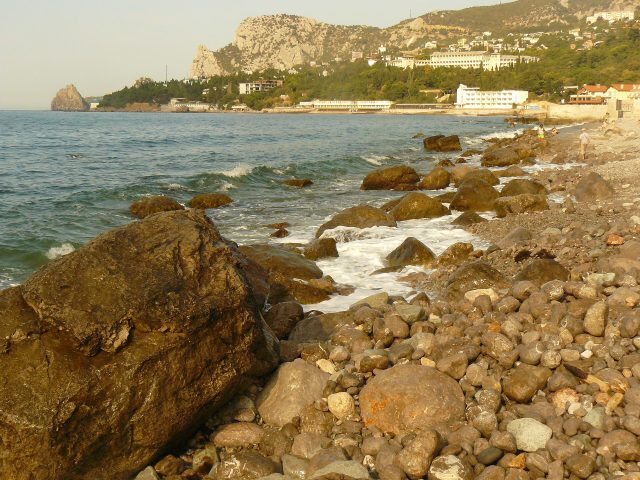
Nyukta is one of those rare places that feels suspended in time, as if the past has gently settled into the landscape without leaving a trace of modernity. Tucked away near Simeiz on Crimea’s southern coast, it isn’t a landmark in the usual sense—no grand monuments or crowded promenades. Instead, it’s a quiet corner where history and nature intertwine effortlessly. The name itself, derived from the Greek word for night, hints at something mysterious, and while no one knows its exact origins, the place does take on a different quality as dusk falls. The fading light softens the contours of the rocks, and the sea below seems to absorb the last warmth of the day, leaving behind an atmosphere that’s both serene and subtly haunting.
The heart of Nyukta is its distinctive rock formation, modest in size but striking in its presence. Unlike the towering cliffs that dominate other parts of the Crimean coastline, this one leans slightly over the water, as if caught mid-motion, about to tumble into the waves. It’s not a difficult climb, but the view from the top is worth the effort. On clear days, the panorama stretches across the coast, taking in Simeiz’s whitewashed houses, the grand silhouette of Alupka’s Vorontsov Palace, and the distant, jagged outline of Mount Ai-Petri, floating above the horizon like a mirage. Locals and visitors often come here to watch the sunset, perching on the sun-warmed stones while the sea below turns from blue to molten gold.
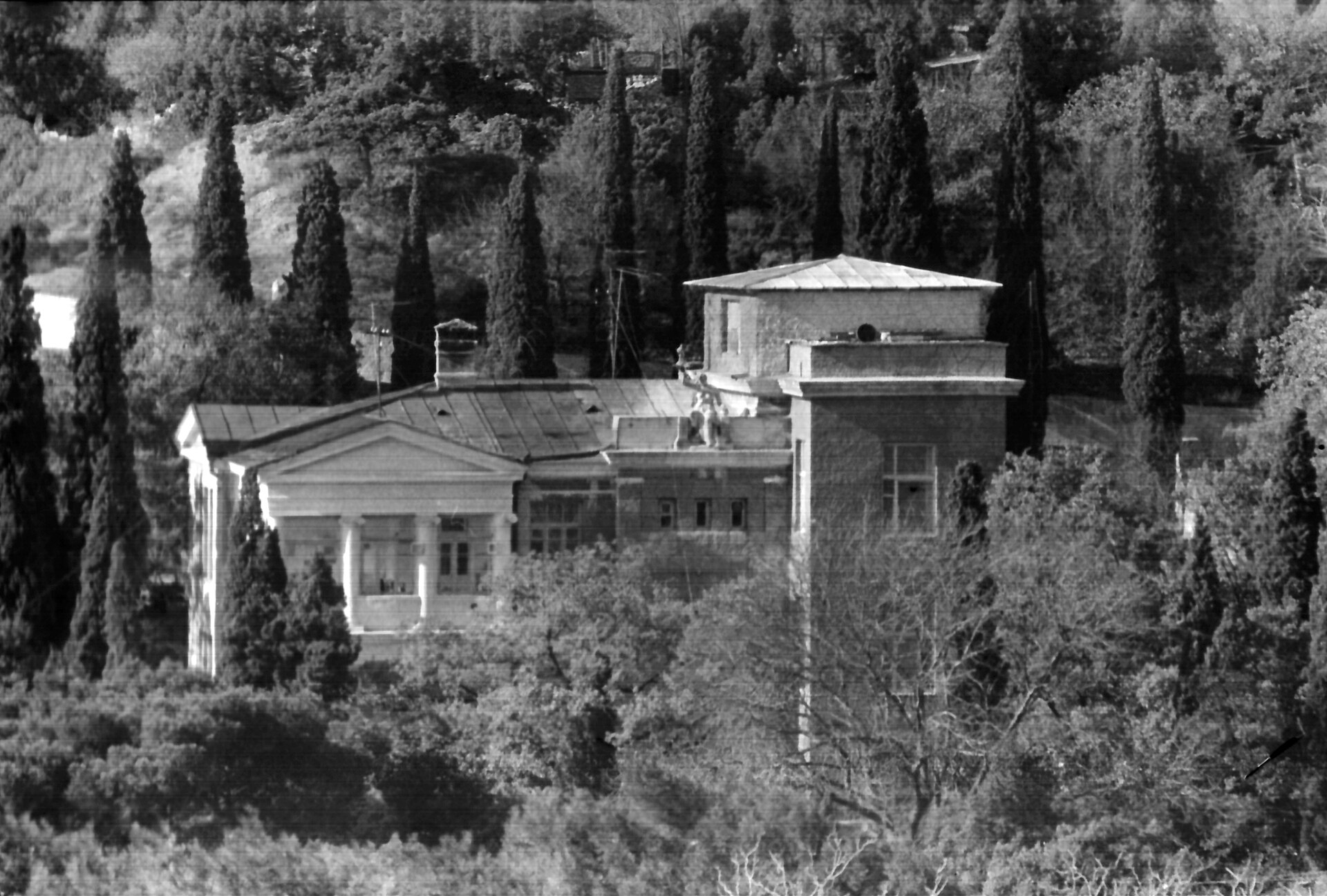
Nyukta’s story is woven into the broader history of Crimea’s southern shore, a place that became a retreat for Russia’s aristocracy and creative elite in the late 19th and early 20th centuries. This stretch of coast was once dotted with grand estates and summer villas, where writers, artists, and musicians gathered for salons and strolls along the shoreline. The Maltsov family, prominent industrialists and patrons of the arts, owned much of the land around Nyukta, shaping its development while also ensuring its natural beauty remained intact. Their influence is still felt in the careful preservation of the landscape, which has changed little over the decades. There are no grand ruins or restored palaces here—just the quiet persistence of nature reclaiming its space, with only faint traces of old paths and crumbling foundations to hint at the lives once lived here.
What makes Nyukta special isn’t any single feature, but rather the way the place feels alive with the past. The air carries the scent of pine and salt, and the wind rustles through the juniper bushes that cling to the rocks. In winter, the sea turns a steely gray, and the cliffs glisten with frost, while spring and autumn bring a quiet beauty, with wildflowers dotting the slopes and the crowds of summer long gone. It’s a place that rewards patience, where the absence of noise and distraction allows you to notice the small details—the way the light catches the water, the cry of a gull echoing off the rocks, or the texture of the stone beneath your fingers.
Reaching Nyukta is simple, though the journey is part of the experience. From Simeiz, it’s a leisurely walk of about a mile and a half along the coast, past guesthouses and private gardens, with the sea always in sight. The path narrows as it approaches the rock, winding between boulders and patches of scrub, and after rain, the stones can be slippery, so it’s worth taking care. Some visitors drive or take a taxi, but the walk is worth it—there’s something about arriving on foot that makes the place feel more intimate, as if you’ve stumbled upon a secret rather than followed a signpost. There are no facilities here, no cafes or souvenir stalls, just the raw beauty of the landscape.
Nyukta isn’t for everyone. If you’re looking for bustling beaches, lively nightlife, or guided tours, you’ll find none of that here. This is a place for those who see Crimea not just as a holiday destination, but as a land with layers of history and untamed beauty. It’s somewhere to sit quietly, to think, or to simply be. The lack of development means there’s nothing to distract from the natural surroundings, and that’s precisely what makes it memorable. You might spend only an hour or two here, but the impression lingers long after you’ve left.
In recent years, more people have begun to seek out Nyukta, drawn by its unspoiled charm. Local authorities have resisted the urge to overdevelop the area, limiting construction and keeping commercialization at bay. It’s a rare approach in a region where so much of the coastline has been transformed by tourism, and it’s one that has preserved Nyukta’s essential character. There’s nothing staged or artificial about this place—just the quiet dialogue between land and sea, the play of light on stone, and the sense that time moves differently here. For those weary of the noise and pace of modern life, Nyukta offers a chance to pause, to breathe, and to remember what it feels like to be truly still.