Nikšić’s city park is the kind of place that doesn’t announce itself. Tucked in the heart of the city, it sprawls across a generous stretch of land where shaded paths wind between open meadows and old trees create pockets of quiet, even though the bustle of the streets is just a short walk away. There are no manicured lawns or grand fountains here—nature decides where the grass grows tall and where the walkways should curve.
The park took shape in the late 19th and early 20th centuries, a time when Nikšić was expanding rapidly. On what was then the edge of the old town, this green space was created as a retreat from the noise of industry, a place where residents could step away from the rhythm of work. Over the decades, it became woven into the fabric of daily life. People met here, celebrated holidays, and strolled through on ordinary afternoons. Some of the benches have stood for generations, and a few of the trees have witnessed the city change around them.
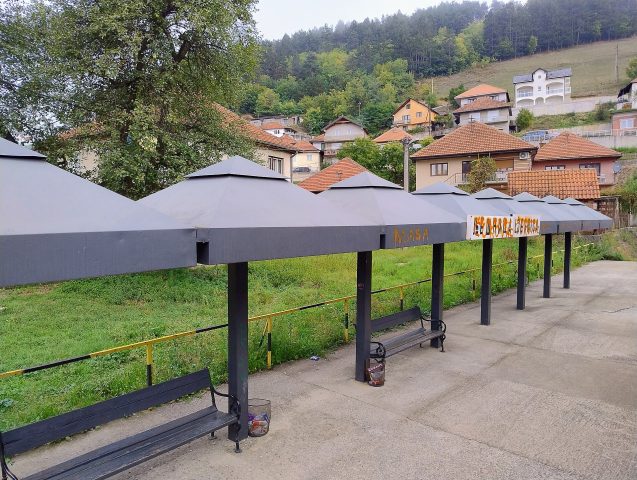
There’s nothing elaborate about the park’s design. No statues or ornate pavilions, just simple gazebos, small bridges over shallow streams, and winding paths that invite you to wander. At its center lies a modest lake, its surface often dotted with duckweed in the summer and occasionally frozen in winter. Families gather along its edges, fishermen cast their lines, and others simply sit by the water, watching the light play across its surface. The water isn’t always clear, but that doesn’t dim its charm—it’s the most picturesque spot in the park, a quiet focal point where the city slows down.
The park is peaceful, even on weekends. In the summer, the air hums with the sound of cicadas and carries the scent of pine and freshly cut grass. Autumn brings the rustle of fallen leaves underfoot, while winter strips the trees bare, their branches etching patterns against the sky. If snow falls, it transforms the park into something almost magical, though such moments are rare. Most of the time, it’s just a quiet place to escape the noise.
Beyond its natural beauty, the park is a cultural hub for Nikšić. Throughout the year, it hosts city festivals, open-air concerts, and exhibitions by local artists. In the summer, musicians play near the lake, and in winter, the park becomes part of the holiday celebrations. There are playgrounds for children, running tracks and outdoor exercise equipment for those who want to stay active, and in recent years, bike paths have been added, making it easier to explore on two wheels.
For the people of Nikšić, the park is more than just a green space—it’s a place to step out of the rush of daily life, to breathe, and to find a moment of stillness. It doesn’t have the glamour of the Adriatic coast or the grandeur of the mountains, but that’s part of its appeal. It’s ordinary in the best sense, a living piece of the city’s history and a reflection of its everyday rhythms.
If you visit Nikšić not just for its landmarks but to get a sense of the place, the park offers a glimpse into the city’s soul. Here, elderly men play chess on weathered tables, young parents push strollers along the paths, and teenagers gather to talk about whatever’s on their minds. There’s no performance, no pretension—just the quiet, unscripted life of a city going about its day.
The park doesn’t try to be the most beautiful spot in Montenegro. It doesn’t need to be. It exists as it is, and that’s enough. You might spend an hour here or an entire afternoon, watching how the light shifts through the trees or how the city moves around you. And if you’re lucky, you’ll leave with the quiet understanding that some of the most meaningful places aren’t the ones that dazzle at first glance, but the ones where life unfolds naturally, at its own unhurried pace.