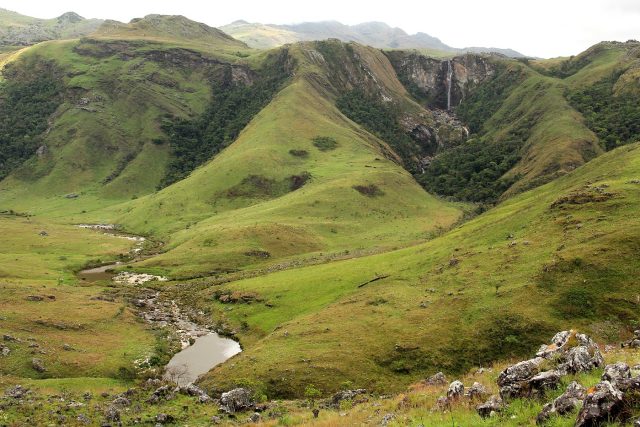
Nyanga is where the earth rises to meet the sky, a place where mist clings to valleys that have held their silence for centuries. This national park unfolds in the eastern highlands of Zimbabwe, a landscape of jagged ridges and plunging gorges where nature moves at its own unhurried pace. There are no crowds here, no hurried footsteps—just the quiet persistence of the wild, as if human presence were only a passing thought. The air carries the scent of damp soil and eucalyptus, and mornings begin with fog rolling down from the peaks, drifting toward rivers and waterfalls like a slow, waking breath.
The park takes its name from the Nyanga Mountains, a range that looms over the land with a kind of ancient authority. These are some of the oldest mountains on the continent, their age measured in hundreds of millions of years. Their slopes are draped in moss and lichen, carved by deep ravines where streams tumble down to feed the valleys below. Some areas feel almost untouchable, their ruggedness both a barrier and an invitation—precisely what draws those who seek solitude and the unspoiled beauty of a place that has resisted time.
Long before modern borders were drawn, this land was home to people who left their mark in ways that endure. On the rock faces, faint but unmistakable, are the petroglyphs of ancient hunter-gatherers—images of animals and human figures etched into stone. These carvings tell stories of a life that thrived here long before European explorers ever set foot in the region. Archaeologists believe the area has been inhabited since the Stone Age, and every boulder, every outcrop, might hold a fragment of history still waiting to be uncovered.
The most striking feature of the park is Mount Nyangani, Zimbabwe’s highest peak at 2,592 meters. Reaching the summit is no small feat—it takes hours of steady climbing—but the reward is a view that stretches beyond the horizon. From the top, the landscape unfolds in layers of forest and savanna, a vast expanse of green and gold. On clear days, the outlines of neighboring countries shimmer in the distance. The mountain is more than just a geographical landmark; it’s a place wrapped in legend, revered by local communities who still regard it as sacred.
Waterfalls are scattered throughout the park, each with its own character. Mutarazi Falls is perhaps the most dramatic, its waters plunging into a narrow gorge, sending up clouds of mist that catch the light like a fleeting rainbow. During the rainy season, from November to March, the falls roar with power, and rivers swell into churning torrents. In the dry months, the water recedes, but the streams never vanish entirely, sustaining the forests and valleys through the quiet seasons.
The flora and fauna here are understated compared to the more famous wildlife reserves of southern Zimbabwe, but no less rich in their own way. Dense forests of acacia and fig trees cling to the slopes, while rare orchids and ferns thrive in the damp, shaded crevices. The animal life is elusive—antelope graze in the clearings, baboons chatter in the treetops, and leopards move unseen through the undergrowth. Birds, though, are everywhere: sunbirds flit between flowers, eagles circle high above the gorges, and the calls of unseen species fill the air. The rivers teem with trout, drawing anglers who come not just for the catch, but for the quiet rhythm of the water.
The climate in Nyanga is mild but unpredictable. Summers bring frequent rain, turning trails slick and challenging, while winters grow crisp, especially at night when temperatures can dip near freezing. The best times to visit are autumn and spring, when the weather settles into a steady rhythm—warm days, cool nights, and landscapes either bursting with new growth or glowing with the golden hues of the dry season.
Visitors have a few options for staying in the park, from basic campsites to rustic lodges with views of the mountains. Local guides offer hikes of varying lengths, from short walks to multi-day treks, leading groups to waterfalls, ancient rock art, or simply along the riverside where the only sounds are the rustle of leaves and the occasional cry of a bird. There’s no need to rush—this is a place where time feels different, where the hours stretch out like the shadows of the peaks at dusk.
Nyanga isn’t a destination for those seeking excitement or distraction. It’s a place where the land dictates the pace, where human visitors are just temporary guests in a world that has existed long before them. The mountains, forests, and rivers here don’t perform for an audience; they simply are. For some, it’s just a beautiful corner of Zimbabwe. For others, it’s a place where the noise of everyday life fades, and something deeper—something older—takes its place.