Narodni trg, or People’s Square, is one of those places in Zadar where the city unfolds at its own unhurried pace, like a well-worn book with pages softened by time. It doesn’t hum with the energy of tourist hotspots, though it sits at the very heart of the historic center. Instead, it feels suspended in time, preserving the rhythm of life that has defined Zadar for centuries. The stone facades lining the square bear the marks of different eras—medieval fortifications, Venetian influences, and the more restrained architecture of the 19th-century Austro-Hungarian period. Each building tells a story, yet the square never feels like an open-air museum. It’s alive in the way only a place deeply woven into daily life can be: the murmur of morning conversations over coffee, the quiet footsteps of locals in the evening, the occasional laughter of children playing nearby.
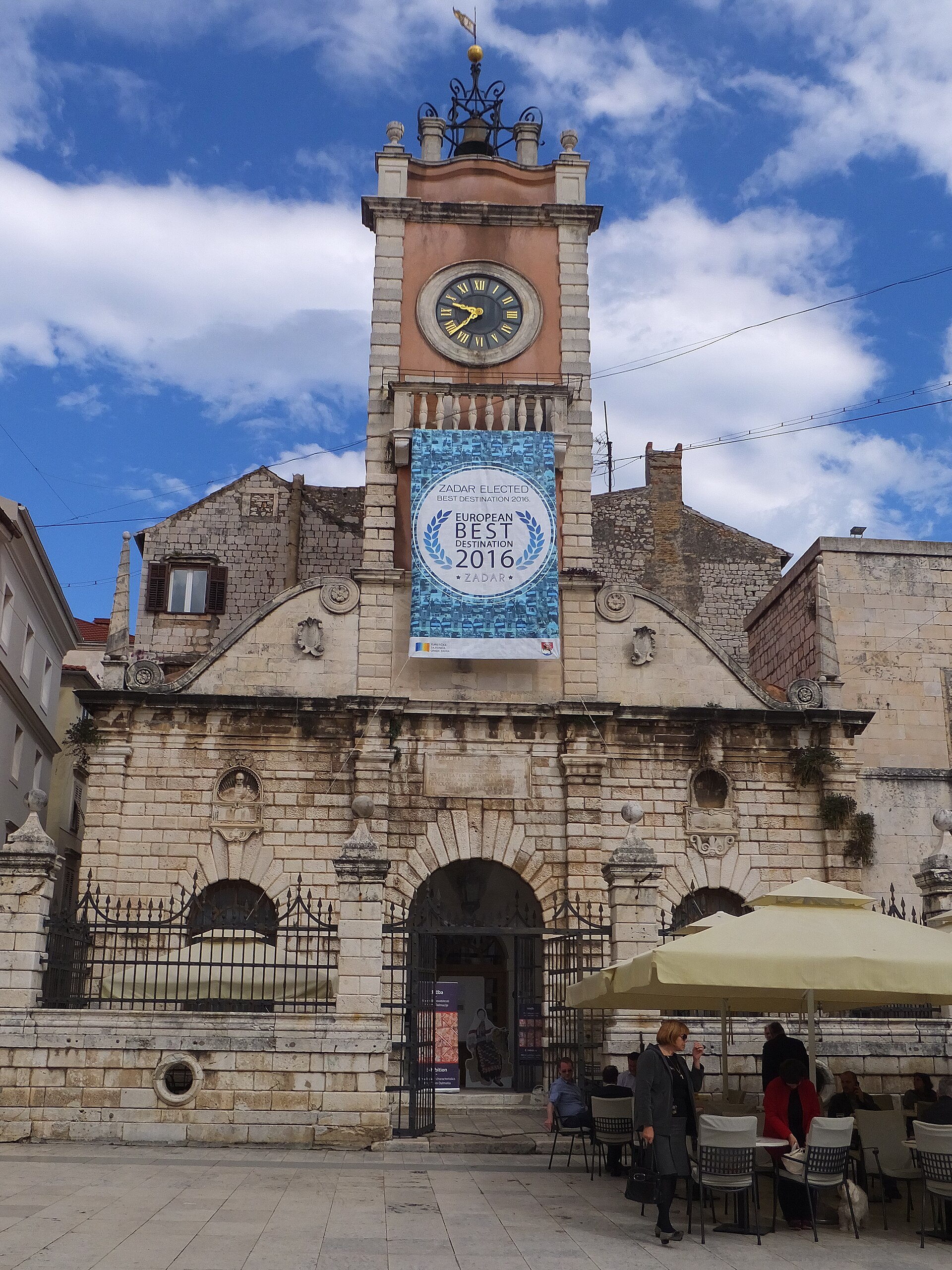
At the center of the square stands the City Lodge, built in the 16th century. With its sturdy arches and thick columns, it was once the setting for public gatherings and judicial proceedings. Today, it occasionally hosts small exhibitions or concerts, but more often than not, it simply stands as a silent witness to the passage of time. Beside it rises the City Guardhouse, a clock tower that was once part of the city’s fortifications. The clock still chimes the hours, its mechanism long since modernized, yet it remains one of Zadar’s enduring symbols—a reminder of how the city has always found a way to blend the old with the new.
What makes Narodni trg so appealing is its sense of scale. It’s neither vast like the grand plazas of European capitals nor cramped like the tucked-away courtyards of the old town. There’s just enough space to sit on one of the benches and watch life unfold around you, everything within easy reach. In the summer, small markets spring up here, selling local goods—olive oil, wine, cured ham, and cheeses. The air fills with the scent of fresh bread from a nearby bakery, and the sound of vendors calling out their wares. In winter, the square grows quieter, the stillness broken only by the occasional footsteps of a passerby or the distant toll of bells from St. Lawrence’s Church.
St. Lawrence’s Church is another quiet gem on the square. A small Romanesque structure, it doesn’t demand attention, but its simple, elegant lines draw the eye. Built in the 11th century, it has undergone renovations over the years, yet its original character remains remarkably intact. Inside, the cool dimness and the faint scent of old stone create a sense of timelessness. A few faded frescoes cling to the walls, their colors softened by centuries, as if holding the memories of everyone who has ever prayed here.
Narodni trg isn’t just about architecture; it’s about atmosphere. It’s easy to imagine the square as it was in the Middle Ages, when merchants haggled over deals, craftsmen displayed their wares, and townspeople gathered to hear the latest news. The details have changed, but the spirit of old Zadar still lingers. In the morning, the smell of freshly baked bread drifts from a nearby bakery. By afternoon, the sound of children playing echoes between the buildings. In the evening, the old-fashioned streetlamps cast a warm glow over the cobblestones, their light flickering against the stone walls.
If you wander Zadar without a map, you’ll likely find yourself here sooner or later. Narodni trg is a kind of crossroads, a place from which you can head toward the bustling waterfront, the labyrinthine streets of the old town, or the more modern parts of the city. But many choose to stay, savoring the rare feeling of time slowing down, the city revealing itself not in a rush, but in its own time.
The square isn’t just for quiet reflection, though. It often serves as a stage for small festivals, impromptu concerts, or traditional Croatian celebrations. During Christmas, a tree is set up here, and locals gather to sing carols and share sweets. In the summer, you might stumble upon an artist displaying their work on the pavement or a jazz band playing under the stars. These moments feel spontaneous, as if the square itself is inviting people to take part in something unplanned.
What makes Narodni trg special is that it doesn’t try to be anything more than it is. It doesn’t aim to dazzle tourists with grand vistas or exclusive attractions. It’s simply a place where you can feel the pulse of real Zadar—a city with a rich history, but without pretension. There are no crowds rushing to snap photos for social media, just the quiet hum of everyday life. Locals sit in the shade of old trees, sipping coffee and chatting. Others stroll by, lost in thought or simply enjoying the stillness.
In the end, Narodni trg isn’t so much a tourist attraction as it is a part of Zadar’s daily life. It asks nothing of visitors except a little attention and respect for its surroundings. If you find yourself here, don’t hurry away. Sit on a bench, listen to the sound of footsteps on the cobblestones, watch how the light plays on the old walls. Maybe then you’ll understand why this city draws people in—not with bright colors or loud fanfare, but with its quiet, unassuming beauty.