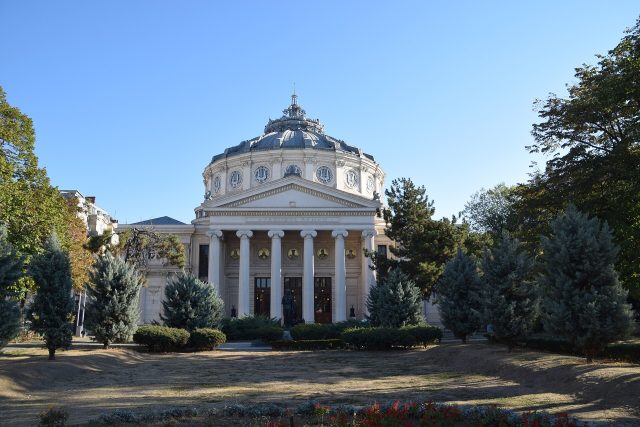
The National Museum of Romanian History stands along Calea Victoriei, a street that has witnessed much of Bucharest’s own evolution. The building itself is impossible to miss—a grand, neoclassical structure of white stone, its columns and pediments echoing the temples of antiquity. Built in the late 19th century, when Romania was carving out its place in Europe, it originally served as the city’s central post office. The high ceilings and spacious halls, designed for a different purpose, now house a collection that spans millennia, offering a quiet counterpoint to the bustle of the capital outside.
Inside, the museum holds over half a million artifacts, but its most compelling pieces are those that tell the story of Dacia and Rome. The gold and silver jewelry, weapons, and coins unearthed from archaeological sites across Romania reveal a civilization far more sophisticated than the myths often suggest. The treasure from Sarmizegetusa, the heart of the ancient Dacian kingdom, is particularly striking—elaborate bracelets, torcs, and ceremonial objects that speak of a people with advanced metalworking skills and far-reaching trade connections. These aren’t just relics; they’re fragments of a culture that once thrived in the Carpathian Mountains, long before the idea of Romania existed.
The medieval galleries shift the focus to Wallachia and Moldavia, where the rise of voivodes and the influence of the Orthodox Church shaped the region’s identity. Suits of armor, religious icons, and illuminated manuscripts line the walls, each piece a testament to the struggles and faith of the time. Among the most intriguing exhibits are those linked to Vlad the Impaler, a figure whose name has been overshadowed by legend. Here, he appears not as a vampire, but as a ruler who fought to keep his principality free from Ottoman control—a man whose brutality was matched only by the challenges of his era.
The 19th and 20th centuries unfold in a series of documents, photographs, and personal effects that trace Romania’s turbulent modern history. The unification of the principalities, the world wars, and the decades under communism are all represented, but the most visceral displays belong to the 1989 Revolution. The artifacts from those days—handwritten protest signs, military gear, even the personal belongings of those who took to the streets—carry the weight of a nation’s reckoning with its past. It’s a reminder that history isn’t just about kings and battles, but about ordinary people who shape it.
Beyond the historical narratives, the museum also preserves the quieter rhythms of Romanian life. The ethnographic section is a testament to the country’s rural traditions, with woven textiles, pottery, and tools that have been passed down through generations. These objects, often humble in appearance, reveal the ingenuity and resilience of communities that sustained themselves through centuries of change. They’re a counterbalance to the grander exhibits, grounding the museum’s story in the everyday.
The building itself is part of the experience. The façade is adorned with bas-reliefs depicting key moments in Romanian history, while inside, the sheer scale of the architecture—tall windows, sweeping staircases—creates a sense of grandeur. One of the most striking features is the mosaic floor in the main hall, a vast map of Romania’s historical regions laid out in intricate detail. It’s a reminder that the country’s past is as much about its landscapes as its people.
What makes the museum more than just a repository of artifacts is its ability to connect the past to the present. Temporary exhibitions and public programs ensure that the collection remains dynamic, while educational initiatives invite visitors to engage with history in a deeper way. It’s a place where locals and tourists alike can spend hours wandering through the galleries, piecing together the fragments of a nation’s story.
For anyone trying to understand Romania, this museum offers a starting point. It doesn’t just present history as a series of dates and events, but as a living, evolving narrative. The artifacts on display are more than objects—they’re voices from the past, each with something to say about who Romanians were, who they are, and how they got here.