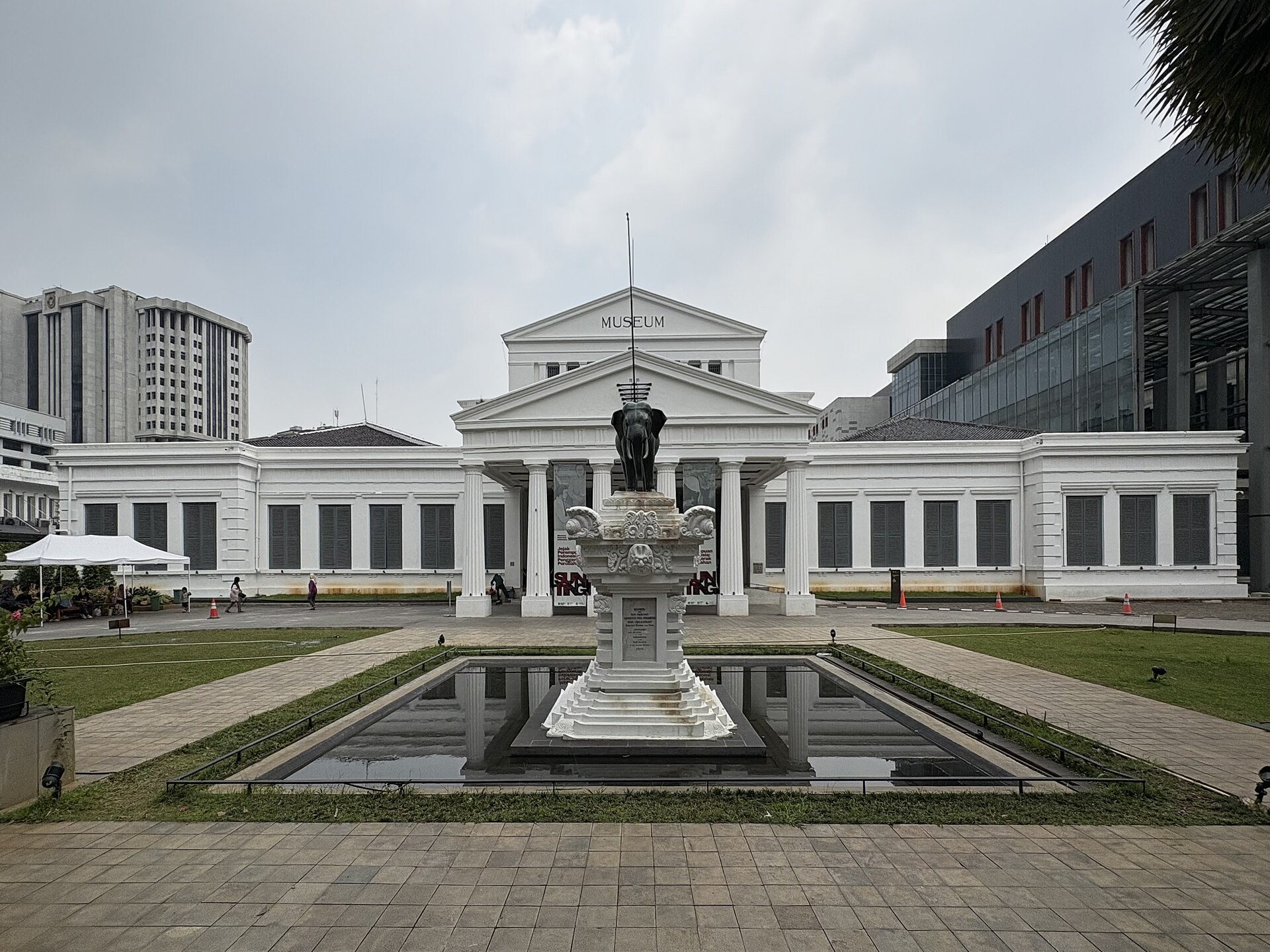
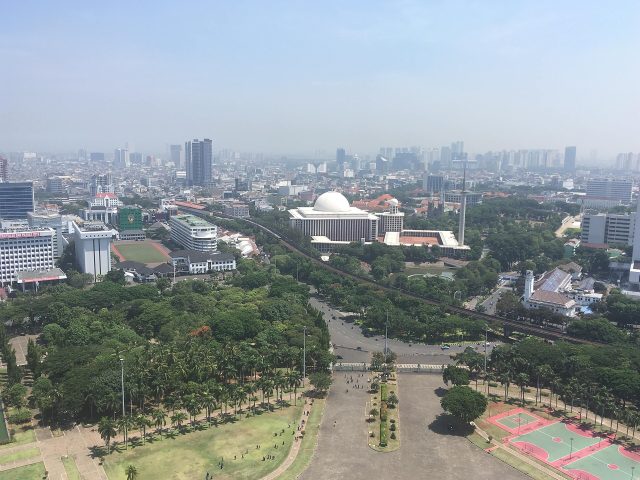
The National Museum of Indonesia, known as the Elephant Museum for the bronze statue in its courtyard, sits on Merdeka Square. It stands apart from Jakarta’s traffic and malls. This is not a place for entertainment but for tracing the threads of a nation shaped by cultures, migrations, and histories. The building, constructed in the mid-19th century by Dutch colonial authorities, was originally the Batavian Society of Arts and Sciences. Its purpose was to collect, classify, and understand the archipelago. Today, it preserves the voices of those who shaped Indonesia before it bore that name.
Walking through its halls moves you through layers of time. The prehistoric collection starts with stone tools, pottery shards, and fossilized remains of early humans found across Java and other islands. These objects show survival and adaptation—communities learning to farm, build, and navigate. Nearby, galleries dedicated to Indonesia’s classical kingdoms display statues of deities, temple relief fragments, and jewelry once belonging to rulers and warriors. These artifacts once stood in monuments like Borobudur and Prambanan.
The ethnographic collection makes the past feel alive. Everyday objects reveal the lives of Indonesia’s diverse peoples. A Dayak wooden mask from Borneo, carved with care, suggests rituals still practiced in remote villages. A length of Javanese batik, its patterns deliberate, reflects a craft passed down through generations. There are fishing nets from Sulawesi, woven baskets from Sumatra, and replicas of traditional houses—Torajan stilt homes, Dayak longhouses, and Papuan huts. These displays invite you to imagine a world where the sacred and the ordinary blurred, where every object had purpose.
The museum’s architecture tells its own story. The original 1868 building, neoclassical in design, features tall columns and high ceilings. It was built to impress but not overwhelm, reflecting the institution’s scholarly roots. In 2007, a modern glass wing was added for temporary exhibitions and events. The contrast between old and new mirrors Indonesia itself, where skyscrapers stand beside ancient temples.
The museum is more than its collections. Lectures on archaeology, workshops on traditional crafts, and regional music performances happen often. Contemporary artists sometimes exhibit works inspired by heritage. For deeper exploration, a library holds rare books and archives, though some materials may be restricted. It’s a place to engage, ask questions, and connect with the stories it holds.
The museum shows Indonesia as a country shaped by trade, conquest, and exchange. Exhibits trace influences from India, China, the Arab world, and Europe—seen in language, cuisine, and daily life. But it also tells the stories of ordinary people: farmers, fishermen, artisans. These threads hold the nation together.
Some exhibits need better lighting or clearer English descriptions. Weekends can get crowded. Yet the sense of discovery remains. There’s no hype here—just history, the scent of aged wood, and the feeling of touching something real. In a city racing toward the future, the National Museum offers a pause to look back and see how much of the past lives on today.