The National Library of Bhutan stands quietly in the heart of Thimphu, a place where the country’s written heritage is preserved with care. Unlike the grand, bustling libraries of larger nations, this one feels more like a sanctuary—a modest building where time moves slowly, and the weight of history is palpable in every corner. It was established in 1967, not long after Bhutan began opening its doors to the outside world, a deliberate effort to safeguard the texts that define its culture, religion, and identity.
The library’s collection is deeply rooted in Bhutan’s Buddhist traditions, housing thousands of ancient manuscripts, block-printed texts, and religious scrolls. Many of these works are written in Dzongkha, the national language, or in classical Tibetan, reflecting the spiritual and intellectual exchanges that have shaped the Himalayan region for centuries. Some of the oldest manuscripts date back to the 12th century, their pages fragile with age, their ink still vivid in places where the words have been handled with reverence. Among the most treasured items are the Kanjur and Tenjur, the core Buddhist scriptures that guide both monastic study and everyday devotion.
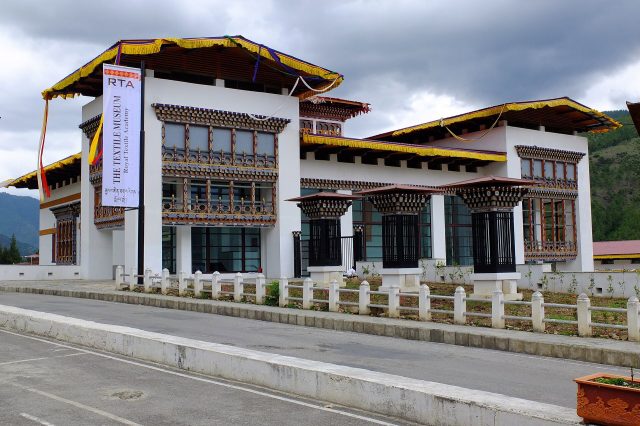
The building itself is unassuming, blending into the city’s landscape without drawing attention. Its architecture follows traditional Bhutanese design, with whitewashed walls, sloping roofs, and wooden windows that filter the sunlight into soft, diffused patterns. Inside, the air is cool and still, the scent of old paper and incense lingering in the quiet. The reading rooms are small but well-organized, with shelves that hold not just books but also rare woodblock prints and handwritten commentaries on philosophy, medicine, and astrology. There’s a sense of intimacy here, as if the space was designed more for contemplation than for crowds.
One of the library’s most striking features is its collection of thangkas—elaborate religious paintings on cloth, often depicting deities, mandalas, or scenes from Buddhist cosmology. These are not merely decorative; they serve as visual scriptures, teaching tools that convey complex spiritual ideas through color and symbolism. Some are so large they must be unrolled with care, their vibrant pigments still bright despite centuries of handling. The library also preserves early printed materials from Bhutan’s first press, established in the 1960s, which marked a turning point in the country’s ability to produce and distribute its own literature.
Beyond its role as a repository of texts, the National Library plays a vital part in Bhutan’s cultural life. It serves as a research center for scholars, both local and foreign, who come to study the country’s unique blend of Buddhism and indigenous traditions. The staff, often monks or trained archivists, are knowledgeable guides, able to explain the significance of a particular manuscript or the history behind a faded inscription. For visitors, the library offers a rare glimpse into a world where knowledge is not just stored but revered—a place where the past is not distant but alive in the pages of a book.
The library also reflects Bhutan’s broader approach to development, which prioritizes Gross National Happiness over economic growth alone. Here, the preservation of culture is not an afterthought but a cornerstone of national identity. The texts housed within these walls are not just historical artifacts; they are living documents that continue to shape how Bhutanese people understand their place in the world. Whether it’s a farmer consulting an astrological almanac or a monk studying a centuries-old commentary, the library remains a bridge between tradition and the present.
For those who visit, the experience is often understated but memorable. There are no grand exhibits or interactive displays—just the quiet hum of a place dedicated to the written word. The library’s location in Thimphu, a city where modern buildings stand alongside ancient temples, makes it feel like a natural part of the landscape. It’s a reminder that in Bhutan, progress doesn’t mean leaving the past behind but carrying it forward with intention. The National Library is not just a building; it’s a testament to a culture that values wisdom, patience, and the quiet power of stories.