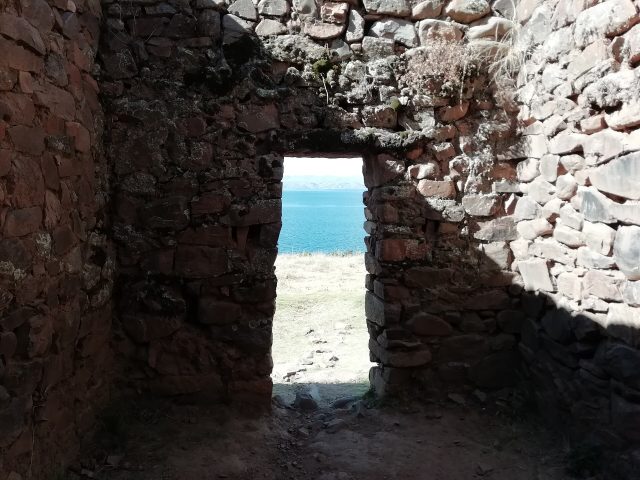
Calvary Hill rises quietly above Copacabana, a small town on the shores of Lake Titicaca where the landscape seems to pause, as if holding its breath. From the top, the lake stretches endlessly toward the horizon, its surface shifting between deep blue and silver depending on the light. On clear days, the distant mountains appear close enough to touch, their peaks sharp against the sky. The hill itself is modest in size, but its presence is felt long after you leave—less for its height than for the way it frames the world below.
The climb up is marked by fourteen small chapels, each representing a station of the Cross. Built in the mid-20th century, they follow a tradition older than their whitewashed walls suggest. Pilgrims and locals ascend the stone steps slowly, pausing at each chapel to pray or reflect. The path isn’t difficult, but it demands attention—some stretches are steep, and the air thins as you rise. Benches along the way offer a place to rest, to look out over the town’s red-tiled roofs or the lake’s vast expanse. On Good Friday, the hill fills with people, but even on ordinary days, you might encounter someone making the journey alone, their footsteps the only sound.
The chapels are simple, almost austere. Their tiled roofs curve gently, and the niches inside hold flickering candles. There’s no grandeur here, just a quiet persistence. The hill has always been a place of significance. Long before the Spanish arrived, it served as a lookout and a site for rituals. The Aymara people, who have lived here for centuries, consider Lake Titicaca sacred, believing it to be the birthplace of the first Incas, who emerged from its waters by the will of the god Viracocha. After colonization, old beliefs didn’t disappear—they merged with Christianity, creating something new. Today, you’ll see crosses alongside Andean symbols: colorful ribbons tied to fences, offerings left in hope of good fortune.
The atmosphere shifts with the time of day. Mornings are cool, the lake still and reflective under the rising sun. By midday, a soft haze drifts over the water, and the air warms. Evenings bring a slow transformation—the sky turns shades of orange and pink, and the lights of Copacabana begin to twinkle below. At these moments, the hill feels like a threshold, a place where earth, water, and sky meet. It’s not just the view that lingers, but the sense of being suspended between worlds.
Copacabana moves at its own pace, and Calvary Hill only deepens that rhythm. There’s no rush here, no need to hurry. You might sit on a bench, watching the lake’s surface ripple in the wind, or listen to the distant chime of the basilica’s bells. Sometimes, artisans set up small stalls near the summit, selling stone carvings, woven bracelets, or postcards of the lake. Even if you don’t buy anything, the conversations—brief, unhurried—feel genuine, like the place itself.
The hill isn’t a destination you can visit in passing. It asks for time, for attention. The climb takes about half an hour if you take it slowly, and the reward isn’t just the view but the way the ascent changes your perspective. Below, the town hums with quiet life: fishermen mending nets, women selling fresh trout from the lake, children playing in the square. From above, it all looks small, almost fragile, yet enduring.
If you come to Copacabana, the climb is worth making. Not for the sake of ticking off a sight, but for the way it slows you down. The hill has a way of making everything else feel distant—the noise of cities, the urgency of schedules. Even the descent carries a different weight, as if you’re carrying something back with you. Maybe it’s the memory of the light on the water, or the way the wind sounds different up there.
Before leaving, it’s worth stopping in one of the town’s small cafés. They serve trout from the lake, grilled or fried, or a bowl of quinoa soup, hearty and simple. But even if you don’t eat, the walk back through Copacabana’s streets leaves a lingering sense of having touched something real. Calvary Hill isn’t just a landmark. It’s a place where history, faith, and landscape converge, where the past isn’t just remembered but still alive. That’s why people return—not because they have to, but because they want to feel it again.