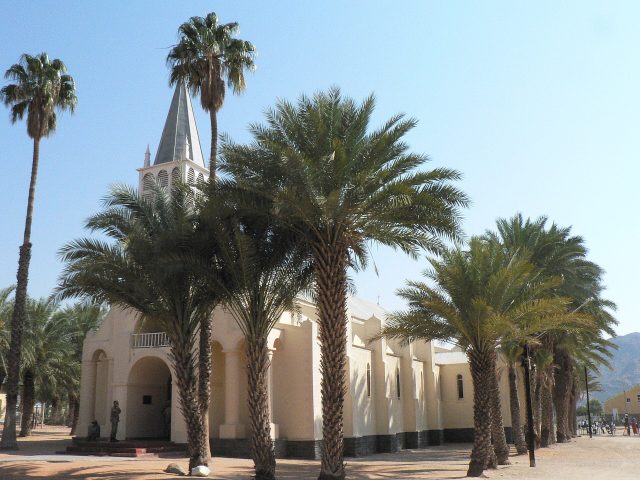
Pella is one of those quiet places that most travelers pass by without a second thought, tucked away in the vast, sunbaked landscapes of South Africa’s Northern Cape. It’s not a town that makes it onto postcards or into guidebooks, but that’s part of its charm. Here, history and nature intertwine in unexpected ways, and the Tulip Museum stands as a small but meaningful testament to the people who shaped this corner of the world. Unlike the grand botanical gardens or flashy flower festivals elsewhere, this museum isn’t just about the beauty of tulips—it’s about the stories they carry, the lives they touched, and how something as simple as a flower became woven into the fabric of a community.
The museum’s origins trace back to the mid-20th century, when Dutch settlers arrived in the region, bringing with them more than just their language and traditions. They carried tulip bulbs, a piece of home they refused to leave behind. In South Africa’s harsh climate, where the sun beats down relentlessly and the soil is unforgiving, growing tulips was never going to be easy. Yet, through sheer persistence, the settlers managed to coax these delicate flowers into bloom. Over time, the tulips became more than just a reminder of the Netherlands—they became a symbol of resilience, a living connection to a distant past. The museum was born from a desire to preserve that connection, to ensure that the story of these flowers and the people who nurtured them wouldn’t fade away.
The museum itself is unassuming, housed in a modest building that blends into the quiet streets of Pella. Inside, the exhibits are small but carefully curated, offering a glimpse into the lives of the Dutch families who made this place their home. Old photographs capture moments of daily life—children playing in the dust, women tending to gardens, men working the land. There are handwritten letters, yellowed with age, detailing the challenges of growing tulips in an unfamiliar climate. Tools used for planting and harvesting are displayed alongside faded seed packets, each one telling a story of adaptation and perseverance. The museum doesn’t overwhelm with grandeur; instead, it invites visitors to lean in, to look closely, and to imagine the lives of those who came before.
Of course, the heart of the museum lies in the tulips themselves. While the collection isn’t vast, it’s enough to show how these flowers, so closely associated with the cool, damp climates of Europe, found a way to thrive in the arid heat of South Africa. Outside, a small garden showcases a handful of varieties that were once common here, some of which have all but disappeared from other parts of the world. The blooms aren’t as vibrant or abundant as they might be in Amsterdam or Istanbul, but that’s part of what makes them special. They’re a quiet reminder that beauty can take root in the most unlikely places, and that even the smallest things can carry deep meaning.
Pella today is a town that moves at its own pace, far removed from the hustle of South Africa’s more famous destinations. The museum isn’t a major tourist attraction, and that’s precisely why it feels so authentic. There are no crowds, no souvenir stalls, no guided tours rushing you from one exhibit to the next. Instead, there’s space to breathe, to reflect, and to appreciate the quiet significance of what’s on display. Locals, many of whom are descendants of the original Dutch settlers, take pride in the museum, not because it brings in hordes of visitors, but because it keeps their history alive. School groups occasionally visit, learning about how different cultures can come together, how traditions can evolve, and how a simple flower can bridge worlds.
Visiting the Tulip Museum isn’t about ticking off another sight on a checklist. It’s about stepping into a slower rhythm, one that matches the unhurried pace of life in Pella. The town is surrounded by the vast, open landscapes of the Northern Cape—endless plains stretching under a sky so big it makes you feel small. It’s easy to imagine the first settlers here, arriving in a land so different from what they knew, planting their tulip bulbs with hope and uncertainty. Some of those bulbs took root, just as the people did, and today, their descendants still live in Pella, still tending to the land, still remembering where they came from.
The tulips that bloom here today might not be as showy as their European cousins, but they’re no less meaningful. They’re a living link to the past, a reminder that history isn’t just found in grand monuments or famous battles. Sometimes, it’s in the quiet persistence of a flower that refuses to fade, in the stories of ordinary people who carried a piece of their homeland halfway across the world. The Tulip Museum doesn’t claim to be the most important place in South Africa, and that’s exactly what makes it worth visiting. It’s a place where you can stand in the shade of a simple building, surrounded by the scent of earth and the occasional bloom, and feel the weight of time in a way that’s both gentle and profound.
If you ever find yourself in this part of the country, far from the well-trodden paths, take a detour to Pella. Spend an hour wandering through the museum, stepping into the garden, and letting the stillness of the place settle over you. It’s not the kind of experience that will leave you breathless with excitement, but it might just leave you with something deeper—a quiet appreciation for the way small things can carry big stories, and for the way a single flower can connect the past to the present.