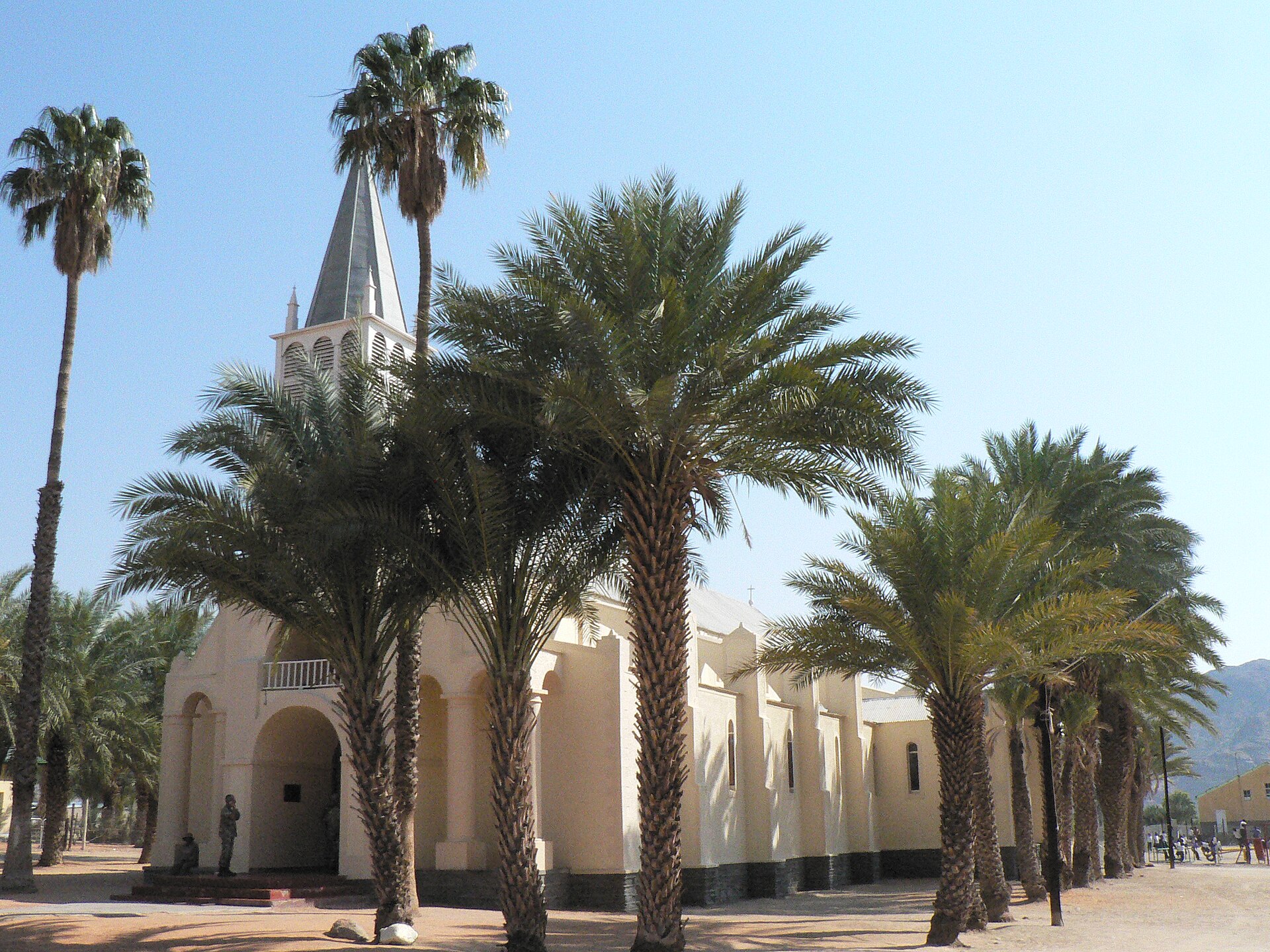
The Immaculate Conception Cathedral in Pella feels like a place that has slipped through the cracks of time. It stands on the edge of a small town in the far north of South Africa, where the vast, arid landscapes of the Karoo give way to scattered patches of green, and the horizon blurs into the shimmer of hot air. Unlike the grand cathedrals of Europe that dominate city squares with their towering spires, this one is unassuming—whitewashed walls, a modest bell tower, and a quiet that is broken only by the wind and the occasional murmur of worshippers. There is no pomp here, but that only makes its presence more striking.
The cathedral’s story is woven into the broader history of missionary work in southern Africa. In the late 19th century, Catholic priests from Europe ventured into these remote regions, establishing missions among local communities. Pella, far from the bustle of major cities, became one such place where faith and daily life intertwined. The cathedral was built in the early 20th century, though the exact date remains a subject of debate among historians. What is certain, however, is its role in the life of the community. It was more than a place of worship—it was a school, a clinic, a refuge for travelers, and a gathering point for those seeking solace or connection.
Architecturally, the cathedral is simple yet distinctive. Its design leans toward the neo-Gothic style, an echo of European traditions that feels slightly out of place in this rugged landscape. Tall, pointed windows, slender columns, and delicate tracery on the facade hint at its origins, but the local climate and materials have left their mark. The walls are built from light stone that gleams almost white under the harsh sun, while the roof is tiled to withstand both scorching heat and the rare but heavy downpours. Inside, the space is airy and bright, with high ceilings, wooden pews, and an altar adorned with modest carvings. There are no gilded decorations or elaborate frescoes, but the sense of peace is immediate.
Pella is not a tourist destination, and the cathedral draws few visitors. The town moves at its own unhurried pace, far removed from the energy of Cape Town or Johannesburg. Many of the locals belong to the Nama people, and while not everyone shares the Catholic faith, the cathedral is treated with respect. For them, it is more than a building—it is a piece of their ancestors’ history, a place where old traditions and new influences have blended over time. On feast days and special occasions, the community gathers here for baptisms, weddings, and funerals. Hymns are sung in multiple languages, the scent of incense mingles with local herbs, and as the sun sets, the cathedral glows softly in the candlelight.
Beyond its religious significance, the Immaculate Conception Cathedral is a cultural landmark. A small but tight-knit community has formed around it, preserving traditions and passing them down through generations. Here, different worlds coexist: Catholic rituals stand alongside Nama customs, European melodies blend with local rhythms. In this way, Pella and its cathedral offer a microcosm of South Africa itself—a place where diversity does not divide but rather creates something richer.
Visiting the cathedral is less about admiring its architecture or ticking off a historical site and more about experiencing its atmosphere. There are no crowds, no pushy guides, no souvenir stalls—just silence, space, and the feeling that time has slowed down. You can sit on a bench in the shade of a tree, listen to the birds, or watch the play of light on the stone walls. For those traveling through South Africa in search of something beyond beaches and safaris, Pella and its cathedral are an unexpected discovery—a place where history feels alive, and faith takes on a tangible form.
The surrounding landscape stretches out in all directions, a vast expanse of desert that seems to go on forever. The journey here is long and not always easy, but that is part of what makes Pella special. There are no tourist hordes, no city noise, just open space and quiet. The cathedral seems to hold the memories of those who came here long ago with hope and conviction, and that sense of history lingers in every stone, in every shaft of light filtering through the stained glass. It is a place that draws those who seek not just entertainment, but a moment of stillness and meaning.