- Home
- South Africa
- Ancient Pella
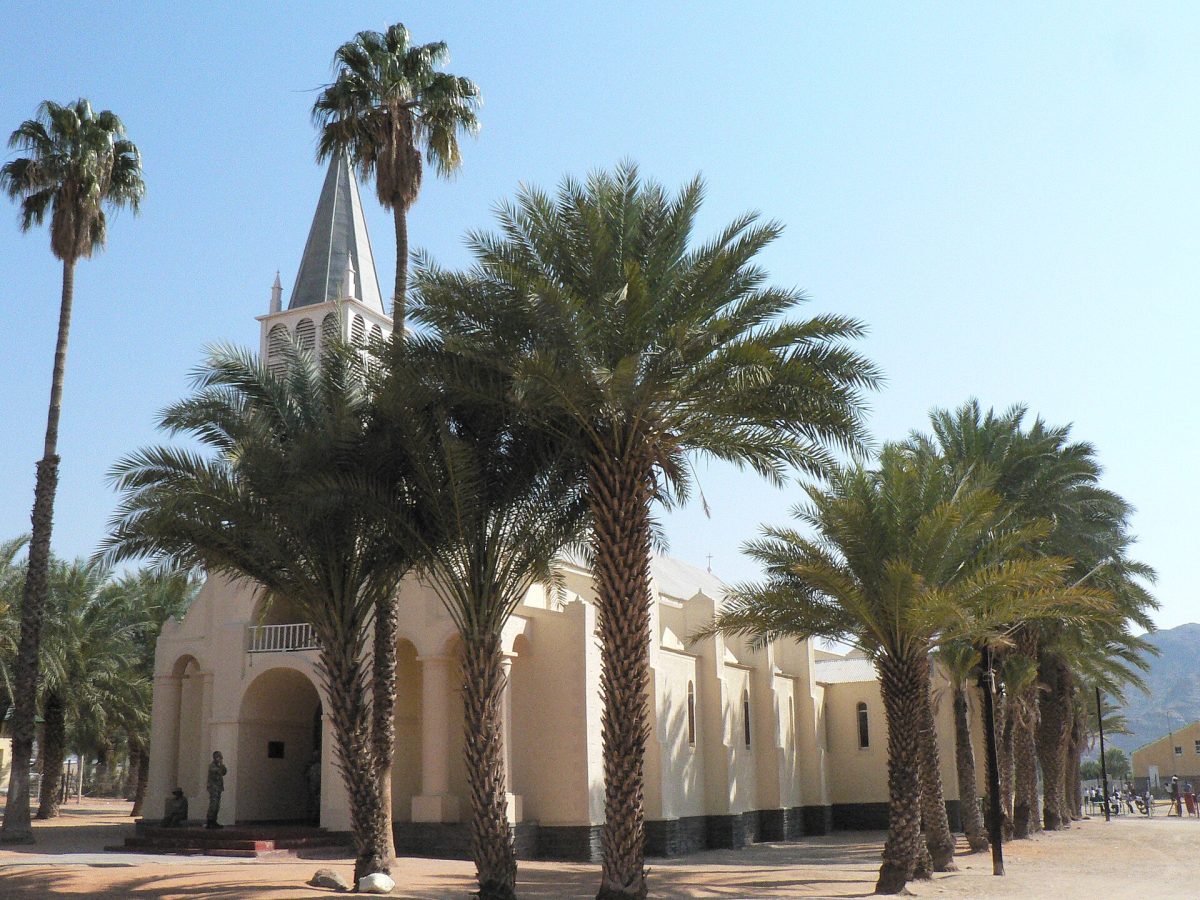
Ancient Pella
South Africa · 1 place
Photo: Andrew Hall, CC BY-SA 3.0
Pella is one of those places that feels like it exists outside of time. Tucked away in the arid expanse of South Africa’s Northern Cape, it sits in the heart of the Karoo semi-desert, where the land stretches endlessly under a relentless sun. Rain is rare here, and when it does fall, the earth drinks it up instantly, leaving behind only the shimmer of heat haze on the horizon. There are no crowds, no neon signs, no rush—just silence, the weight of the sun, and the quiet certainty that you’ve reached the edge of the map. That’s what makes Pella special. It doesn’t try to impress; it simply is, content in its own unhurried rhythm.
The town began in the late 1800s as a mission station, founded by German missionaries from the Rhenish Mission Society. They came to these empty lands to bring Christianity to the Nama and San people, and over time, a small settlement grew around the mission. Today, the past lingers in the thick-walled church with its modest steeple, the sunbaked clay buildings, and the quiet cemetery where the first settlers rest. There’s no grand museum here, no polished plaques—just the kind of history that seeps into your bones when you walk the dusty streets, where every cracked wall and weathered door tells a story.
Life in Pella moves at the pace of the land. Summers are brutal, with temperatures climbing past forty degrees, driving everyone indoors or under shade until the worst of the heat passes. Winters bring cold nights, though the days warm just enough to make outdoor work bearable. Most people here live off the land, raising sheep and goats, growing lucerne and maize on soil that gives little without effort. Water is precious, and every source—a well, a seasonal river—is guarded like gold. The land doesn’t offer much, but those who live here know how to make do.
Despite its remoteness, Pella isn’t cut off from the world. The drive from Upington takes a few hours along a paved road that winds through rocky hills and sparse scrubland. Along the way, you might spot herds of springbok grazing by the roadside or a lone farmhouse fenced in with barbed wire. The town itself is small—a general store for essentials, a petrol station, a couple of cafés serving strong coffee and homemade bread. The locals are friendly but not intrusive; they’re used to the occasional visitor and ask for nothing more than respect for their way of life.
This isn’t a place for those seeking luxury or entertainment. There are no five-star hotels, no fine-dining restaurants, no shopping malls. What Pella offers instead is something far rarer: a sky that burns with every shade of orange and purple at dusk, stars so bright they seem within reach, and a silence so deep it presses against your ears yet soothes the mind. It’s a place for those who’ve grown tired of noise, who want to sit quietly with their thoughts and the vastness of the land. Here, you can perch on the porch of an old house, listen to the hum of cicadas, and realize how little it takes to feel content. In Pella, the world is stripped down to its essence—no frills, no pretenses, just the quiet truth of being.
See & Do
1 place
Places on the map
Marker colour follows the categoryClimate and weather
Detailed weather: Ancient Pella- Average temperature
- 24 °C
- Precipitation per year
- 53 mm
Average air temperature
°C
29
30
28
27
22
18
17
19
22
25
27
27
Jan
Feb
Mar
Apr
May
Jun
Jul
Aug
Sep
Oct
Nov
Dec


