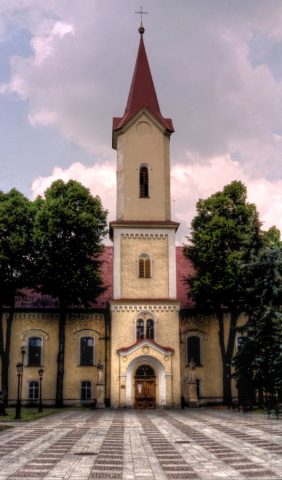
Revúca is one of those quiet Slovak towns that most travelers pass by without a second thought. It doesn’t have grand monuments or crowded squares, no neon signs or souvenir shops competing for attention. Instead, it offers something rarer—a sense of time moving at its own unhurried pace, a place where the past lingers in the details of everyday life. At the heart of this unassuming town sits the Museum of Crafts and Folk Art, a small but thoughtful space that preserves the skills and traditions that once shaped the region.
The museum occupies a building that has witnessed more than a century of local history. Constructed in the late 1800s, it was originally a residential home before becoming a repository of craftsmanship. The architecture is typical of the area—thick walls, high ceilings, and large windows that let in soft, diffused light. Inside, the atmosphere is deliberately uncluttered. There are no flashy displays or digital screens, just the quiet presence of tools, textiles, and handmade objects that once played a role in people’s daily lives. The space feels lived-in, as if the past hasn’t quite faded away.
The exhibits focus on the trades that sustained rural Slovakia for generations. Blacksmiths, potters, weavers, and carpenters—each craft is represented through the tools of the trade and the objects they produced. The collection includes everything from simple clay pots to intricately carved furniture, but the weaving section stands out. Several looms, some still functional, take up a corner of the room, surrounded by samples of fabric woven by local artisans. The textiles vary widely—coarse linen for work clothes, delicate embroidered linens for special occasions, and patterned tablecloths that once graced family tables. Each piece speaks to a level of skill and patience that modern life rarely demands.
A separate room is dedicated to folk art, where everyday objects become canvases for creativity. Wooden chests painted with floral motifs, clay jugs adorned with geometric patterns, and embroidered towels hang alongside traditional costumes. The most striking items are the women’s headpieces and jewelry, worn during festivals and celebrations. These weren’t just decorative—they carried meaning, signaling a woman’s age, marital status, or social standing. The craftsmanship is subtle but deliberate, a quiet testament to the importance of beauty in ordinary life.
What makes the museum more than just a collection of artifacts is its occasional workshops. Visitors can try their hand at traditional crafts under the guidance of local artisans—weaving on a loom, shaping clay, or carving wood. For children, it’s a chance to connect with history in a tangible way. Adults often leave with a newfound respect for the effort behind seemingly simple objects. The workshops remind you that what we now take for granted—cloth, pottery, furniture—once required time, knowledge, and care.
Revúca itself has long been a town of makers. In the past, it was a hub for trade and craftsmanship, drawing artisans from surrounding villages. Here, they produced tools, textiles, and even musical instruments. Some of these traditions have faded, but others persist, adapted to modern needs. The museum traces this evolution, showing how industrialization changed the lives of craftspeople and why certain skills endured despite the rise of factories. It’s a story of resilience, of techniques passed down through families even as the world around them changed.
Walking through the museum, it’s hard not to reflect on how much has been lost in the shift toward mass production. The objects here weren’t made to be disposable. They were built to last, to be repaired, to be handed down. In an age where so much is temporary, the museum offers a quiet argument for the value of handmade things—not just for their beauty, but for the thought and effort they represent.
Revúca doesn’t try to be a tourist destination, and that’s part of its charm. The town invites you to slow down, to wander its quiet streets, to linger in a café or browse a small shop. The Museum of Crafts and Folk Art fits perfectly into this rhythm. It’s not a place to rush through. Instead, it asks you to pay attention—to the weight of a wooden tool in your hand, to the intricate patterns on a piece of fabric, to the stories embedded in each object. Here, history isn’t just something you observe. It’s something you feel.