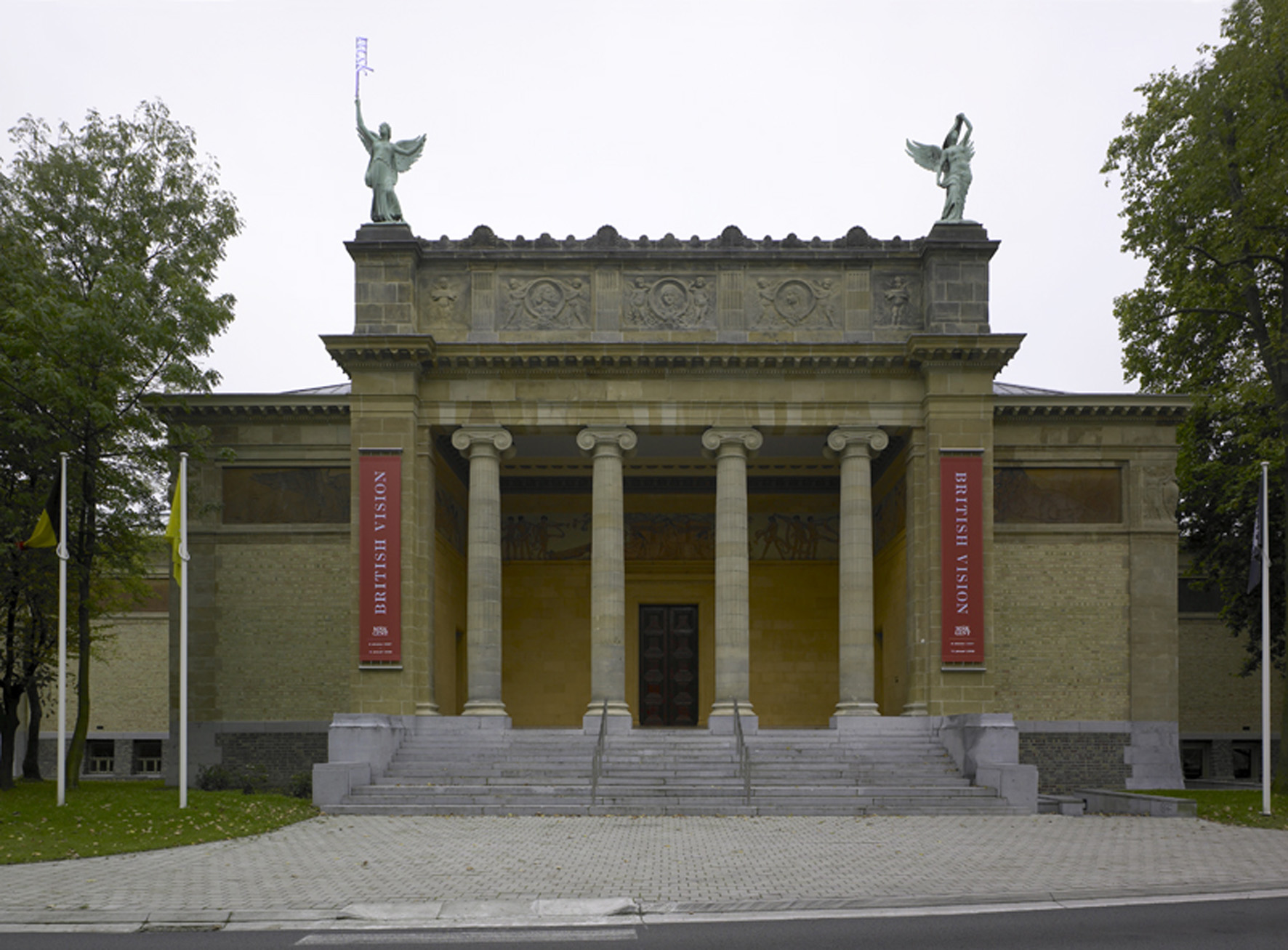
Ghent’s Museum of Fine Arts, or MSK as it’s often called, sits quietly at the edge of Citadelpark, a green expanse that feels like a pause in the city’s steady rhythm. The building itself is a piece of history, designed in the early 20th century by architect Charles van Rysselberghe, who gave it a stately neoclassical facade that blends seamlessly with the park’s old trees and winding paths. Inside, the galleries unfold in a way that feels both deliberate and unhurried, as if the space was built to let art breathe rather than overwhelm.
The museum’s collection spans from the Middle Ages to the early 20th century, with a particular strength in Flemish art. Walking through the rooms, you’ll find works by Hieronymus Bosch, whose intricate, almost surreal compositions still feel unsettlingly modern. There’s a quiet intensity to his *Saint Jerome at Prayer*, where the saint’s gaunt figure kneels in a landscape that seems to twist with hidden meaning. Nearby, Peter Paul Rubens’ *Portrait of a Man* commands attention not just for its technical mastery but for the way the subject’s gaze seems to follow you, as if he’s privy to some private joke.
The 17th century is well represented, with paintings that capture the richness of the Southern Netherlands during its golden age. Jacob Jordaens’ *The King Drinks* is a riot of color and movement, a scene of revelry that feels almost alive with the clink of glasses and the hum of conversation. The details—the flushed faces, the spilled wine, the dog sniffing at a fallen pie—make it easy to forget you’re looking at a canvas. Then there’s Anthony van Dyck, whose portraits carry a sense of effortless elegance, as if his subjects stepped out of a ballroom and into the frame without missing a beat.
One of the museum’s lesser-known treasures is its collection of 19th-century Belgian art, which offers a glimpse into a country in the throes of industrialization and social change. The works here feel more intimate, often focusing on everyday scenes—farmers in the fields, workers in the factories, families gathered in modest homes. Artists like Emile Claus and Théo van Rysselberghe played with light in ways that feel almost impressionistic, though their approach was distinctly their own. Claus’ *The Ice Birds* is a masterclass in capturing the play of winter sunlight on snow, while van Rysselberghe’s *The Reading* bathes its subjects in a warm, golden glow that makes the scene feel like a stolen moment.
The museum doesn’t shy away from the darker or more experimental sides of art history either. There’s a small but striking collection of symbolist works, where artists like Fernand Khnopff and James Ensor explored dreams, fears, and the subconscious. Ensor’s *The Intrigue* is a particularly unsettling piece, with its masked figures and eerie, almost carnival-like atmosphere. It’s the kind of painting that lingers in your mind long after you’ve left the gallery, a reminder that art isn’t always meant to comfort.
What makes MSK special isn’t just the quality of its collection but the way it tells a story—of Ghent, of Flanders, of the shifting tides of European art over centuries. The museum doesn’t try to be encyclopedic; instead, it focuses on moments, on the connections between artists and their times. A visit here feels less like a checklist of masterpieces and more like a conversation, one that starts with a medieval altarpiece and ends with a modernist sketch, all under the same roof.
The building itself has its own quiet charm. The grand staircase, the high ceilings, the way natural light filters through the windows—it all serves the art without drawing attention to itself. Even the smaller galleries have a sense of intimacy, as if they were designed to let you get lost in a single painting without distraction. There’s no rush here, no pressure to see everything at once. The museum invites you to wander, to return to a favorite piece, to sit on one of the benches and let the art sink in.
Outside, Citadelpark offers a perfect counterpoint to the museum’s quiet intensity. The paths wind past ponds and sculptures, and on a sunny day, you’ll find locals reading on the grass or children playing near the water. It’s a reminder that Ghent isn’t just a city of history but one that lives and breathes, where the past and present coexist without fuss. The Museum of Fine Arts is part of that balance—a place where art isn’t just preserved but allowed to live, to surprise, and to speak in its own time.