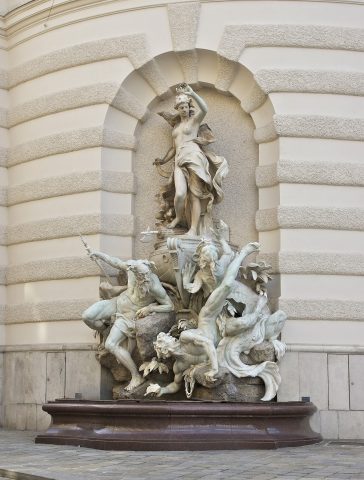
The Kunsthistorisches Museum in Vienna is one of those rare places that feels suspended in time yet remains vibrantly alive. It stands along the Ringstrasse, the grand boulevard encircling the city’s historic core, its imposing façade an immediate draw. Commissioned by Emperor Franz Joseph I in the late 19th century, the museum was designed to house the Habsburg dynasty’s vast art collections, amassed over centuries. Architects Gottfried Semper and Karl von Hasenauer crafted the building in the neo-Renaissance style, with a soaring dome, stately colonnades, and intricate ornamentation that echoes the grandeur of ancient temples. Inside, the museum unfolds like a Renaissance palace—marble staircases, gilded ceilings, and frescoes create an atmosphere of quiet majesty, inviting visitors to linger over every detail.
The museum’s collection is more than a mere assemblage of artworks; it’s a chronicle of European culture. Here, masterpieces by Bruegel the Elder, Rubens, Raphael, Titian, and Velázquez share space with lesser-known but equally compelling works. The Bruegel collection is particularly remarkable, with paintings like *The Peasant Dance* and *Hunters in the Snow* capturing 16th-century life with such vividness that the scenes feel almost tangible. The Habsburgs didn’t just collect art for prestige—they saw it as an extension of their power and legacy. Some pieces arrived in Vienna from Spain, Italy, or the Netherlands, while others were commissioned specifically for imperial residences, each with its own story of acquisition and display.
One of the museum’s most celebrated sections is its antiquities collection, where Greek and Roman sculptures, vases, and jewelry offer a glimpse into the ancient world. Among the highlights is the Gonzaga Cameo, carved from layered sardonyx, its delicate craftsmanship still astonishing after centuries. The Egyptian artifacts—mummies, sarcophagi, and everyday objects—provide a rare window into one of history’s oldest civilizations. These pieces aren’t just relics; they’re threads connecting past and present, reminding us how art has always been woven into human existence.
Beyond its permanent collection, the museum remains a living space for art. Temporary exhibitions, lectures, and concerts breathe new life into the galleries, often juxtaposing contemporary perspectives with classical works. A modern artist’s reinterpretation of a Renaissance theme or a concert of Baroque music performed beneath frescoed ceilings can shift how visitors see familiar pieces. The building itself is a masterpiece, its interiors so meticulously designed that even the ceilings are adorned with allegorical scenes, immersing visitors in another era.
A visit here is a slow, deliberate journey. Unlike some tourist-heavy sites, the museum’s halls are spacious enough to allow for quiet contemplation, even when crowded. You might spend an hour in front of a Rembrandt portrait, then wander into a gallery of medieval altarpieces, each room offering its own mood—some grand and solemn, others intimate, as if you’ve stepped into a private chamber. Children often pause in awe before massive canvases or try to decipher the stories behind mythological scenes, their curiosity a reminder of the museum’s enduring appeal.
The Kunsthistorisches Museum sits at the heart of Vienna, making it an easy stop on a walk through the city’s historic center. Nearby, the Hofburg Palace and St. Stephen’s Cathedral offer further glimpses into the city’s imperial past, while the State Opera House stands as a testament to its cultural vitality. After a visit, a coffee at one of the Ringstrasse cafés provides the perfect setting to reflect on what you’ve seen. Vienna has long been a city where art and life intertwine, and this museum is one of its crowning jewels.
For anyone drawn to history, architecture, or simply the beauty of human creativity, the museum is a revelation. There’s no rush here, no need to see everything at once. The collections are so vast that even repeat visits reveal new details, new connections. In a world that often moves too quickly, the Kunsthistorisches Museum offers a rare gift: the chance to step into a slower rhythm, where art isn’t just observed but experienced. It’s a place where the past isn’t just preserved—it’s still very much alive.