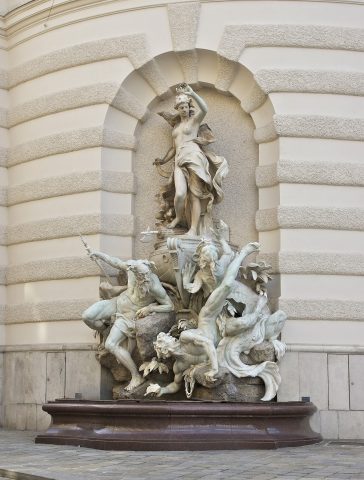
Vienna’s State Opera House isn’t just a building—it’s the city’s heartbeat, a place where music and history intertwine so seamlessly that it’s hard to tell where one ends and the other begins. Standing on the Ringstrasse, its grand façade and ornate details tell a story that stretches back over a century and a half, from the height of the Habsburg Empire to the present day. The opera house isn’t merely a venue; it’s a living archive of Vienna’s cultural identity, where every performance carries the weight of tradition while still feeling fresh and immediate.
The story of the opera house begins in the 1860s, when Emperor Franz Joseph I envisioned Vienna as the cultural capital of Europe. He commissioned architects August Sicard von Sicardsburg and Eduard van der Nüll to design a theater that would rival the great opera houses of Italy. The result was a masterpiece of neo-Renaissance architecture, its exterior adorned with sculptures of muses, composers, and allegorical figures that seem to watch over the city. But the building’s early years were marked by tragedy. Van der Nüll, overwhelmed by criticism of the design, took his own life before the opera house was completed. Sicardsburg followed soon after, leaving the project to be finished by others. When the doors finally opened in 1869 with a performance of Mozart’s *Don Giovanni*, the theater was already a place of legend.
Over the decades, the Vienna State Opera became a stage for the greatest names in music. Gustav Mahler, Richard Strauss, and Herbert von Karajan all left their mark here, conducting premieres of works by Wagner, Verdi, and Puccini. The opera house was a witness to history, too—its walls echoing with the sounds of a changing world. During World War II, Allied bombs severely damaged the building, reducing parts of it to rubble. The question of how to rebuild it sparked heated debates. Should it be modernized, or restored to its original glory? In the end, the decision was made to recreate the 19th-century design, blending historical authenticity with modern stagecraft. By 1955, the opera house had risen from the ashes, ready to reclaim its place at the center of Vienna’s cultural life.
Step inside, and the grandeur is impossible to miss. The foyer is a dazzling display of marble, gold leaf, and intricate frescoes, with chandeliers casting a warm glow over the space. The auditorium itself is a marvel of acoustics and design, seating over 1,700 people in a way that ensures every note reaches the farthest corners. The imperial box, once reserved for the emperor, remains empty—a silent reminder of the past. Portraits of legendary performers line the walls, their faces a testament to the countless artists who have graced the stage. Even the smallest details, like the hand-painted ceiling or the plush red velvet of the seats, speak to a commitment to beauty and craftsmanship.
Today, the Vienna State Opera is more than just a theater; it’s an institution. Its own orchestra, ballet company, and choir perform a repertoire that spans centuries, from Baroque masterpieces to contemporary works. Each season brings over 300 performances, and tickets for popular shows can sell out months in advance. But the opera house isn’t just for the elite. Standing-room tickets offer an affordable way to experience a performance, and during the summer, the plaza outside becomes an open-air stage for live broadcasts. Even when the main season ends, the opera house stays alive with festivals, guest performances, and experimental productions that keep the tradition evolving.
One of the most iconic events in the opera’s calendar is the Vienna Opera Ball, held every February. For one night, the auditorium transforms into a glittering ballroom, filled with thousands of guests in formal attire. The evening begins with the debutantes’ dance, a tradition that dates back generations, and ends with the entire crowd waltzing to the strains of Strauss. It’s a spectacle that captures the essence of Vienna—elegant, timeless, and deeply rooted in ritual. For many locals, the ball isn’t just a party; it’s a rite of passage, a moment when the city’s past and present come together in a whirl of music and movement.
Yet for all its grandeur, the opera house has a way of feeling intimate. Before a performance, you might catch musicians tuning their instruments or singers rehearsing in the wings. The air hums with anticipation, a quiet energy that builds until the first notes fill the hall. During intermission, the foyer buzzes with conversation as patrons discuss the performance over glasses of champagne or the opera’s signature chocolates, a small but beloved tradition. It’s these moments—the clink of glasses, the murmur of voices, the shared experience of music—that make the opera house feel like a second home to so many.
Vienna without its opera house would be like a symphony without its melody. This is a place where history isn’t just preserved; it’s lived. You can spend an evening listening to Mozart in the same hall where emperors once sat, or simply stand outside as the lights come on, watching the city come alive. The opera house isn’t a museum—it’s a living, breathing entity, constantly adapting while staying true to the traditions that define it. And perhaps that’s its greatest magic: the way it manages to feel both eternal and ever-changing, a bridge between the past and the present.