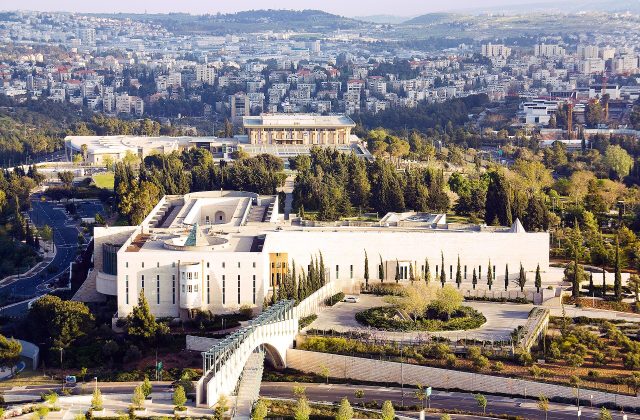
The Museum of the Biblical Lands sits quietly in Jerusalem’s Givat Ram neighborhood, a short walk from the city’s other major cultural institutions. Unlike traditional museums filled with paintings or sculptures, this one focuses on the everyday objects that shaped the lives of people thousands of years ago. Here, you’ll find tools, weapons, jewelry, and religious artifacts—each piece a fragment of a world that once thrived in the regions mentioned in the Bible. The exhibits span from the Bronze Age to late antiquity, offering a glimpse into how ancient societies lived, worshipped, and interacted with one another.
The museum’s origins trace back to the mid-20th century, a time when biblical archaeology was gaining momentum. Its collection grew through excavations across Israel and neighboring countries, as well as donations from private collectors and academic institutions. What makes this place unique is its emphasis on the cultures that coexisted with the ancient Israelites—Philistines, Canaanites, Egyptians, Assyrians, and Babylonians. A Philistine pot with geometric patterns, an Egyptian scarab amulet, or a clay tablet inscribed with cuneiform all tell stories of trade, conflict, and shared traditions that shaped the ancient Near East.
The building itself is a study in modern design with subtle nods to tradition. High ceilings, large windows, and uncluttered galleries allow natural light to highlight the exhibits without distraction. The layout encourages visitors to move freely, following either a chronological or thematic path. There’s no overcrowding—each artifact is given space, inviting close inspection. The minimalist display cases ensure that the focus remains on the objects and the stories they carry.
One of the most compelling sections of the museum features reconstructions of ancient settlements and temples. A partial recreation of a Canaanite temple, complete with an altar and sacrificial bowls, or a Philistine household with clay vessels and tools, helps visitors visualize the environments described in biblical texts. These aren’t exact replicas but interpretations based on archaeological findings, offering a tangible connection to the past. They remind us that the people who lived in these places were not just figures in a story but real individuals with daily routines, beliefs, and challenges.
For those interested in biblical history, the museum provides a deeper context for the scriptures. Items like oil lamps similar to those used in King David’s time or seals bearing the names of biblical figures appear alongside artifacts that illustrate the broader cultural landscape. Even if not every exhibit is directly tied to the Bible, together they paint a picture of the world in which these narratives unfolded. The museum doesn’t claim to prove or disprove the texts but instead presents the material culture that surrounded them.
Beyond religious or historical interest, the museum offers insights into the foundations of modern civilization. Many of the ideas, laws, and even phrases we use today have roots in the ancient Near East. The concept of justice, as outlined in the Code of Hammurabi, or beliefs about the afterlife reflected in Egyptian sarcophagi, can be traced through the exhibits. It’s a reminder that the past isn’t as distant as it seems—its influence lingers in ways we often overlook.
The museum’s approach is refreshingly understated. There’s no grand narrative imposed on the visitor; instead, the artifacts speak for themselves. Whether you’re drawn to the craftsmanship of a Canaanite pendant or the intricate details of an Assyrian relief, the experience feels personal. It’s a place where history isn’t just studied but felt—a collection of voices from the past waiting to be heard.
In recent years, the museum has expanded its collection and incorporated modern technologies to enhance the visitor experience. Yet its core remains unchanged: a bridge between eras, where ancient objects become a way to understand the people who made and used them. For a city like Jerusalem, where history is layered into every street and stone, the Museum of the Biblical Lands offers a way to peel back those layers and see the past not as a distant memory but as something alive and relevant.