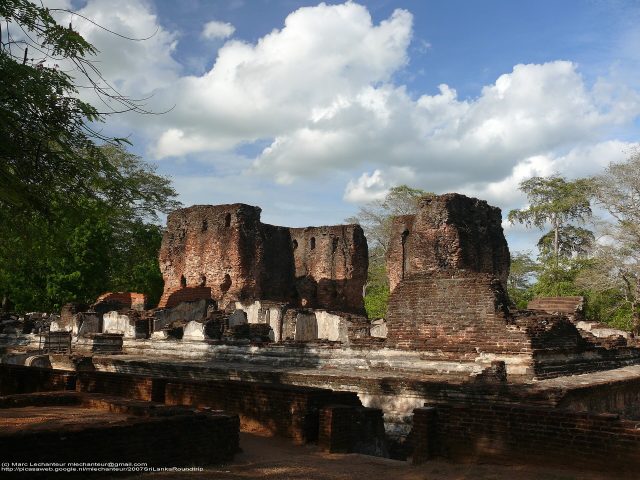
Polonnaruwa feels like a place where time has paused, preserving the legacy of Sri Lanka’s medieval kings. The ruins of palaces, temples, and man-made reservoirs scattered across the landscape carry the weight of history in every stone. The Archaeological Museum of Polonnaruwa serves as a bridge between past and present, turning silent relics into a narrative of the island’s golden age. Though modest in size, the museum holds immense value, offering a glimpse into the life of one of Sri Lanka’s most illustrious capitals.
Housed in a modern building designed to suit the tropical climate, the museum provides a welcome respite from the heat. High ceilings and large windows create an airy atmosphere, while the cool interior makes it easy to linger among the exhibits. The collection is arranged chronologically, beginning with the reign of King Vijayabahu I, who made Polonnaruwa the island’s political and cultural heart after the fall of Anuradhapura. Everyday objects, weapons, jewelry, and religious artifacts unearthed from nearby excavations fill the galleries, each piece adding to the story of a thriving medieval city.
One of the museum’s most compelling sections features stone inscriptions carved in Sinhala, Tamil, and Sanskrit. These texts reveal the laws, taxes, and royal decrees of the time, as well as the religious endowments that sustained temples. Among them, the inscription of King Nissanka Malla stands out—a proud account of his achievements in governance and devotion. These carvings are more than historical records; they reflect the evolution of language and culture on the island, shaped by trade, conquest, and exchange with neighboring civilizations.
The architectural fragments on display offer a window into Polonnaruwa’s grandeur. Intricately carved column capitals, ornate wall panels, and fragments of statues hint at the city’s former splendor. The most striking pieces are the Buddha statues from the Gal Vihara complex, sculpted in the 12th century. Despite the wear of time, their serene expressions and graceful lines remain captivating, embodying the artistic mastery of the era.
Beyond the medieval period, the museum also showcases earlier artifacts from the Anuradhapura era, as well as evidence of Polonnaruwa’s role as a trading hub. Chinese porcelain, Indian coins, and pottery shards from the Middle East underscore the island’s position at the crossroads of ancient maritime routes. These objects remind visitors that Sri Lanka has long been a meeting point of cultures, where goods, ideas, and traditions flowed freely.
The museum does more than display relics—it brings history to life. Reconstructed dwellings, farming tools, and craftsmanship artifacts paint a picture of daily existence in the city. A particularly rich collection of pottery, from simple clay pots to elaborately decorated vessels, reveals the contrast between the sacred and the mundane. These humble objects speak of markets, workshops, and homes that once thrived alongside the grand temples and palaces.
What makes the Archaeological Museum of Polonnaruwa special is its ability to make history feel tangible. The exhibits are curated not as dry academic displays but as a conversation with the past. This approach resonates with visitors, whether they are travelers or locals, helping them see Polonnaruwa not just as a ruin but as a living city that once pulsed with energy.
After leaving the museum, the archaeological park takes on new meaning. The stones, statues, and temple remains are no longer just remnants of the past—they become part of a larger story. The museum provides the context to appreciate the city as it once was, at the height of its influence. It’s a place where history stops being an abstract concept and becomes something real, something you can almost touch.