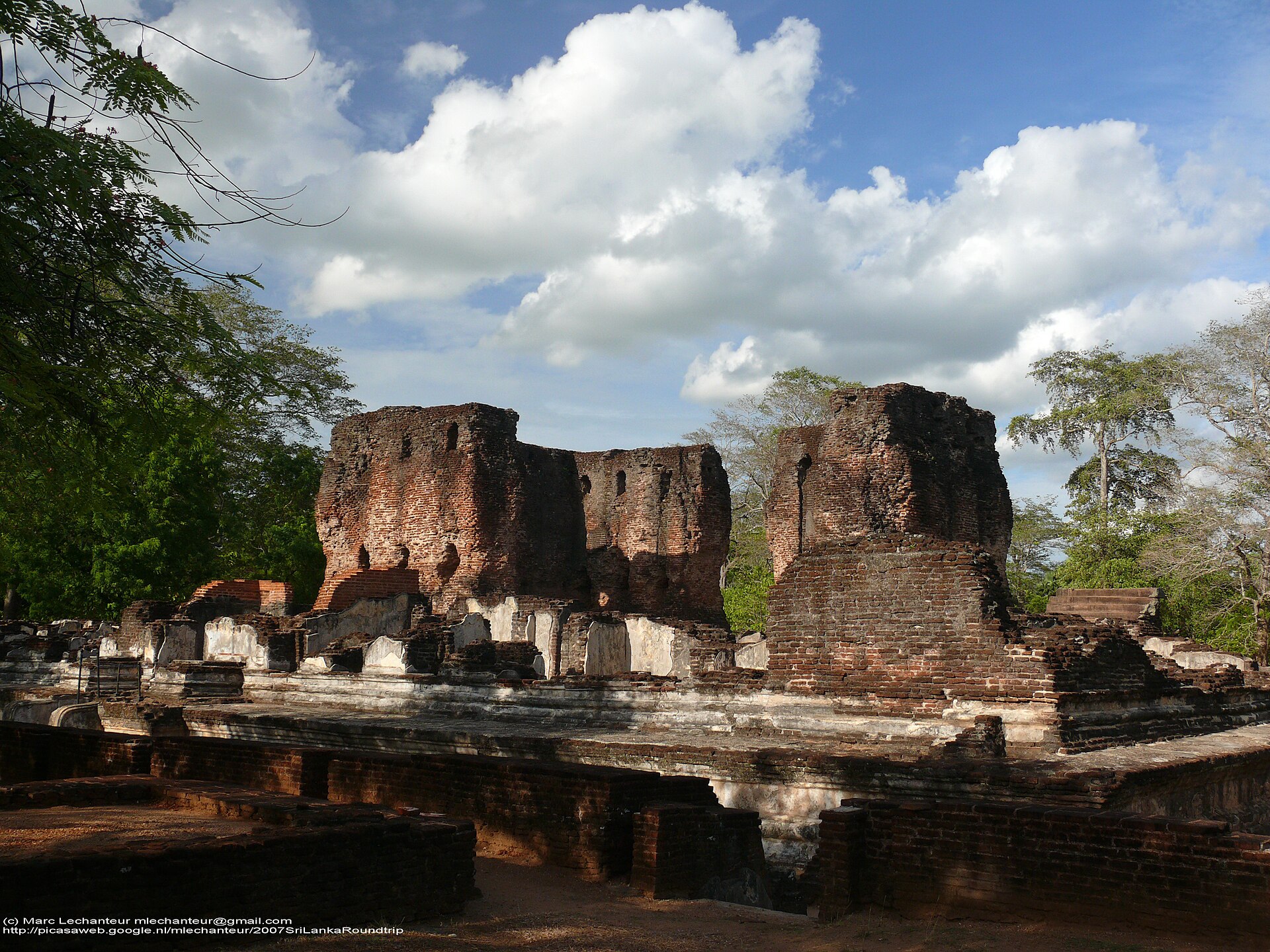
Polonnaruwa is one of those rare places in Sri Lanka where time seems to have paused, allowing the past and present to coexist in quiet harmony. This ancient city, nestled in the island’s northern plains, was once the thriving capital of a Sinhalese kingdom, and its ruins still whisper stories of its former grandeur. There are no modern skyscrapers or bustling streets here—just the hush of wind through the trees and the occasional murmur of visitors wandering paths laid down centuries ago.
The city’s history stretches back to the 11th century, when King Vijayabahu I moved the capital from Anuradhapura after years of war and invasion. Polonnaruwa became the heart of Sinhalese civilization, a center of political power and religious devotion where Buddhist temples stood beside royal palaces. Its golden age came under King Parakramabahu the Great, who transformed the city into a marvel of engineering and artistry. He built vast temples, intricate irrigation systems, and reservoirs that turned arid land into fertile fields. Some of these projects still endure today, like the sprawling Parakrama Samudra, a man-made lake that once symbolized the king’s authority and now sustains local villages.
The architecture of Polonnaruwa is a striking blend of strength and grace, where every stone carries the weight of history. The ancient city is now an archaeological park, home to some of Sri Lanka’s most remarkable ruins. Among them is the Gal Vihara, a rock temple featuring four colossal Buddha statues carved directly into the granite. The most mesmerizing is the reclining Buddha, its seventeen-meter-long form exuding a serene stillness that invites quiet reflection. Nearby, the remains of Parakramabahu’s palace stand as a shadow of its former glory—massive walls and columns that hint at the opulence of a bygone era.
Another highlight is the Rankot Vihara, known locally as the Golden Temple. This towering stupa, one of the tallest in Sri Lanka at thirty meters, rises with smooth, rounded contours that evoke a sense of peace. Close by is the Kiri Vihara, a smaller stupa that has survived the centuries almost untouched. Its pristine white surface contrasts sharply with the red earth, a reminder of how fragile yet enduring human achievements can be.
Polonnaruwa is more than just a collection of ruins; it’s a place where nature and history intertwine. The archaeological park is surrounded by dense forests and ancient reservoirs, like the Parakrama Samudra, a vast body of water covering twenty square kilometers. Built in the 12th century, it was both a practical resource and a symbol of royal power. Today, the lake is a haven for birds and a fishing ground for locals, who cast their nets much as their ancestors did centuries ago.
Walking through Polonnaruwa feels like stepping into another era. Unlike Anuradhapura or Sigiriya, it sees fewer visitors, which only deepens the sense of tranquility. There’s time here to wander among the ruins, to imagine the generations who once walked these same paths, who prayed in these temples, and who built a civilization that still echoes in the stones. The locals treat the site with reverence, and that quiet respect lingers in the air, touching everyone who visits.
What makes Polonnaruwa special is its distance from the usual tourist trails. There are no luxury resorts or crowded restaurants, just small guesthouses and simple cafes where you can try traditional Sri Lankan dishes. As evening falls, the city grows still, the only sounds the chirping of cicadas and the distant chime of temple bells. It’s a place for those who seek not entertainment, but a moment of connection with the past—a chance to step away from the noise of the modern world and listen to the stories the ruins have to tell.
Polonnaruwa isn’t just an open-air museum; it’s a living place that continues to evolve. Religious ceremonies still take place here, and locals visit the stupas to honor their ancestors. The line between past and present blurs as ancient stones stand beside modern homes, and Buddhist monks in vibrant robes walk the same paths their predecessors did a thousand years ago. That’s why Polonnaruwa leaves such a lasting impression—it doesn’t just recount history, it lets you feel it.