Arad’s museum is a quiet but revealing place, tucked into a city that feels like an improbable dream in the middle of the Negev Desert. Founded in the 1960s as one of Israel’s first planned modern settlements, Arad was built with a vision—an attempt to carve a livable future out of harsh, sunbaked land. The museum captures that spirit, tracing the layers of history that have shaped not just the city, but the entire region, from ancient times to the present.
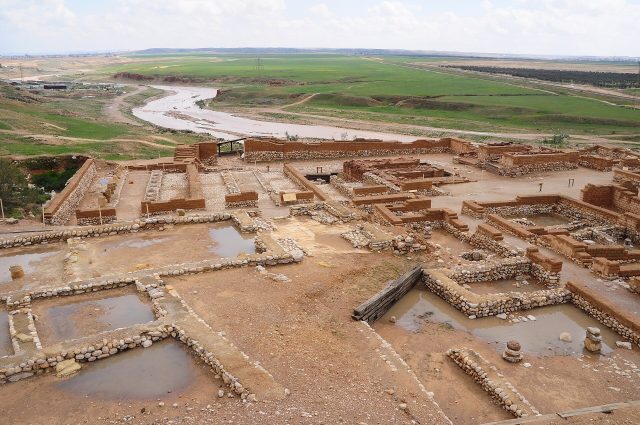
The exhibits begin with the distant past, where fragments of pottery, tools, and broken walls tell the story of people who lived here thousands of years ago. Nearby, the ruins of the biblical city of Arad still stand, mentioned in the Old Testament as a place of trade and conflict. The artifacts—small altars, ritual vessels, and figurines—hint at how the desert was never just a barrier, but a space where people sought meaning, offering prayers to unseen forces in an unforgiving landscape.
From there, the museum shifts to the birth of modern Arad. The city was established in 1962 as part of a bold experiment to populate the Negev, drawing young families, idealists, and immigrants who believed in building something new. Black-and-white photographs show the first tent camps, the early blueprints for houses, and the personal belongings of those who arrived with little more than hope. The original plan envisioned a garden city, with wide streets and greenery around every home. Reality, of course, was messier, but the city still carries the imprint of that early optimism.
One of the most compelling sections explores Arad’s cultural mosaic. Over the decades, the city has become home to people from North Africa, Europe, the former Soviet Union, and Ethiopia, each group bringing its own traditions, food, and crafts. The museum displays embroidered textiles, musical instruments, and everyday objects that reveal how these different communities learned to coexist in a place where resources were scarce and the environment demanded resilience. It’s not just a story of immigration, but of how people adapt, blending their pasts while forging a shared future.
The building itself is worth noticing. Designed to blend with the desert surroundings, it’s low-slung and unassuming, built from local stone with large windows that let in the light. Inside, the space feels open and unhurried, with courtyards where visitors can pause in the shade. There’s none of the crowded intensity of bigger museums—just a sense of quiet invitation, as if the place is waiting for you to take your time.
Beyond preserving history, the museum is also a place where the city’s present and future take shape. Temporary exhibitions feature work by local artists, while lectures and workshops tackle everything from desert ecology to contemporary social issues. Arad, once an experiment, is now a city of multiple generations, and the museum reflects that evolution. It holds onto the memories of the pioneers who built it, but it’s also a space for new voices, whether through photography, environmental projects, or discussions about what comes next.
A visit here pairs well with exploring Arad itself. The city doesn’t feel like other Israeli towns—there are no ancient fortresses or bustling markets, just quiet streets lined with flat-roofed houses and gardens where olive trees and cacti grow. The surrounding desert offers hikes to ancient ruins or simply the chance to watch the sunset turn the hills gold. The museum acts as a kind of guide, helping you see Arad not just as a city in the desert, but as a place shaped by the people who chose to make it home.
For anyone curious about history, archaeology, or how communities thrive in extreme environments, the museum offers something rare: a sense of authenticity. There are no grand masterpieces or famous names here, just the quiet accumulation of lives lived in a difficult but beautiful place. It doesn’t try to impress or entertain—it simply asks you to listen, to look closely, and to understand how much a small city on the edge of the desert can teach about resilience, change, and the stories we carry with us.