Tucked away on the edge of modern Arad, where the Negev Desert stretches into the distance, Tel Arad is one of those rare places where the past doesn’t just feel close—it feels alive. There are no crowds here, no guided tours with loudspeakers, no gift shops selling trinkets. Just the quiet hum of the desert wind, the weight of centuries in the stones beneath your feet, and the slow, patient stories the ruins have to tell to anyone willing to listen.
The hill was first settled over five thousand years ago, during the Early Bronze Age, when it was one of the largest cities in Canaan. Back then, Tel Arad was a fortified hub, encircled by thick walls and a deep moat, its streets lined with houses, temples, and a sophisticated water system that allowed its people to thrive in an otherwise unforgiving landscape. For centuries, it flourished—until, abruptly, it was abandoned. No one knows for certain why. Some suggest a shift in climate made the land uninhabitable; others point to the arrival of nomadic tribes. Whatever the reason, the city was left to the desert, and for a long time, it stayed that way.
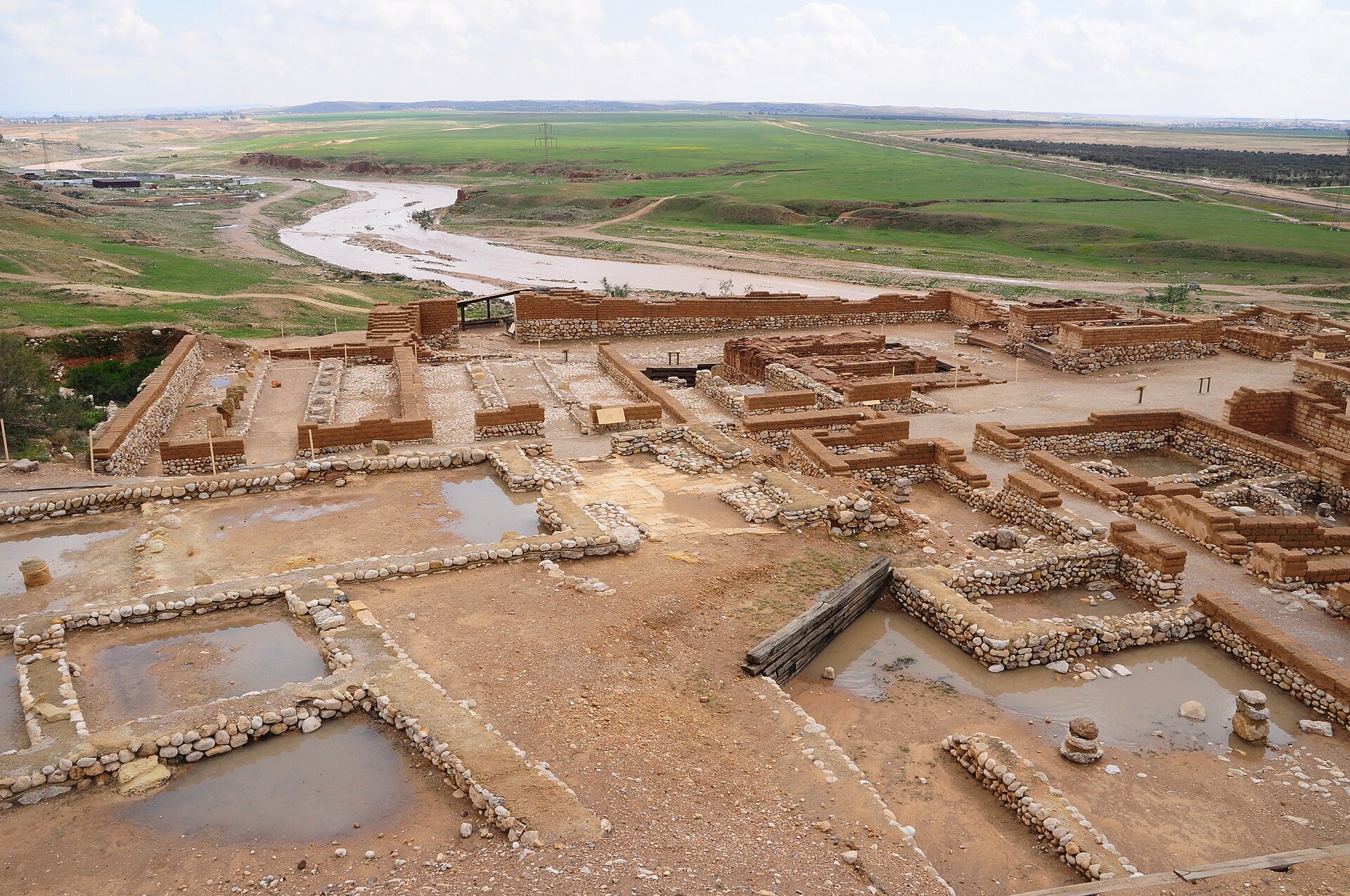
Life returned to the hill in the Iron Age, when the Israelites built a fortress here in the 10th century BCE. This was no ordinary stronghold—it was a critical outpost on the southern frontier of the Kingdom of Judah, guarding the trade routes that connected the Mediterranean to the Arabian Peninsula. The fortress walls, built from massive stones, still stand in places, along with the remnants of gates, towers, and storage rooms. But the most impressive feature is the water system: a network of cisterns and channels designed to capture every drop of rain, a lifeline in a land where water was more precious than gold. The fortress was expanded and reinforced over the centuries, only to be destroyed by the Babylonians in the 6th century BCE. After that, the hill lay silent for millennia.
One of the most intriguing discoveries at Tel Arad is the small temple found within the fortress walls. It’s a puzzle of a place, laid out like a miniature version of the Jerusalem Temple, complete with altars, offering tables, and two stone pillars that echo descriptions of Solomon’s Temple. Scholars still debate its purpose. Some believe it was an early site of Yahweh worship, a local sanctuary that predated the centralization of religion in Jerusalem. Others think it served as a place of prayer for soldiers and travelers passing through the fortress. Whatever its original function, the temple offers a rare glimpse into the religious practices of ancient Judah, and it’s sparked more than a few heated discussions among historians.
Today, Tel Arad is an open-air museum, but it doesn’t feel like one. There are no reconstructions, no plastic replicas, no signs explaining every little detail. Just the raw, unfiltered remains of the past—crumbling walls, sun-bleached stones, and the occasional shard of pottery half-buried in the dirt. Walking through the site, you can descend into the ancient cisterns where water was once stored, or climb onto the fortress walls for a view of the endless desert. The air is dry, the silence deep, and the sense of time is different here. Minutes stretch into something slower, quieter. The past doesn’t just feel close; it feels almost tangible, especially in the early morning or late afternoon, when the light turns the stones gold and the shadows grow long.
This isn’t just a place for history buffs. Tel Arad has a way of drawing in anyone who needs a break from the noise of the modern world. The Negev Desert, with its vast emptiness, creates a sense of isolation, as if you’ve stepped into another era. You could spend hours here, wandering the paths, sitting on a low wall, listening to the wind and your own thoughts. There are hiking trails nearby that lead to other archaeological sites and natural wonders, but even just an hour or two at Tel Arad can leave a lasting impression.
It’s worth remembering that Tel Arad is more than just a tourist attraction. For many, it’s a place of deep cultural and religious significance, a physical link to the stories and traditions that have shaped identities for thousands of years. The ruins here aren’t just stones—they’re part of a larger narrative, one that weaves together biblical accounts, archaeological evidence, and the living memories of people who have passed through this land. Visiting Tel Arad can feel like stepping into that narrative, if only for a little while.
If you find yourself in Arad, don’t rush past Tel Arad. Bring water, wear comfortable shoes, and give yourself time to explore. Walk the paths, touch the stones, imagine the people who once lived here—Canaanites, Israelites, soldiers, traders. Let the place work on you slowly. History here doesn’t hurry. It waits.