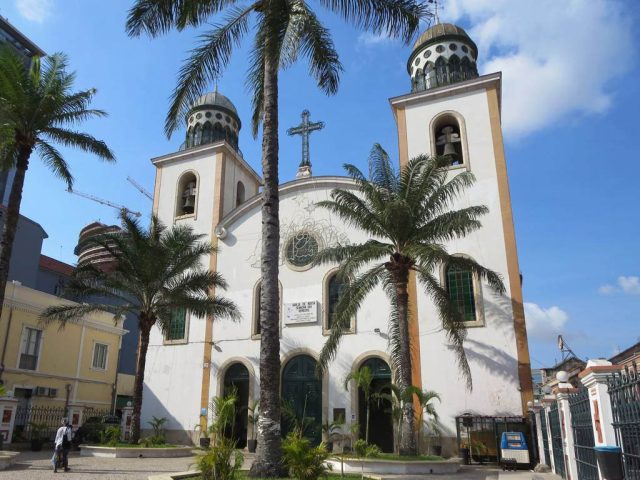
The National Museum of Anthropology in Luanda holds objects that were part of everyday life in Angola. The building, a colonial-era mansion, stands as a remnant of the past. Its whitewashed walls, high ceilings, and heavy wooden doors reflect the time when Luanda was Portugal’s administrative center in Africa. Inside, the collection represents the country’s cultural diversity, sourced from across Angola.
Masks from initiation ceremonies and festivals share space with wooden sculptures tied to myths and spiritual traditions. Clay pots, looms, and hunting tools show how people once lived. Musical instruments highlight music’s role in Angolan culture. Each object includes a brief description, but their power lies in how they link past and present.
The museum also displays archaeological finds. Stone tools, pottery fragments, and jewelry reveal lives from thousands of years ago. A dedicated section focuses on the Kingdom of Kongo, which shaped the region from the 15th to the 19th centuries. These artifacts reconstruct a pre-colonial identity, showing Angola’s cultural roots before European influence.
The building was constructed in the 19th century as a residence for Portuguese officials. After independence in 1975, it became a museum. The interior keeps its original character: halls filled with natural light, antique chandeliers, and ornate plaster ceilings. The rooms still carry echoes of the conversations and decisions made within them.
The museum avoids grand statements. It preserves traditions that remain alive in Angolan communities today. Many rituals depicted in the exhibits continue, though adapted. The museum doesn’t claim to tell the full story—just a starting point for understanding how deeply these traditions run.
If you’re curious about Africa’s layered history, this place reveals Angola beyond stereotypes. It shows a country with a rich, complex heritage. The artifacts prove that every culture has its own narrative, and Angola’s is no different. A few hours here make you realize how much remains unseen.
Luanda is changing—modern buildings rise beside decaying colonial facades. The museum offers a pause. It’s a place to step away from the noise and consider what endures.
The past isn’t just preserved here. It lingers.
The museum isn’t crowded. You can wander without rush. For those who want to see Angola beyond the surface, it’s a quiet discovery. It won’t answer every question, but it might make you ask more.