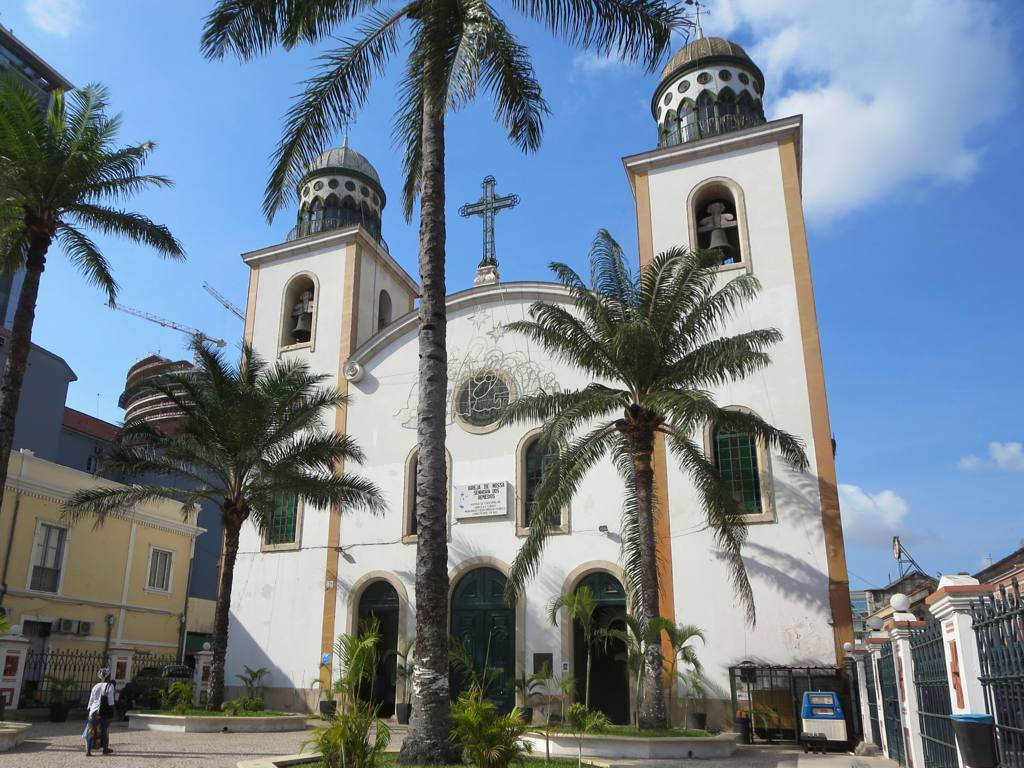
Luanda Cathedral is one of those places that quietly settles into the cityscape, almost unnoticed, though it once drew entire generations to its steps. Built in the mid-17th century, it stands on a hill in the heart of Luanda, a silent witness to the days when the city was still taking shape. It doesn’t impress with grand dimensions or lavish decoration, but in its modest architecture, you can sense the layers of history woven into its walls—stories of colonizers, locals, and those who tried to make this place home.
The cathedral was constructed by the Portuguese, and its design carries the unmistakable marks of European influence from that era. The facade is restrained, almost austere, with two towers flanking it that once served not just as bell towers but as lookout points. Inside, the space is divided into three naves, supported by sturdy columns clad in local stone. The walls are adorned with frescoes, though time and the humid climate have faded them, leaving some images barely discernible. Even so, they offer a glimpse into the religious traditions brought from Europe and how those traditions gradually intertwined with local beliefs.
Over the centuries, the cathedral has endured its share of upheavals. In the 18th century, it was looted by pirates, and later, fires and earthquakes damaged the structure. Each time, it was rebuilt, though never with the same care as in its early years. By the 19th century, Luanda had grown into a vital port city, and the cathedral became more than just a spiritual center—it was a social hub. Ceremonies for arriving governors were held here, and the city’s elite were laid to rest within its walls. Prayers were spoken in Portuguese, and later in local languages, reflecting the shifts in society.
Today, the cathedral remains an active place of worship, though its role in the city’s life has diminished. Luanda has long outgrown its colonial boundaries, and modern districts have pushed the old center into the background. Still, it draws those with an interest in history. Inside, you can find old altars, intricately carved wooden pews, and an organ that is said to still be played during services. Locals treat it with respect, but not reverence—it’s part of the city’s heritage, not a pilgrimage site.
The area around the cathedral is a small neighborhood of narrow streets and low-slung buildings that retain a colonial atmosphere. There are no crowds of tourists here, just a quiet corner that feels like a piece of old Europe transplanted onto African soil. On weekends, vendors set up stalls nearby, selling souvenirs and traditional fabrics, while in the evenings, elderly men gather on the steps to discuss the day’s news. This isn’t a place for hurried sightseeing; it’s where you can feel the unhurried rhythm of Luanda, a city that moves at its own pace despite its rapid growth.
The cathedral isn’t one of Angola’s headline attractions, and guidebooks rarely mention it. Maybe it’s because it lacks the grandeur of other landmarks, or because its history isn’t tied to dramatic events. But that’s precisely what makes it special. There’s no hustle, no pressure to perform for visitors—just a quiet space where you can stand beneath its vaulted ceilings, listen to the echo of footsteps on the stone floor, and imagine the voices of the city’s earliest settlers.
In recent decades, restoration efforts have begun to preserve the cathedral for future generations, though progress is slow due to limited funding and the challenges of the climate. Even so, it remains one of the few tangible links to Luanda’s early history. For those who come to the city not just for its beaches or modern attractions, the cathedral offers a bridge between past and present.
Luanda is changing fast, and sometimes it feels like the old city might disappear entirely. But as long as the cathedral stands, there’s a sense that the memory of those early days won’t fade completely. It doesn’t demand attention or seek to impress. It simply exists—quietly, unassumingly, as a place that has seen so much change and yet remains the same.