Oiapoque is one of those places that exists almost entirely outside the usual travel narratives. Tucked away in Brazil’s far north, where the country brushes against French Guiana, it’s a town that feels more like a quiet outpost than a destination. The municipal market here isn’t just a place to buy groceries—it’s the kind of spot where the rhythm of daily life unfolds without pretense, where the line between commerce and community blurs into something far more meaningful.
The market sits in the heart of town, on a square that feels too large for a place this small. Oiapoque itself is modest, home to only a few thousand people, and the market reflects that scale. It’s not a bustling commercial hub but a gathering place where people come for more than just supplies. Mornings are for shopping, afternoons for lingering conversations, and evenings for the slow, unhurried chats of older residents who settle onto benches, watching the world pass by. There’s a sense of time moving differently here, as if the heat and the river have stretched the hours just a little longer.
The building itself is unassuming—low-slung, with wide aisles to let the air circulate and keep the humidity from spoiling the goods. The roof is corrugated metal, practical against the frequent rains, while the open sides allow the breeze to drift through. Inside, the scent of fresh fish, ripe fruit, and damp wood fills the space, a mix that instantly grounds you in the tropics. The stalls are simple, often made of rough-hewn wood, their surfaces worn smooth by years of use. There’s no polished display here, no sleek packaging—just the raw, unfiltered reality of what the land and the river provide.
What makes the market unique is its position at the edge of two worlds. Oiapoque sits where Brazil meets French Guiana, and that proximity seeps into everything, including the goods on offer. You might find French cheeses, wines, or canned goods that rarely make it this far into Brazil, but the real draw is the local fare. There’s açaí, sold fresh from the branch rather than as a processed pulp, and cassava root, the backbone of Amazonian cooking. Fishermen bring in their catch from the Oiapoque River—massive catfish, the legendary pirarucu, or smaller fish perfect for frying. The selection feels effortless, as if the vendors assume you already know how to prepare what they’re selling.
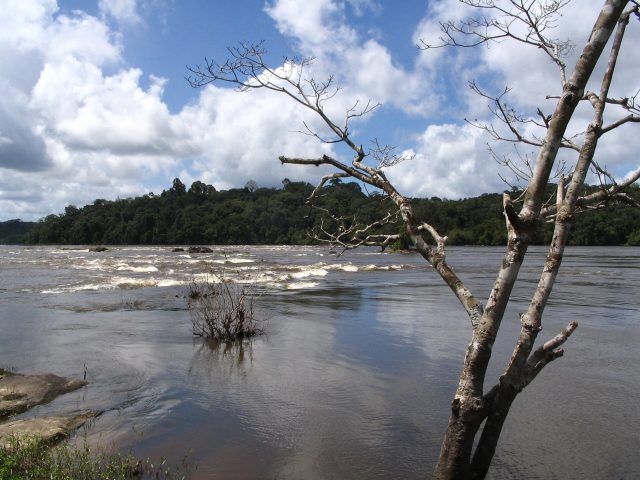
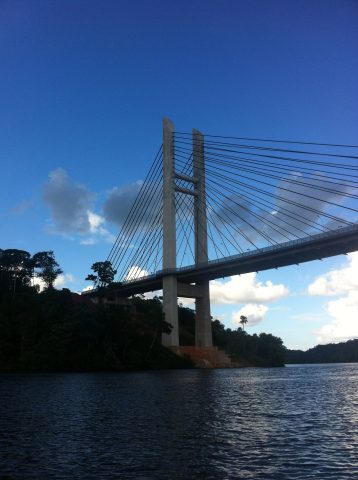
The market’s history is woven into the story of the town itself. Oiapoque began as a riverside settlement, a place where the waterway was the only highway for miles. Before roads and bridges, the river was the lifeline, and trade happened wherever boats could dock. What started as an informal exchange of goods and gossip eventually found a permanent home, then a roof. Even now, the market retains that old sense of necessity—of trade as survival, as connection. It’s not just about buying and selling; it’s about the way people have always made do, adapting to the land and to each other.
For visitors, the market offers a rare glimpse into a way of life that hasn’t been polished for outsiders. There are no souvenir stalls, no pushy vendors, no staged performances of local culture. Instead, there’s the quiet exchange of knowledge—a fishmonger explaining how to clean a pirarucu, a farmer describing the best season for certain fruits. You might leave with a bag of cupuaçu nuts, a wedge of French Guianan cheese, or nothing at all, just the memory of sitting on a bench with a strong cup of coffee, watching the town go about its day.
In recent years, Oiapoque has started to appear on the radar of travelers seeking something beyond the usual tourist trails. But even as the town slowly changes, the market remains stubbornly itself. It’s not a place you visit for spectacle; it’s where you come to understand what it means to live in a place like this. In a world where so many cities feel interchangeable, the municipal market in Oiapoque is a reminder that commerce can be more than just transactions. It can be culture, tradition, a way of holding onto something real. There are no flashy signs here, no curated experiences—just the quiet, unfiltered pulse of a community that has always known how to make do with what it has.